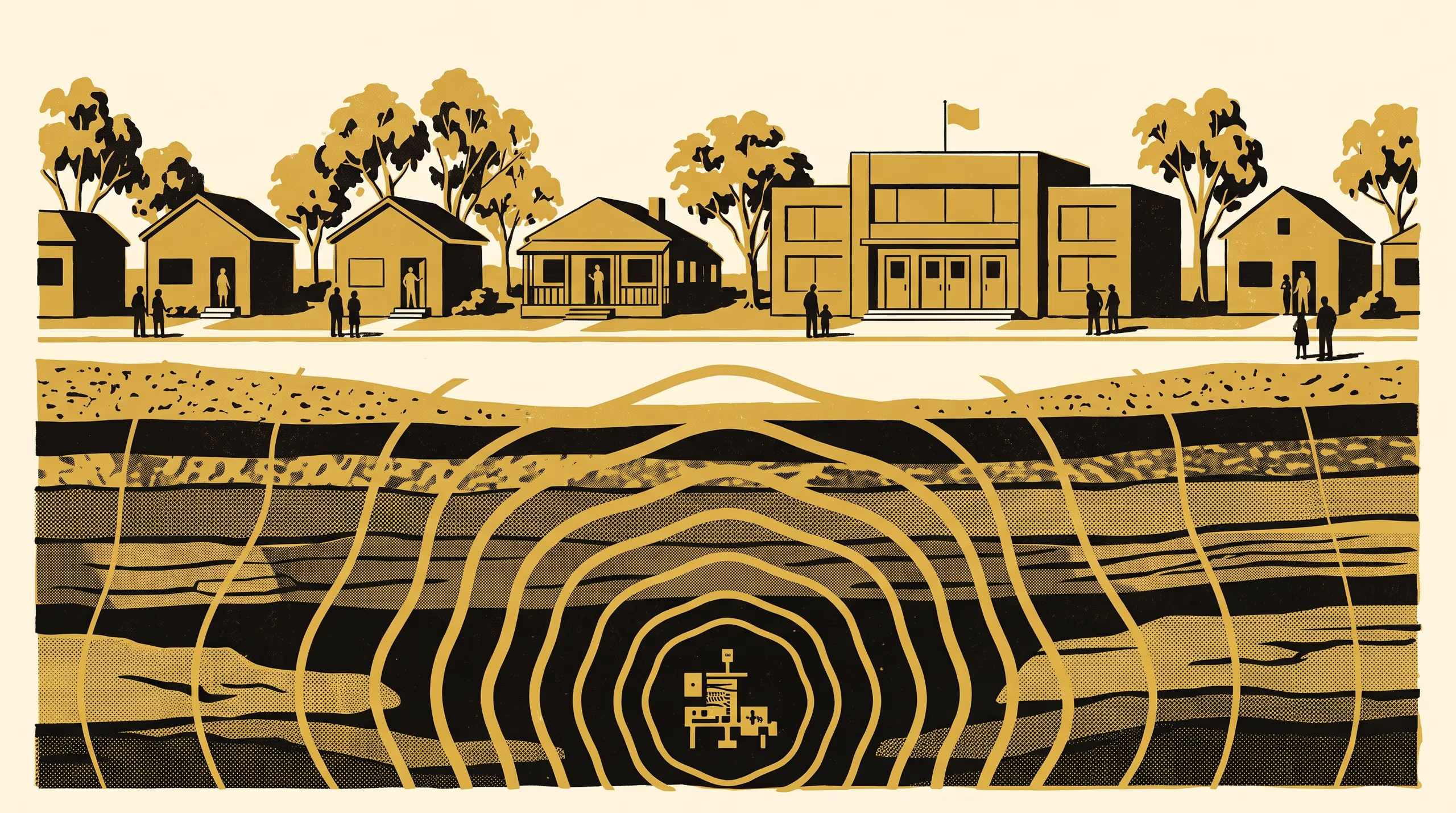
A new brochure invites residents to lodge felt reports, host an instrument beneath a hall or classroom, and attend open readings at which the town's record of small earthquakes is read aloud and brought to a close.
A civic brochure from the School of Settled Matters invites the town to help keep a public record of the ground beneath it
Slop University’s newest brochure is addressed less to prospective students or donors than to the people next door. Felt It Too, led by Dr Odalys Penhallow of the School of Settled Matters with Associate Professor Ragnhild Uzoma and Dr Clemency Tredinnick, asks the town to tell the University whenever the ground moves beneath it, however slightly.
The publication sets out three ways in. Residents may lodge a felt report describing what they noticed and what it moved; schools, halls and clubs may host one of the School of Underlying Conditions’ instruments on the rock beneath their floors; and anyone may attend the Received Readings Group’s open readings, where entries in the town’s record of the ground are read aloud, questioned and marked as settled. Testimony and instrument trace are held side by side throughout, in what the brochure frames as a shared civic undertaking rather than a service.
The School of Settled Matters is used to reading records long after the people who made them have gone home. It is a novel thing, and a welcome one, to be handed a record while the cups are still rattling on the shelf.
— Dr Clemency Tredinnick, Lecturer, School of Settled Matters
Associate Professor Uzoma thanked “every household, hall and classroom that has lent the Basement Relations Group a corner of its floor”, adding that the network “goes wherever we are invited, and nowhere else.”
The brochure stands as a further expression of the University’s conviction that a civic institution earns its place partly by how attentively it listens. It draws on six published studies from three Schools, among them work on instrument records that disagree and on what a single buried probe can speak for.
The full brochure is available from the University’s research repository under an open licence, doi:10.5555/slop.wopzst.