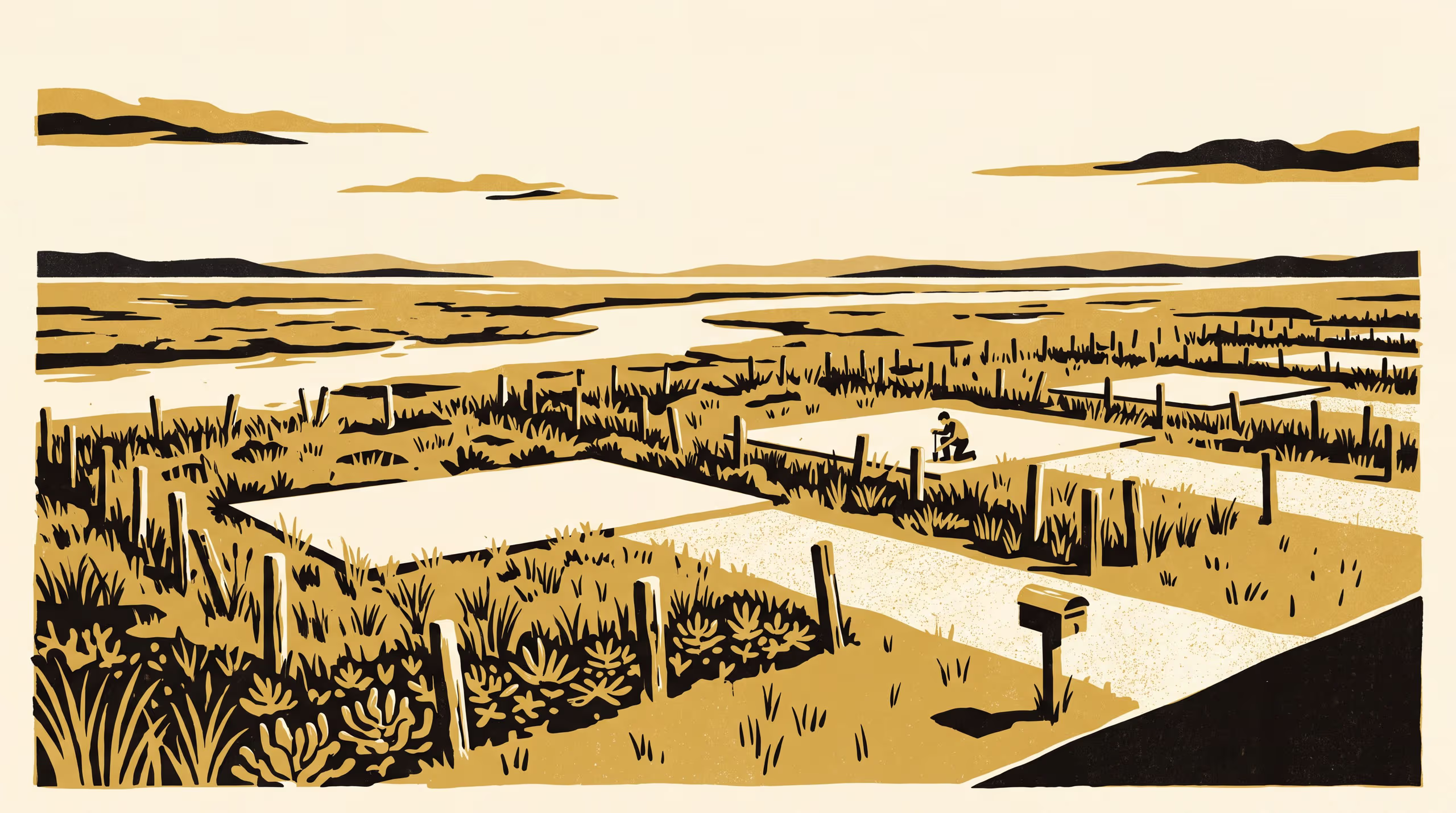
A new research poster from the School of Settled Matters follows saltmarsh and soil carbon across 41 house lots vacated by a managed retreat, and finds the marsh still keeps to the plan of the street that stood there.
On house lots vacated by a coastal buyout, former lawns, garden beds and driveways are each becoming a different kind of saltmarsh
Forty-one house lots, a folder of old site plans and a gouge corer are at the centre of What the Marsh Made of the Gardens, a new research poster from the School of Settled Matters. Led by Associate Professor Anselm Threlkeld with Dr Brynjar Obiora and Dr Clemency Tredinnick, the work asks what becomes of a shoreline street once its houses have gone and the tide has been allowed back in.
We tend to think a street is finished when the last removal truck pulls away. It turns out the street had other plans, and we would like to keep walking the lots for as long as they will have us.
— Associate Professor Anselm Threlkeld, School of Settled Matters
Combining vegetation survey, soil coring and a close reading of each lot’s vacancy-era plans, the team set former lawns, garden beds, slabs and driveways against the years since their owners left, situating coastal adaptation, carbon accounting and the long afterlife of land tenure within one shared field programme. Across 328 quadrats, the poster reports that what a patch of ground used to be shapes the marsh it becomes, with former lawns gathering carbon several times faster than former driveways.
The University regards the poster as a characteristic piece of the School’s work, which has long followed a decision past the moment it is made and into the ground it governs. Dr Tredinnick said the fence lines still visible in the rushes were “a welcome invitation to think about everything a boundary goes on doing after the paperwork is filed”.
The full poster is available from the University’s research repository under an open licence, doi:10.5555/slop.8dmakr.