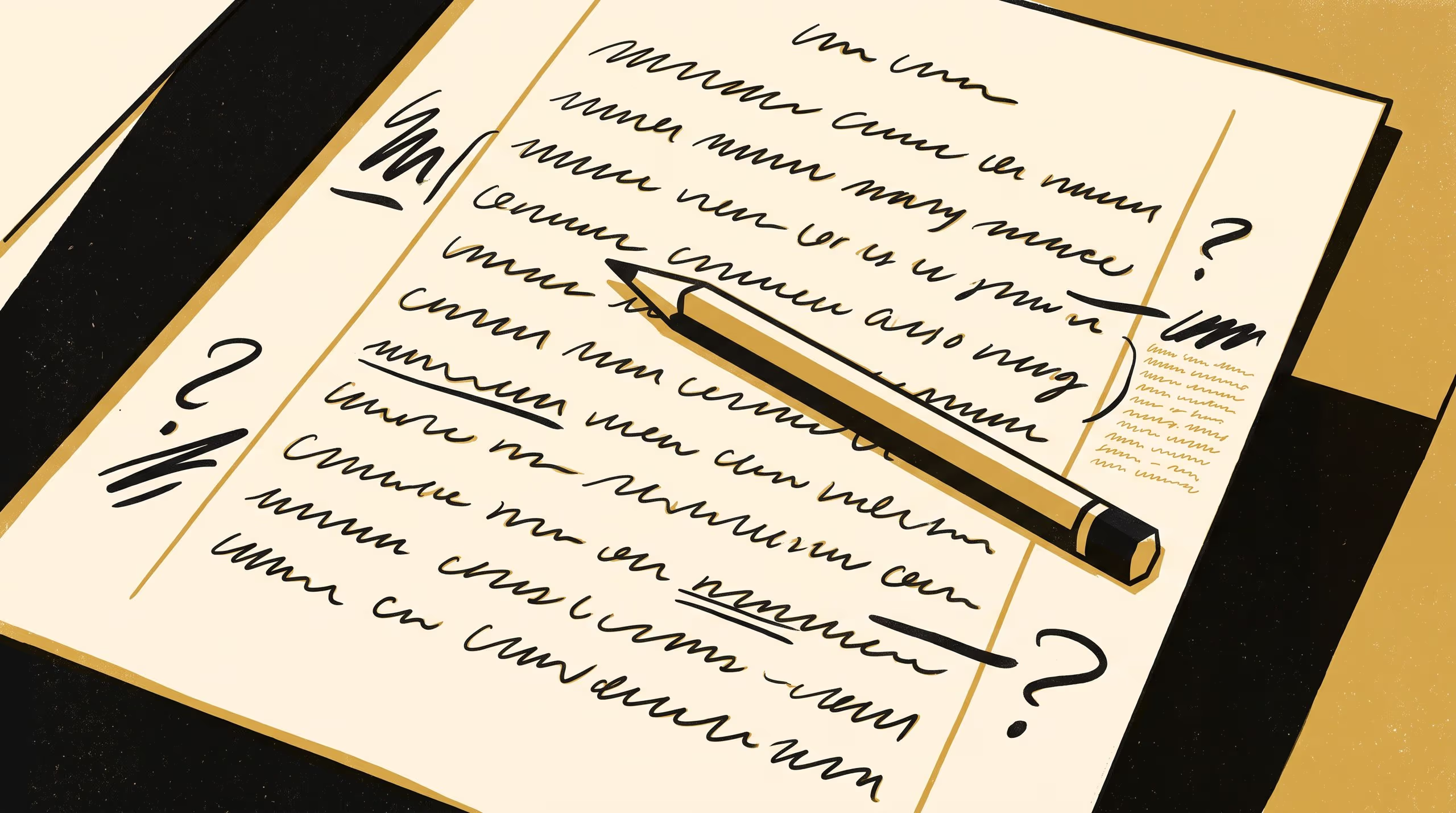
A new paper led by Associate Professor Ragnhild Uzoma reads the comments 46 English teachers wrote on Year 10 essay drafts alongside what their students did next, and finds the deepest revisions came from the questions students acted on least.
A three-school study of English teachers' written comments and the revisions that followed them
Forty-six secondary English teachers lent the University a term of their red pen, and 1,031 of their Year 10 students lent it the drafts that pen was used on. Answered in the Margin, a new paper by Associate Professor Ragnhild Uzoma of the School of Underlying Conditions, Dr Ingeborg Nwachukwu of the School of Continuous Improvement and Associate Professor Anselm Threlkeld of the School of Settled Matters, sets those comments beside the revisions that came after them.
Feedback is a conversation the University has been having with itself for as long as it has marked anything. It is good to have the students’ half of it on the record at last, even if a good deal of it is in pencil.
— Dr Ingeborg Nwachukwu, Lecturer and Convenor, Capability Sprints
The study brings developmental psychology to the everyday practice of written response, aligning each teacher’s way of making meaning with the shape of the comments they leave and the uptake those comments enable. Its central observation is that the questions teachers could not answer for themselves were the comments students revised for least often and most thoroughly, and that one in five of those left out of the revision had been answered anyway, in a short reply to the teacher beside the question.
The University is glad to see its readers of rock, rubrics and statutes find common ground in a Year 10 classroom.
“We went in to read the comments,” said Associate Professor Uzoma, “and came out having read the replies. The students had been a step ahead of us the whole time.”
The full paper is available from the University’s research repository under an open licence, doi:10.5555/slop.2fsti6.