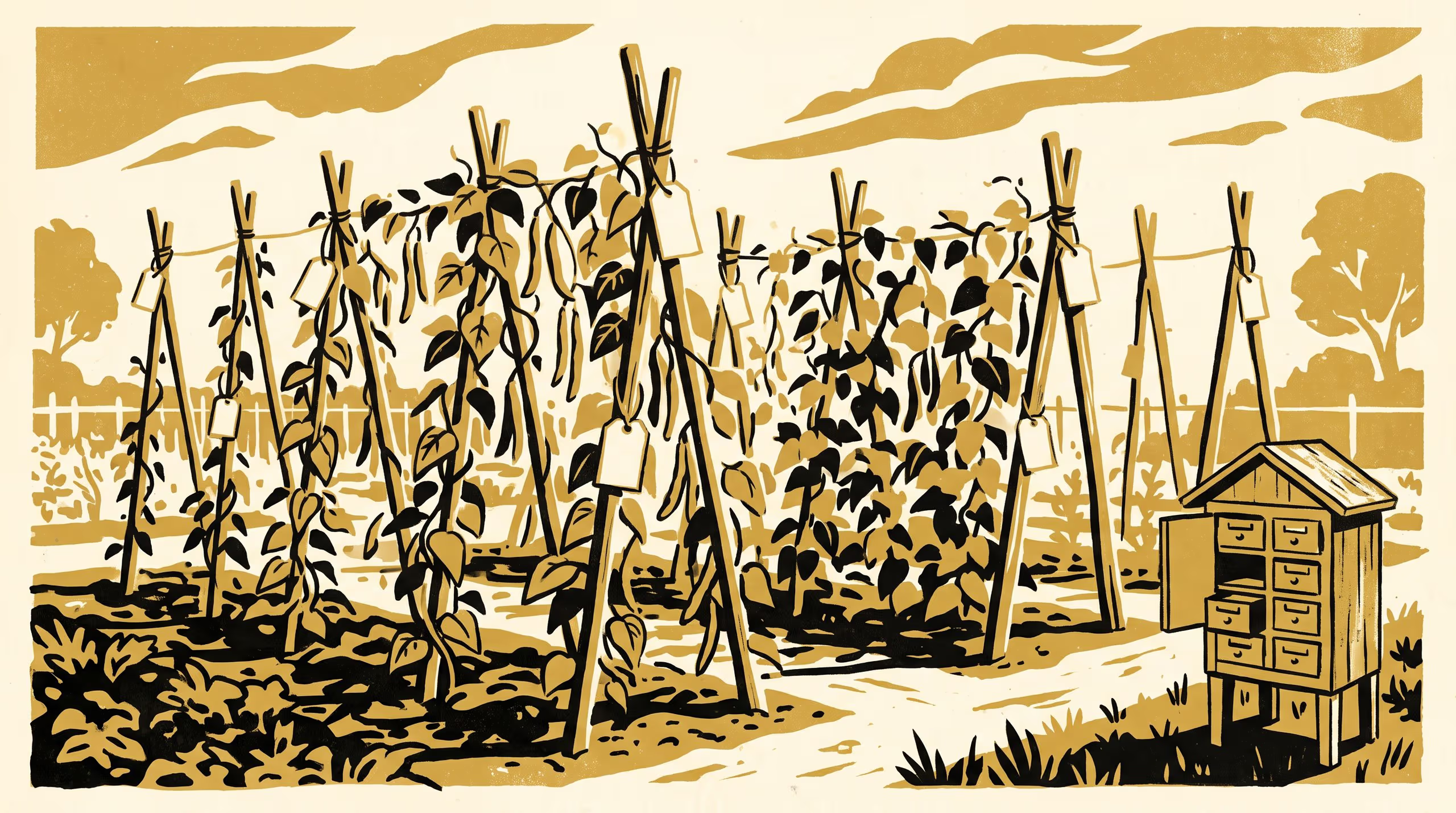
A new research poster from the School of Settled Matters genotypes the bean collection of one community seed library and finds that a lot's seed stays true across many exchanges while its name is reassigned at the return desk.
Two decades of a community library's lending ledger set each bean's genotype against the name it came back under
Slop University’s long interest in how a written record outlives the people who made it has found an unexpected home on the shelves of a community seed library. The Name Goes Further Than the Bean, a new research poster led by Associate Professor Anselm Threlkeld of the School of Settled Matters, with Dr Odalys Penhallow of the same School and Dr Brynjar Obiora of the School of Underlying Conditions, follows the library’s beans and their names through two decades of lending.
Every catalogue is somebody’s reading of what they were handed. We finish this study with far more questions about that than we began with, and we are grateful for every one of them.
— Associate Professor Anselm Threlkeld, School of Settled Matters
The team brought genetic testing, ledger transcription and conversations with growers together into a single account of how a variety moves through a community. Six or more exchanges from its first deposit, a bean was still the same bean in 83 per cent of cases, but it carried its original name in only 38 per cent. Most of those names changed not in a grower’s garden but at the library’s own return desk, where a returned packet was filed under the nearest name already on the shelf.
The poster adds to a widening seam of the University’s research on custody, transmission and the slow work of meaning, and reflects the School’s conviction that a ledger is worth reading closely wherever it is kept.
“There will be other seasons and other packets,” said Dr Obiora, Senior Research Fellow. “This is a good place to keep looking.”
The full poster is available from the University’s research repository under an open licence, doi:10.5555/slop.1z59m6.