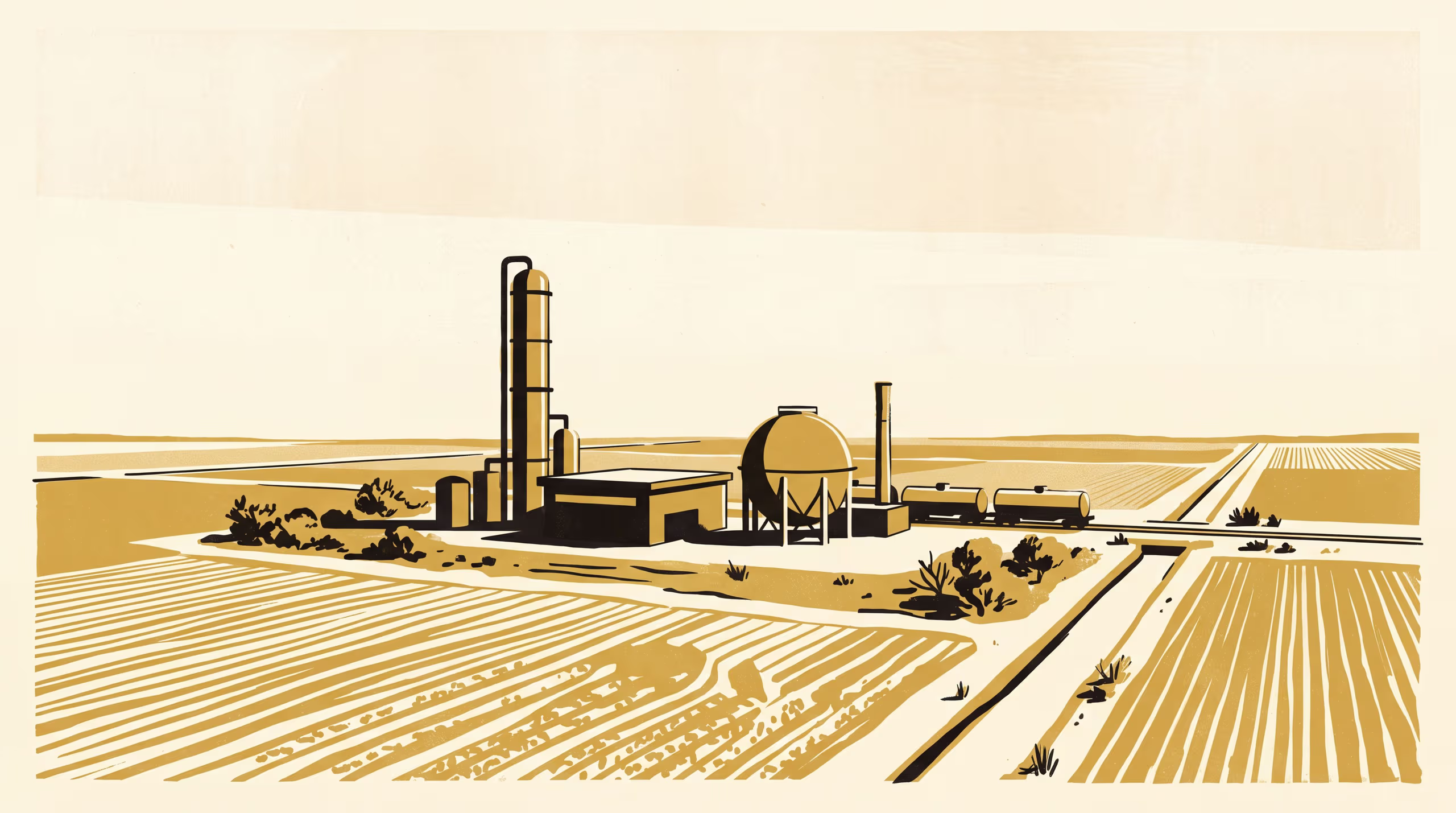
A new research poster from the School of Emergent Priorities follows thirty-five years of maintenance shutdowns at an inland ammonia works and finds them settling into the slack weeks of the farming district it supplied.
An inland ammonia works moved its annual shutdown to its customers' quiet weeks, and its manual never noticed
For more than a decade, the board of a country ammonia works minuted an autumn shutdown that took place in June. The Autumn Shutdown, Held in June, a new research poster from the School of Emergent Priorities, sets out how that came to be. Its authors, Dr Runa Adegoke, Dr Marek Solheim and Dr Brynjar Obiora, find that across 35 annual turnarounds the works gradually stopped keeping its manual’s calendar and began keeping its customers’.
Our School spends most of its year asking when a plan stopped describing the work. This time the plan was in a ring binder, and the answer was in a drawer of logbooks beside it.
— Dr Runa Adegoke, Senior Lecturer and Convenor, Strategic Drift Survey
The study brings together operating records, sales ledgers and governance documentation to build an integrated picture of how a single production site aligned its maintenance posture with the seasonal rhythms of the district it served. It positions the shutdown calendar as an underused source for regional economic history, and as a durable link between industrial practice and the working year around it.
The poster adds a long view to the University’s research on nitrogen and the land, and does so from an archive no one had thought to open for the purpose. “A historian is grateful for any record kept for some other reason,” said Dr Solheim, Lecturer and Deputy Convenor of the Horizon Register. “This one was kept very carefully indeed, and we are still finding out what for.”
The full poster is available from the University’s research repository under an open licence, doi:10.5555/slop.19ughs.