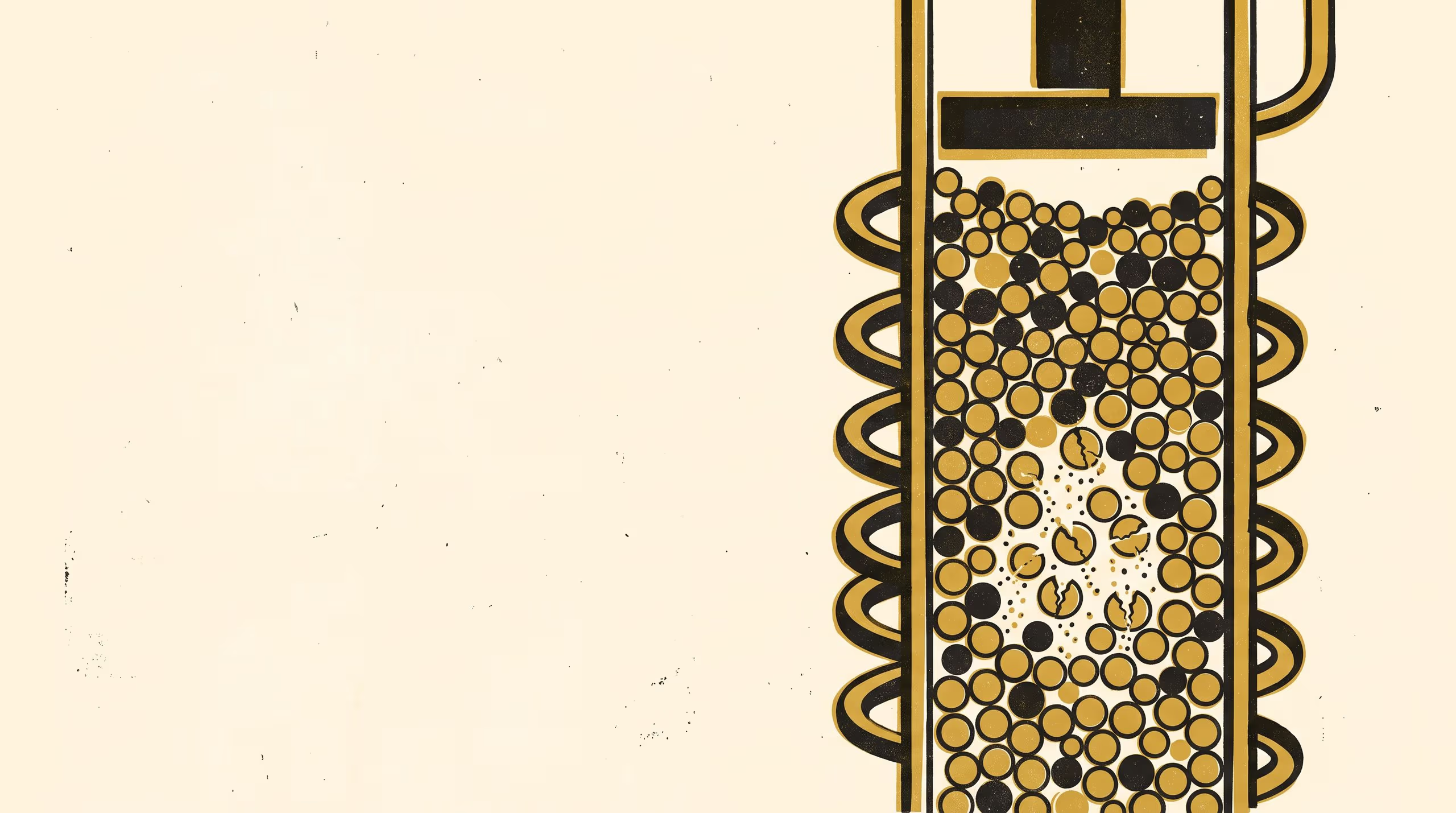
A new research poster from the School of Settled Matters takes nine ceramic breeder pebble beds through thirty heating cycles and follows where their broken pebbles go before each bed stops moving.
A School of Settled Matters poster finds the pebbles crushed early end up at the floor of the bed
The School of Settled Matters has carried its interest in when a thing can be called finished into the materials of fusion energy. Before the Bed Settles, a new research poster by Dr Odalys Penhallow, Dr Brynjar Obiora and Associate Professor Anselm Threlkeld, heats and cools beds of lithium ceramic pebbles under load until they stop compacting, then asks what happened to the pebbles that broke along the way.
We have answered the question we set and opened two more in the process, which the School regards as a fair rate of exchange. We would be delighted to hear from colleagues who think the next ones should be put differently.
— Dr Odalys Penhallow, Senior Lecturer, School of Settled Matters
The poster aligns a load-frame protocol with acoustic listening and careful sieving, positioning the breeder bed as a system whose settled state is shaped by its unsettled history. Under the heaviest load the beds took seventeen cycles to come to rest, and the fragments of pebbles crushed near the top had by then made their way to the bottom quarter.
“There will be more cycles to run, and more beds to run them on,” said Dr Obiora, Senior Research Fellow in the School of Underlying Conditions. “Our School was glad to lend its sieves to the work, and expects to be asked for them again.”
The work reflects the University’s continuing readiness to follow a good question across the boundaries of its schools, wherever the question happens to be standing.
The full poster is available from the University’s research repository under an open licence, doi:10.5555/slop.7ncq0h.