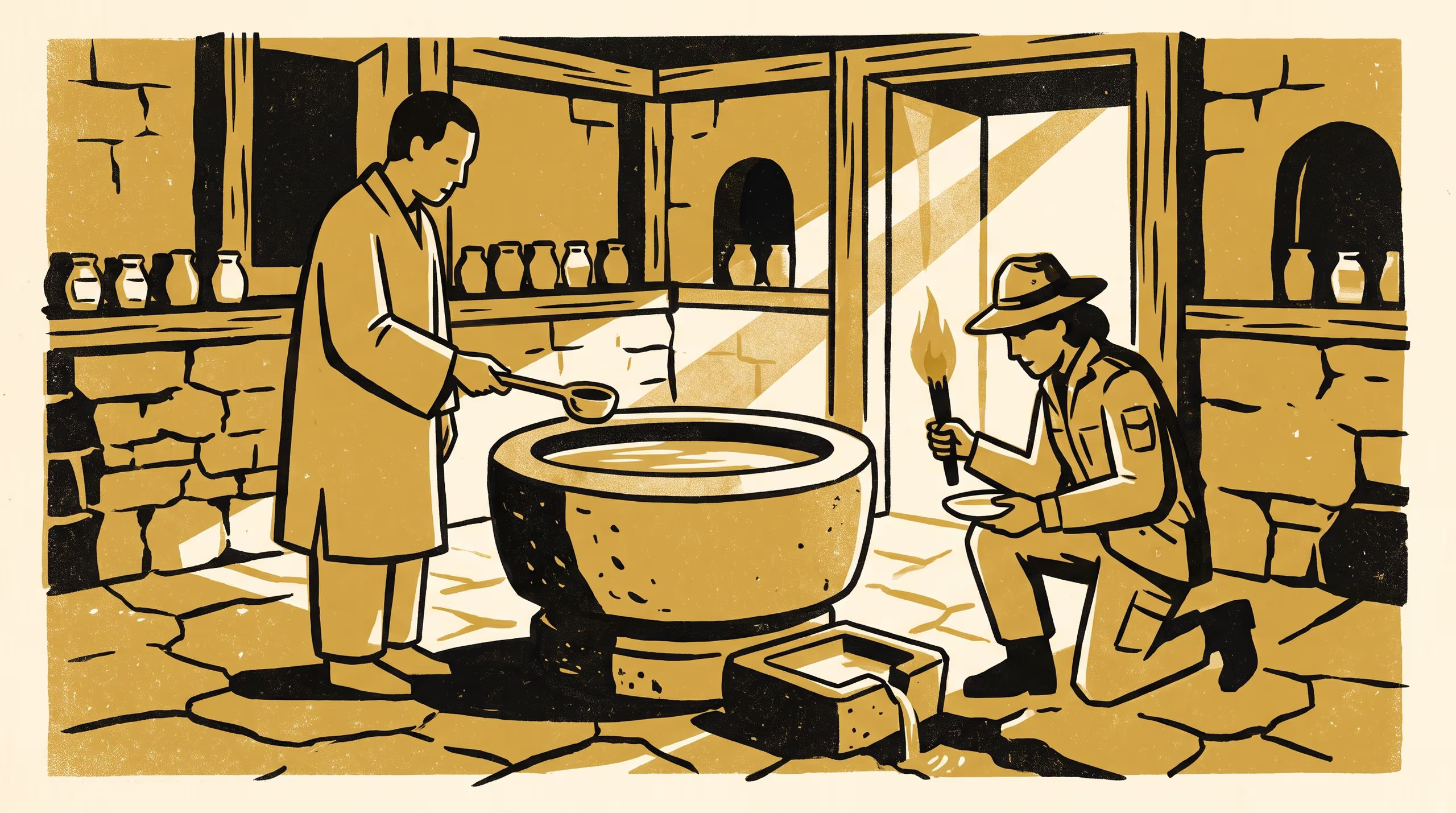
A research poster from the School of Settled Matters follows a pilgrimage shrine's custodians as they work out how water they hold to be blessed can join a district campaign's weekly round of tipping out standing water.
Fieldwork at one hillside pilgrimage shrine follows its vessels into a dengue campaign's weekly emptying round
The School of Settled Matters studies how a question comes to be closed. Its newest research poster finds one being closed far from any courtroom, in the minute book of a hillside pilgrimage shrine. Returned, Not Discarded, by Dr Clemency Tredinnick, Dr Vigdis Emenike and Dr Odalys Penhallow, follows the shrine’s custodians through a district dengue campaign that asked every site to tip out its standing water each week, and asks what they did with the water they held to be blessed.
A law school spends most of its days with questions somebody else has already settled. It was humbling to watch one being settled in front of us, without a lawyer in the room, and the School has been rethinking what it means by a settlement ever since.
— Dr Clemency Tredinnick, Lecturer, School of Settled Matters
Across fourteen months of participant observation, the team set the custodians’ own deliberations beside a weekly walk of every water-holding vessel on the grounds, bringing ritual practice, institutional record-keeping and public-health engagement into a single conversation. The poster traces how one class of water joined the round at once, another only after the custodians resolved that blessed water is returned to the earth rather than discarded, and a third once that rite was extended to it.
Dr Emenike, whose groundwater fieldwork has long attended to water that stands, called the shrine’s round “one of the most careful ways of keeping still water I have been shown, and one I hope we go on walking with them.”
The University counts the poster among the clearest early statements of what its newest school intends to study.
The full poster is available from the University’s research repository under an open licence, doi:10.5555/slop.kz9qgs.