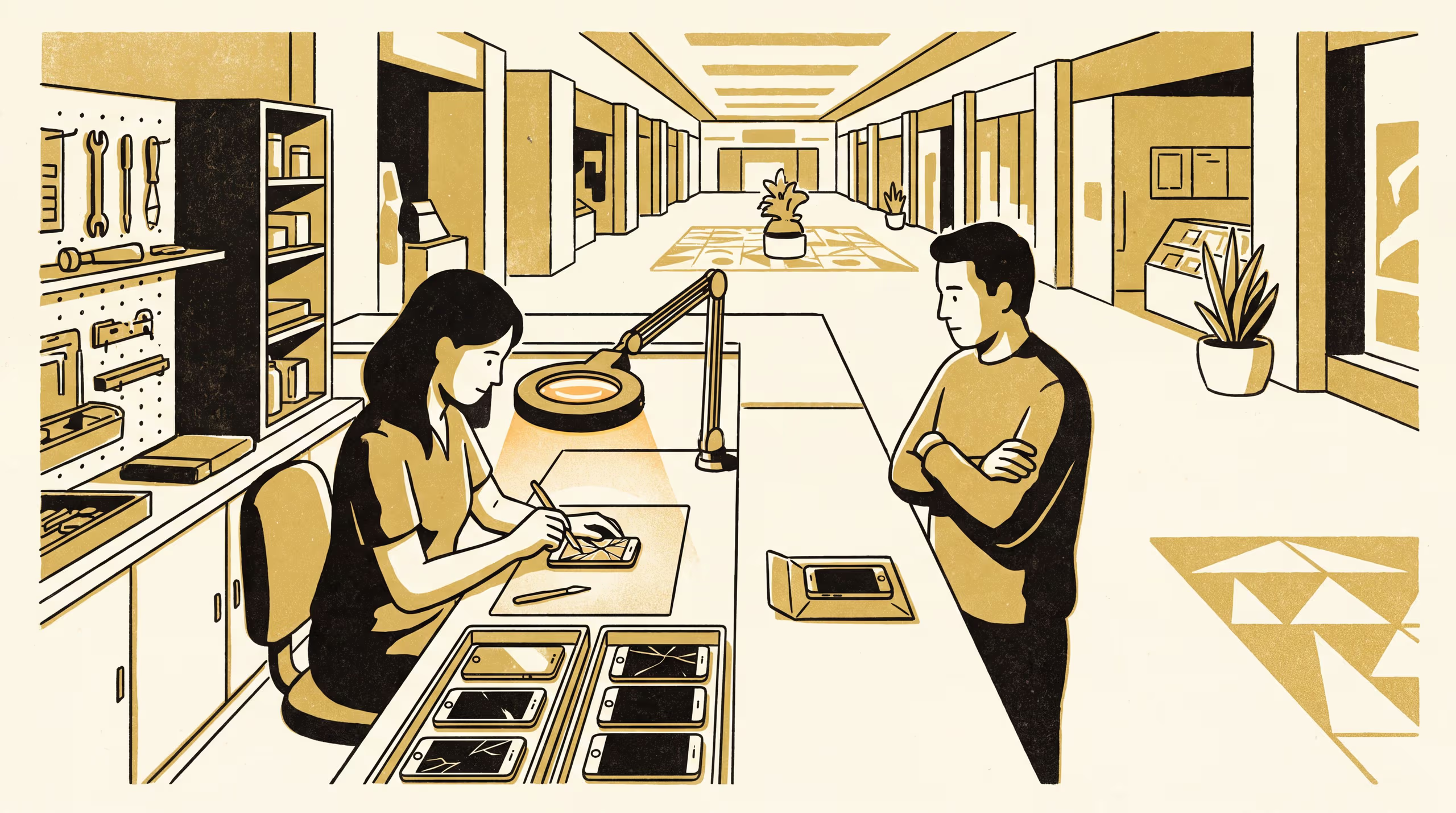
A research poster from the School of Settled Matters finds that a well-handled repair failure brings phone-repair customers back sooner but not more often, and that a second failure sees about half as many return.
A research poster tests the service recovery paradox against the return visits of a phone-repair chain's customers
Slop University has joined one of the longest-running conversations in the study of customer loyalty with a new research poster from the School of Settled Matters. Back Sooner, Not More Often, led by Associate Professor Anselm Threlkeld with Dr Solveig Adeyemi of the School of Continuous Improvement and doctoral candidate Ms Edda Nwafor, asks whether a customer whose repair is put right comes back more loyal than one whose repair never went wrong.
The School of Settled Matters spends its days asking what a promise binds a person to. A repair counter asks the same question at a quicker pace, and we have come away with a clearer sense of our own subject for having stood behind one.
— Associate Professor Anselm Threlkeld, School of Settled Matters
At its core, the poster aligns three years of job records from a network of shopping-centre kiosks with the later visits of 6,412 customers, situating every failure and every redo within an end-to-end view of the customer relationship. Its answer is a careful one: a well-handled first failure brings customers back sooner without bringing more of them back, while a second failure on the same job sees roughly half as many return.
Dr Adeyemi described that second failure as “the part of the customer’s story we will want to stay with longest”, and welcomed the attention it has drawn from colleagues in both Schools.
The University counts the poster among its clearest demonstrations yet that a School founded on the settled question can meet commerce at the counter on its own terms.
The full poster is available from the University’s research repository under an open licence, doi:10.5555/slop.aox6ax.