A paper from the School of Settled Matters and the School of Underlying Conditions follows three batches of tin oxide sol through a year and a half on the shelf and asks when each of its measured properties stops changing.
Three batches of tin oxide nanoparticle sol, opened a bottle at a time across 540 days, settle property by property in the same order
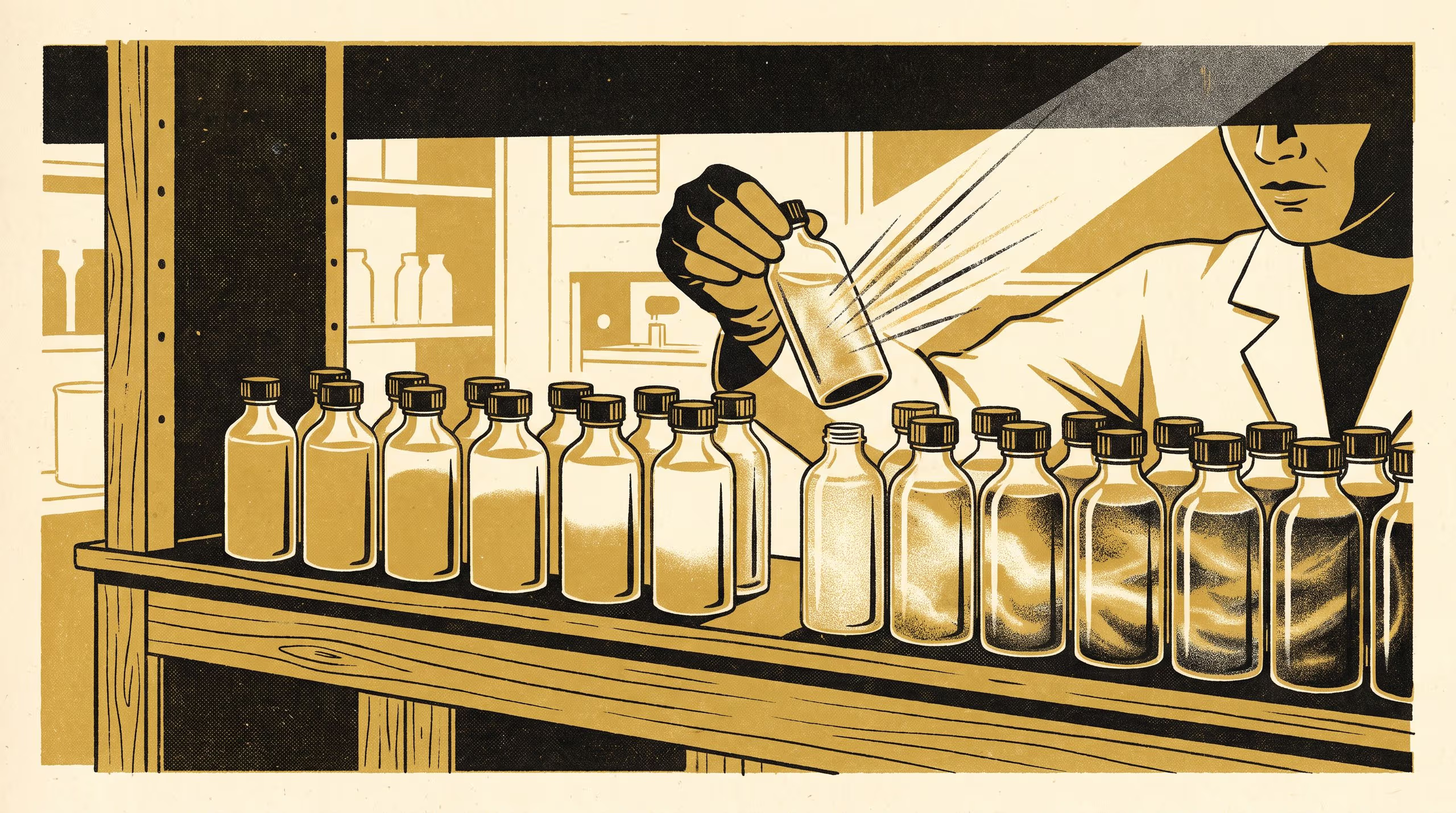
Every few weeks for a year and a half, one more sealed bottle came down from the cabinet and was opened for the last time. The result is When Does a Stored SnO₂ Sol Stop Ageing?, a new paper by Dr Odalys Penhallow, Senior Lecturer in the School of Settled Matters, and Associate Professor Ragnhild Uzoma, Lead of the Basement Relations Group in the School of Underlying Conditions.
We set out to find the day a sol could be left alone. It turned out to have four of them, and we expect to spend a good while getting to know each one.
— Dr Odalys Penhallow, Senior Lecturer, School of Settled Matters
The study brings structural, optical and colloidal characterisation into a single longitudinal framework, aligning each measurement with its own repeatability to establish a property-level settling point across the full storage horizon. In all three batches the optical gap settled first, within three months, and the surface charge last, close to a full year on. The values recorded when the batches were first released sat well outside where each property eventually came to rest.
In carrying the vocabulary of the settled point from the law reports to the laboratory shelf, the paper honours the University’s long-held view that the most valuable thing a scholar brings to a new field is the discipline of waiting for an answer.
Associate Professor Uzoma said the work had raised “more questions about patience than any of us expected from a cabinet”, and that the Basement Relations Group would be happy to keep several of them open for some time yet.
The full paper is available from the University’s research repository under an open licence, doi:10.5555/slop.eovq8k.