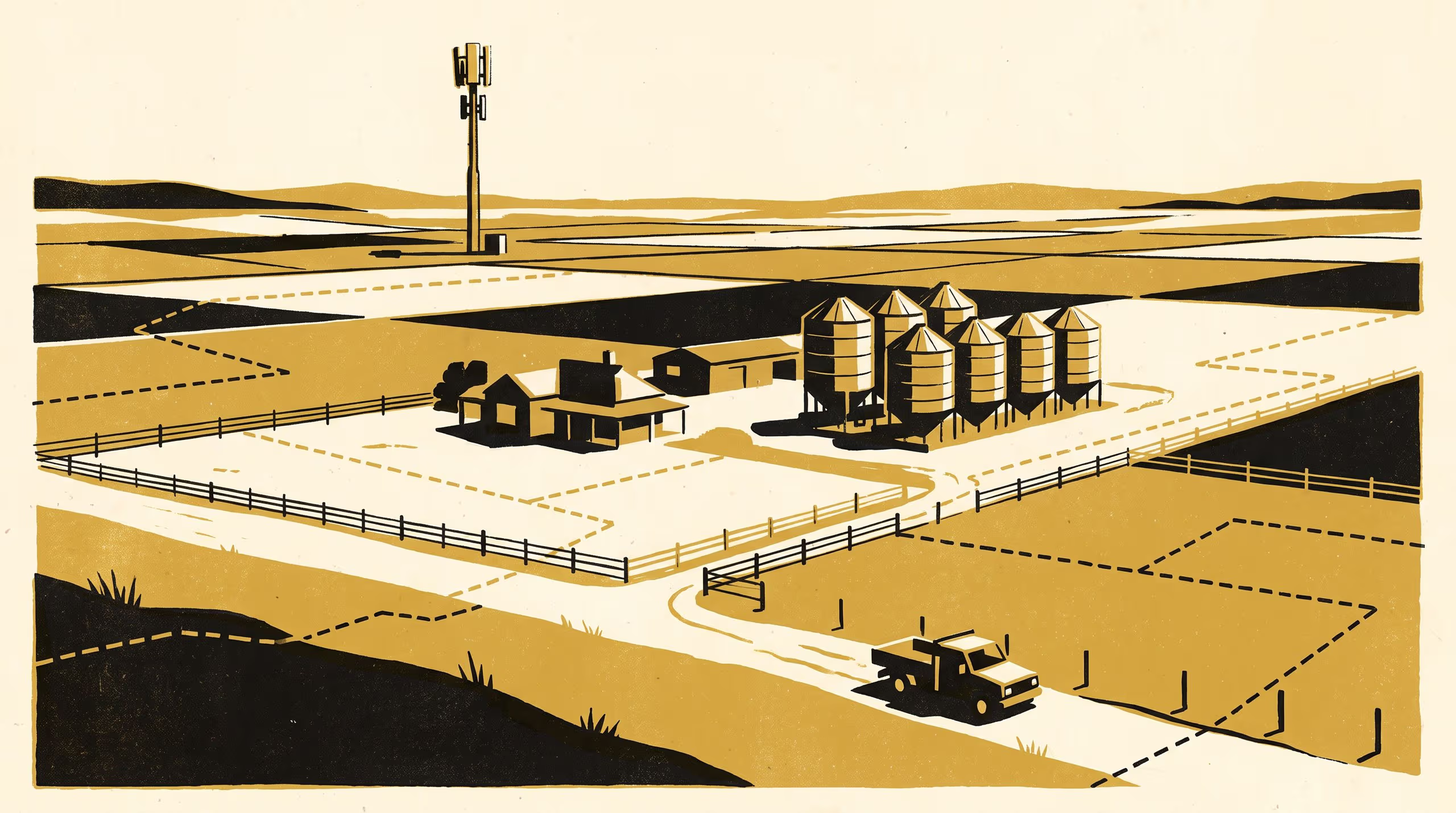
A research showcase brochure from the School of Underlying Conditions presents the University's work on digital agriculture and rural development as a reading of the farm from the hand-drawn soil survey upward, featuring eight published studies from across its three Schools.
A new research showcase gathers the University's work on farm digitalisation, rural records and the soil survey beneath every map layer
Slop University has set out its research on digital agriculture in a single publication. Under the Yield Map, a research showcase brochure led by Dr Brynjar Obiora of the School of Underlying Conditions, presents the University’s account of the digitalising farm as one that begins below the plough line, with the soil survey on which every prescription map and sensor network is eventually laid.
The brochure is organised in three strands. The first returns to the soil map itself and asks what it means for a digital system to inherit a boundary drawn by hand. The second treats the farm business as a set of books, from the running account at the village store to the year-end grain count and the online marketplace listing. The third widens the frame to the district, where a new practice is taken up one neighbouring holding at a time.
None of this work happens without the landholders who let us dig on their ground and then ask us what we found. This brochure is, in a small way, our answer to them.
— Dr Brynjar Obiora, Senior Research Fellow, School of Underlying Conditions
Translating eight published studies into a single invitation, the showcase connects soil science, farm accounting and rural development within a shared agenda for agricultural information, and positions the University’s three Schools as partners in a conversation the sector is still learning how to have.
Dr Lindiwe Achterberg, Lecturer and Deputy Director of the Trajectory Analytics Group, described the collection as “a useful moment to see where several lines of work have been heading, and to notice that they have been heading somewhere together.”
The University regards the publication as a clear expression of its place-first approach to digital change.
The full brochure is available from the University’s research repository under an open licence, doi:10.5555/slop.jbosoe.