A research poster from the School of Settled Matters runs four charges of one copper methanol catalyst through different first campaigns and six identical regenerations, and finds that activity returns while selectivity carries the earlier campaign forward.
Four charges of one copper catalyst, six identical regenerations, and a selectivity gap that would not close
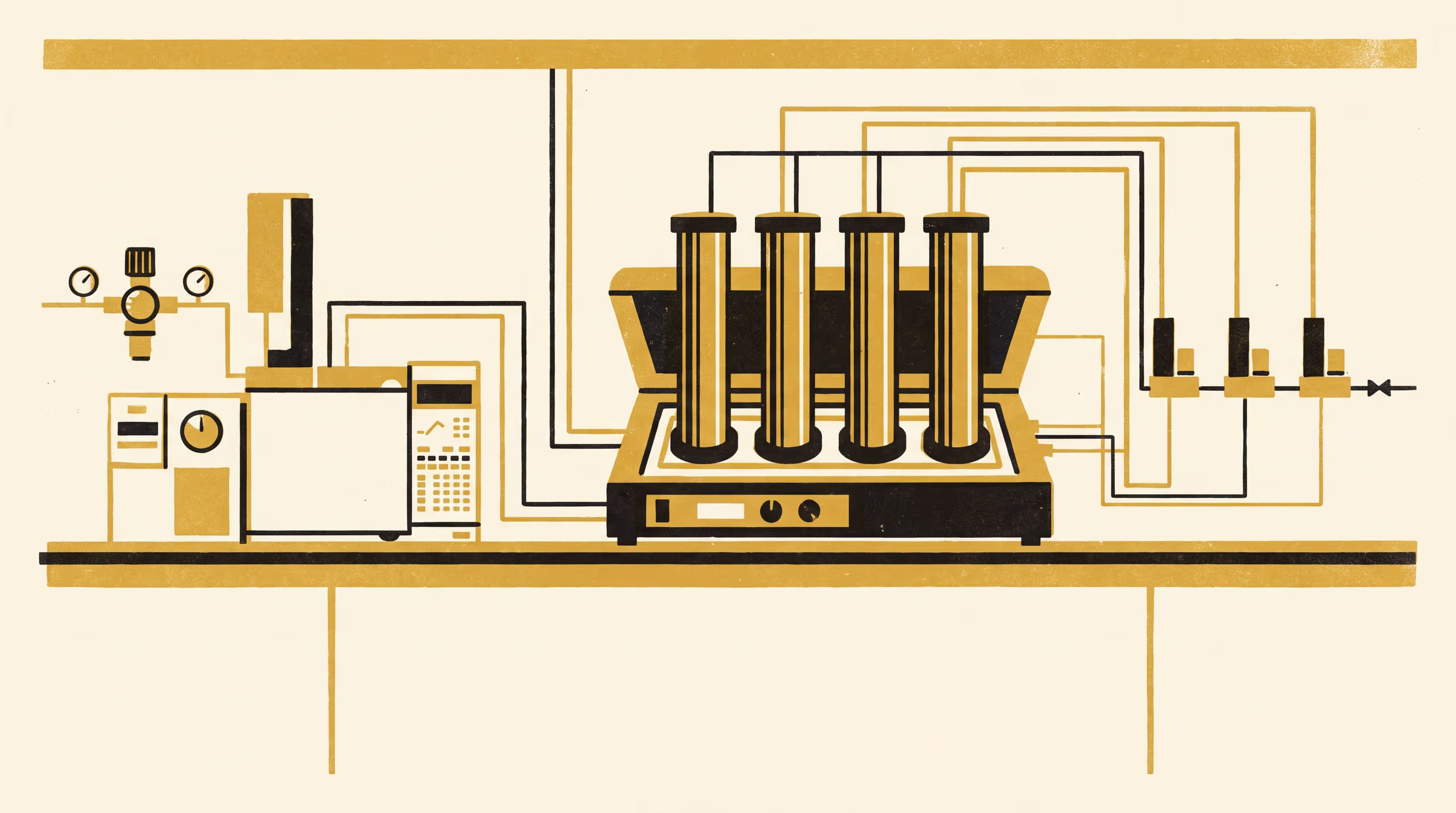
One batch of copper catalyst, divided four ways, each portion sent through a different first campaign and then restored by exactly the same procedure six times over: that is the apparatus behind Regenerated, Not Restored, a new research poster led by Dr Clemency Tredinnick, Lecturer in the School of Settled Matters, with Mr Eskil Nwabueze, Doctoral Candidate in the School of Continuous Improvement, and Dr Odalys Penhallow, Senior Lecturer in the School of Settled Matters.
The team reports that every bed’s conversion of carbon dioxide came back within two regenerations, while the bed first run with water in its feed still made methanol 6.1 points less selectively than a fresh one after the sixth.
A regeneration log asks one question of a bed, and it is the easy one. The School would rather be asked the harder one, about where the bed has been, and expects to be asked it more often from here.
— Dr Clemency Tredinnick, Lecturer, School of Settled Matters
The poster brings reactor practice, catalyst history and the record-keeping of the process laboratory into a single framework for thinking about what a restored material carries with it. It sits comfortably within the University’s growing presence in the chemistry of carbon dioxide, and within a School whose first season has ranged well beyond the law library.
Mr Nwabueze credited the technicians who kept four reactors running in step, saying that “a study like this is only as good as the people who never let one bed get ahead of the others”.
The full poster is available from the University’s research repository under an open licence, doi:10.5555/slop.nzee06.