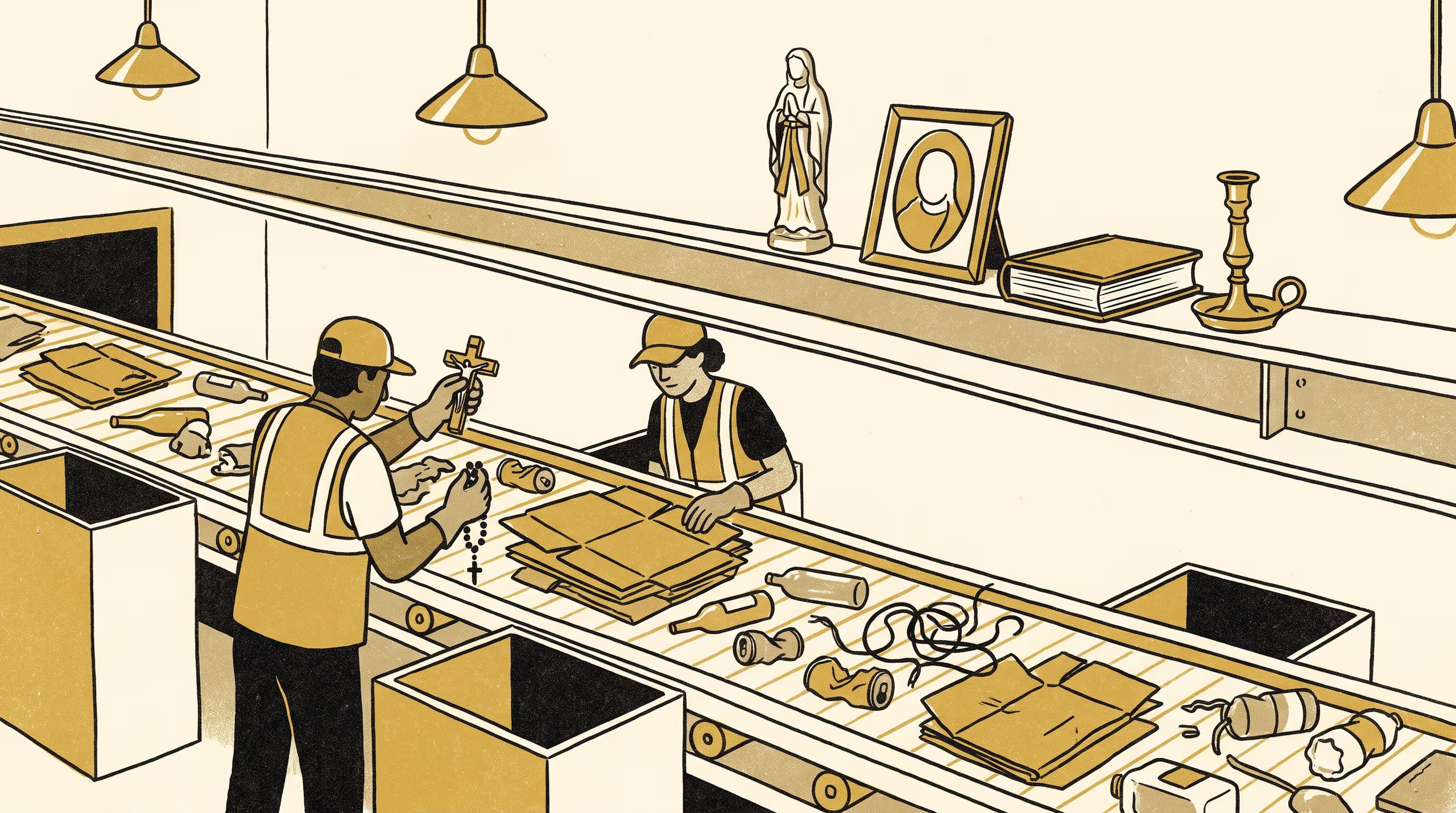
A new paper from the School of Emergent Priorities reads the shelf of rosaries, crucifixes and scriptures kept by the sorters at a regional recycling facility as a practical theology of sacred waste.
Dr Lindiwe Achterberg spent fourteen months at a sorting station where religious objects are set aside rather than baled
The University’s research into what households let go of now reaches the religious objects that pass through the recycling stream, with the publication of Profane but Not Sordid by Dr Lindiwe Achterberg, Lecturer in the School of Emergent Priorities.
The paper follows the sorters at a regional materials recovery facility, who keep a shelf above their station for the rosaries, crucifixes, prayer books and devotional pictures they take off the belt. Through sustained fieldwork on the line and close attention to several faith traditions, the study places an everyday sorting practice within a wider conversation about stewardship, care and the afterlife of objects, and proposes the shelf as a genizah without a burial.
The people on the line taught me most of what is in this paper, usually while doing three other things at once. I am grateful for their patience, and for the room they made for a theologian at pre-sort.
— Dr Lindiwe Achterberg, Lecturer, School of Emergent Priorities
The work brings a theological voice to a field the University has so far approached through logistics and the household, and it extends the School’s long attention to arrangements that outlast their intended term.
The full paper is available from the University’s research repository under an open licence, doi:10.5555/slop.wm41pr.