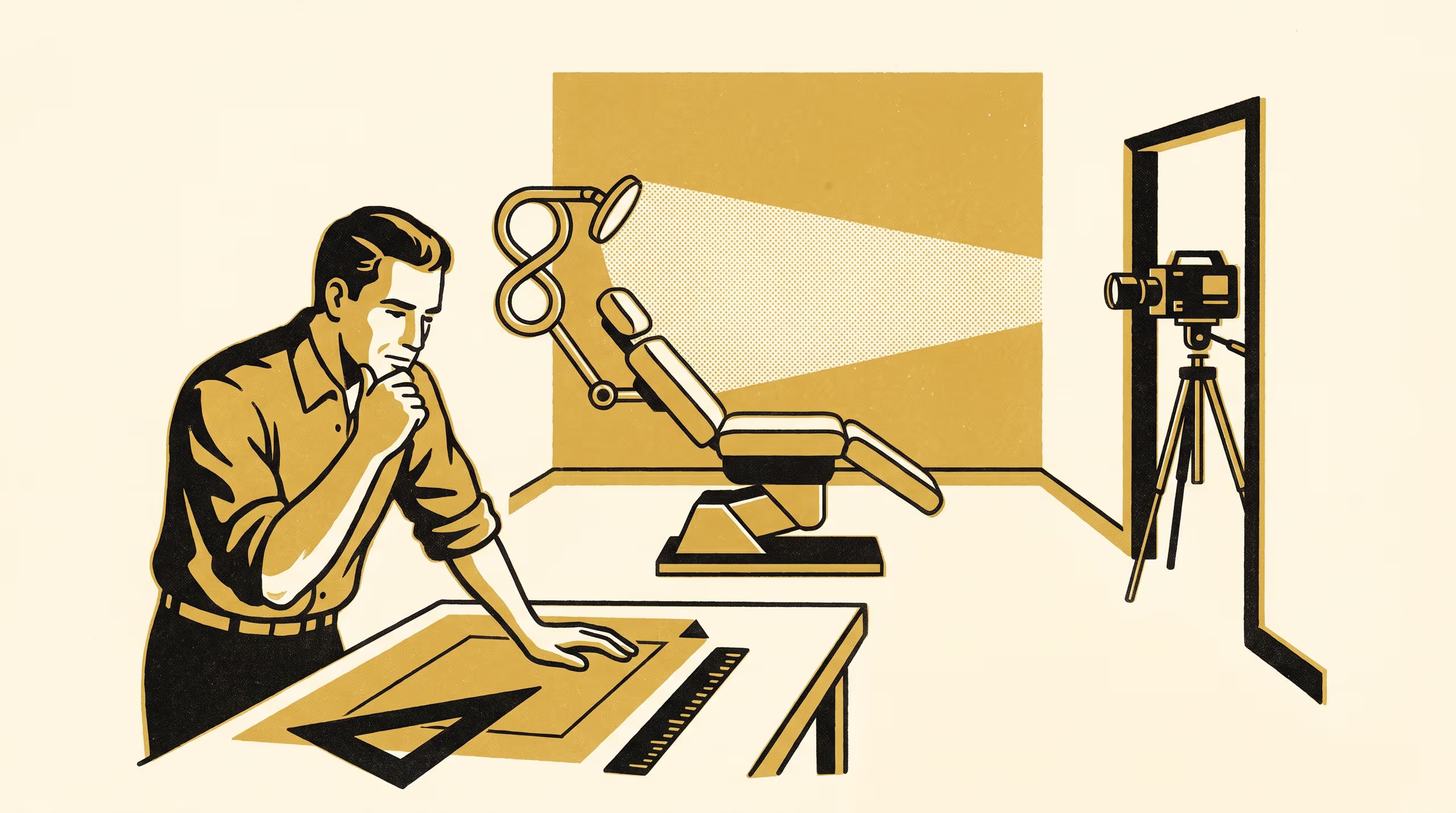
A new research poster from the School of Continuous Improvement compares how fourteen transcranial magnetic stimulation suites appear in their clinics' photographs with how they appear to the patient in the chair.
Fourteen rTMS suites, each clinic's own interior photograph, and the view from the reclined treatment chair
Every room in which repetitive transcranial magnetic stimulation is given can be seen from two places: the doorway, where the clinic’s photographer stands, and the treatment chair, where a patient returns day after day. Behind the Headrest, a new research poster from the School of Continuous Improvement, sets those two views beside each other across fourteen suites.
The poster is by Dr Ingeborg Nwachukwu, Lecturer and Convenor, Capability Sprints, with Eivind Onwuka, Doctoral Candidate in the School, and Hedvig Anyanwu, Doctoral Candidate in the School of Emergent Priorities.
We are grateful to the clinic teams who let us in after the last appointment of the day and sat in their own chairs, some of them for the first time. The rooms looked different to everyone from there.
— Dr Ingeborg Nwachukwu, Lecturer and Convenor, Capability Sprints
Bringing measured drawing, photographic re-staging and the close reading of architectural criticism into a single frame of reference, the team located where each clinic’s published image was taken and rebuilt the outlook of a patient held still at recline. The two pictures proved close to opposites: the chair, the artwork and the window anchor the photograph, while the view from the chair is given largely to a plain wall and the console beside it.
The University is pleased to see the School’s long interest in what happens after the first visit carried into the built environment. Mr Onwuka said the study had left the team “with more questions about doorways than we expected, which feels like the right way round.”
The full poster is available from the University’s research repository under an open licence, doi:10.5555/slop.r8vd4m.