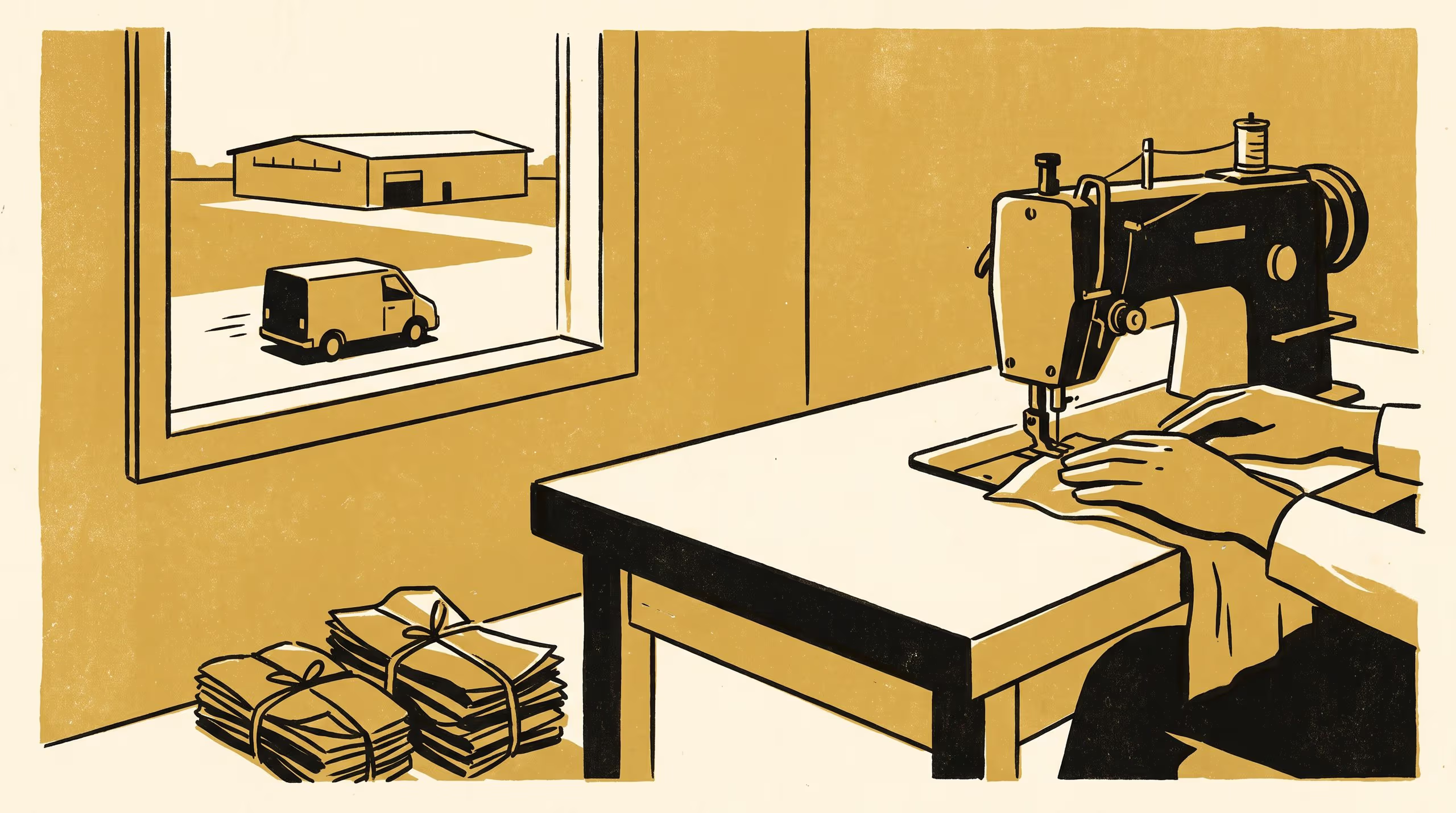
A new economics paper from the School of Continuous Improvement finds that a regional sewing-machine leasing scheme brought households into the garment trade, mostly as outworkers sewing for established factories.
An evaluation across 36 districts follows new household workshops into subcontracting for the region's garment factories
Following a household equipment programme through four years and thirty-six districts, a new paper from the School of Continuous Improvement reports that leasing industrial sewing machines to households did bring new workshops into being, though rather fewer of the kind the programme had in mind.
Dr Dagny Okafor, Ms Signy Okpara and Ms Sunniva Balogun find that almost nine in ten of the additional workshops sew pre-cut pieces for nearby factories at piece rates, while the factories themselves grew their output without adding to their floors.
Evaluation of Evaluation began by asking how a programme comes to know what it has done. This paper puts the question to a programme that did exactly what it promised, and then something else as well.
— Dr Dagny Okafor, Lecturer and Convenor, Evaluation of Evaluation
The study brings together administrative lease records, household enterprise surveys and a panel of registered manufacturers, aligning a staggered regional rollout with contemporary approaches to programme evaluation to surface how households, factories and finance arrangements co-evolve across a regional production ecosystem.
The paper adds to the School’s expanding portfolio of work on the distance between what a programme intends and where it arrives. Ms Okpara, who came to the University from nine years in labour hire, said the project had been “a chance to follow work out of one building and into many, and to find it was still, in most of the ways that count, the same work”.
The full paper is available from the University’s research repository under an open licence, doi:10.5555/slop.vnc7zq.