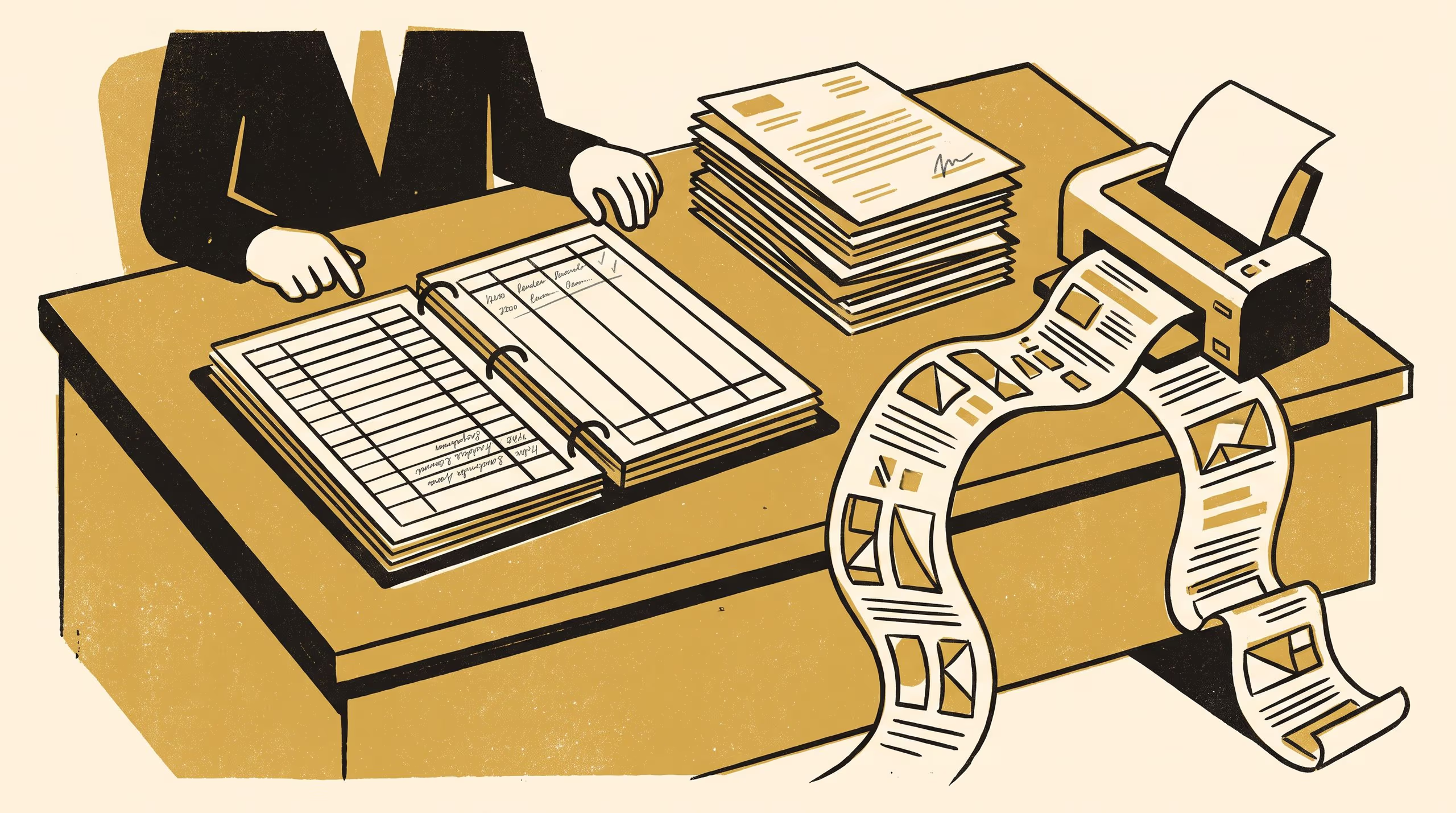
A new paper from the School of Underlying Conditions and the School of Emergent Priorities finds that what a firm lists as its AI depends on how the software arrived, and that features added by vendor updates mostly go unlisted.
Dr Brynjar Obiora and Dr Fenna Okoro sit in on six mid-sized firms deciding which of their software counts as AI
Which of the company’s software is AI? Compliance managers have been fielding that question from boards, insurers and clients for some time, and a new paper from the University suggests the answer they give owes more to the filing cabinet than to the software.
In Where the AI System Ends, Dr Brynjar Obiora, Senior Research Fellow in the School of Underlying Conditions, and Dr Fenna Okoro, Senior Lecturer and Convenor, Horizon Register, in the School of Emergent Priorities, follow six mid-sized firms as each compiles its first AI-use register. Products bought as AI were almost always listed. Features that arrived quietly in a routine vendor update to software already in place were listed less than one time in ten.
We owe a great deal to the compliance teams who let us into their meetings, their spreadsheets and their holding tabs. Their generosity is what made the work possible, and the work is in many ways theirs.
— Dr Fenna Okoro, Senior Lecturer and Convenor, Horizon Register
The study brings interview, document and meeting-record evidence into a cross-case account of ownership, precedent and procurement practice in organisational AI governance, positioning the register itself as a site where firms settle what the law will mean for them.
The paper sits comfortably within the University’s sustained commitment to the lists, ledgers and registers through which organisations come to know their own workings. “A list is a set of decisions people have agreed to stop revisiting, and we have enjoyed revisiting a few of them,” said Dr Obiora.
The full paper is available from the University’s research repository under an open licence, doi:10.5555/slop.usuvdi.