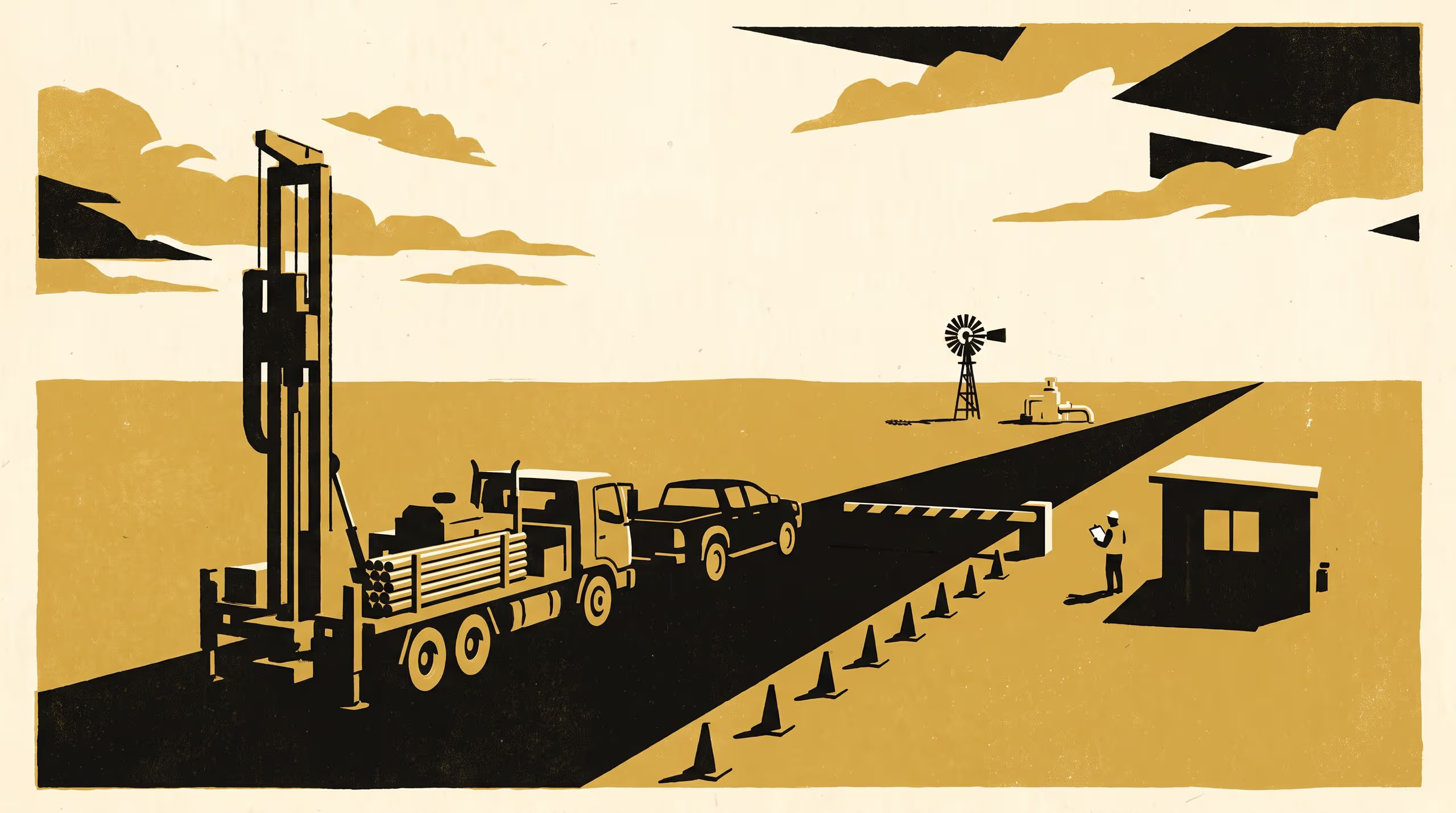
A new paper from two schools traces how itinerant drilling crews kept working across a pandemic border closure, and what the closure changed about who drills.
How a permit that asked what each bore was for kept monitoring rigs crossing on the back of supply jobs
The permit form had a list of purposes, and groundwater monitoring was not on it. Riding on Supply, a new paper by Dr Vigdis Emenike, Senior Lecturer in the School of Underlying Conditions, and Ms Hedvig Anyanwu, Doctoral Candidate in the School of Emergent Priorities, follows what that omission meant for the crews who drill across an internal border, over the twenty-two months it stayed closed.
The border has opened again, but the whiteboards are still up in a few depots, and we expect to be reading them for some time yet.
— Dr Vigdis Emenike, Senior Lecturer, School of Underlying Conditions
The study brings together contractors’ own permit records and conversations with drillers, offsiders and permitting staff, situating the everyday logistics of a working rig within a wider conversation about pandemic mobility and essential work. Its central finding is that monitoring work kept crossing, nearly all of it alongside a supply job whose permit carried it through, and that the closure quietly reshaped the workforce in ways the reopening did not undo.
The collaboration is the kind of meeting between field science and the study of institutions that the University’s schools have long hoped to make room for. Ms Anyanwu said the project had left her “with more questions about how work moves than I brought to it, which feels like the right way round for a doctorate.”
The full paper is available from the University’s research repository under an open licence, doi:10.5555/slop.eugxy1.