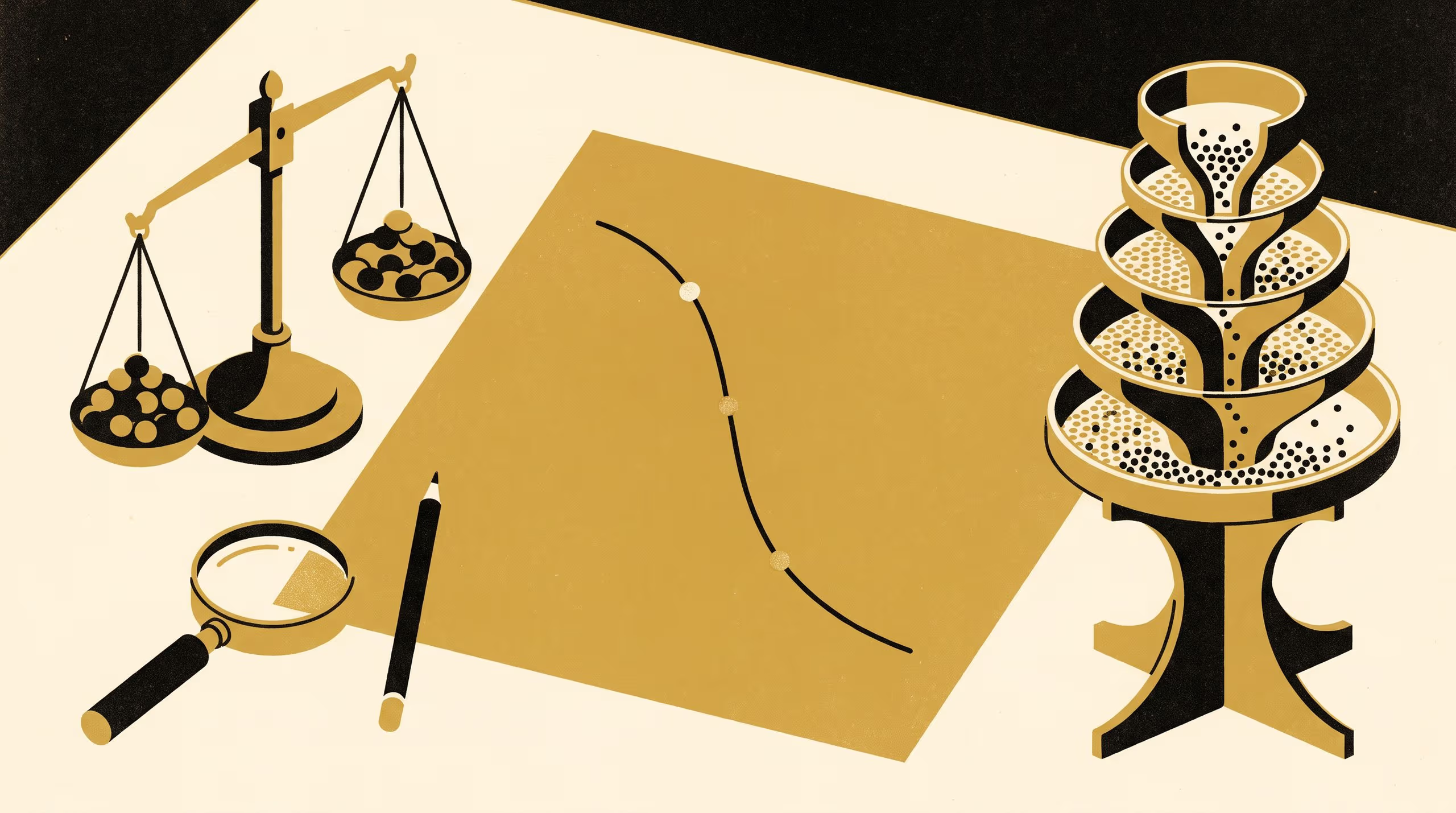
Three School of Emergent Priorities researchers model the thymus as a gatekeeper with a costly check behind it, and find that when the check weakens the gate does worse on both counts.
A theory poster treats central tolerance as a screen with an audit standing behind it, and finds that a weaker audit makes both errors worse
How strict should a gatekeeper be when someone stands behind it to check its work? A new research poster from the School of Emergent Priorities puts that question to the thymus, the organ that decides which immune cells are released into the body, and answers it with the tools of economic theory.
Doctoral candidates Halvard Nnamani and Ylva Ogunbanjo, with Associate Professor Kwame Lindqvist, Director of the Master of Priority Studies, frame the organ’s choice as a screening problem. A clone deleted in error leaves a gap in the body’s defences; a clone released in error can turn on the body itself; and a second, more expensive layer of regulation catches some of what gets through. The poster aligns these considerations within a single, tractable threshold, and sets out how that threshold should move as the second layer gains or loses capacity.
Every institution has a threshold somewhere that was set before anyone now present arrived. It is reassuring to have a way of asking, kindly, whether it is still in the right place.
— Associate Professor Kwame Lindqvist, Director, Master of Priority Studies
Mr Nnamani, whose doctoral research concerns what online forms allow through, described the thymus as “a very old form with a very short list of options”.
The work carries the School’s long attention to how decisions about admission are made into a field it has not previously visited, and the School regards the result as a natural extension of its interest in the gate.
The full poster is available from the University’s research repository under an open licence, doi:10.5555/slop.r1jhr3.