A new paper from the School of Emergent Priorities studies how plant breeders inherit, keep faith with and hand on work that outlasts their time in post.
A breeding station's varieties are mostly released by someone other than the breeder who crossed them
The School of Emergent Priorities has long been interested in what an organisation owes to the people who will run it next. A new paper, Crosses Made by Someone Else, by Ylva Ogunbanjo, Doctoral Candidate, and Dr Anneke Tolan, Senior Research Fellow and Deputy Convenor, Futures in Committee, carries that interest into the glasshouse and the trial plot.
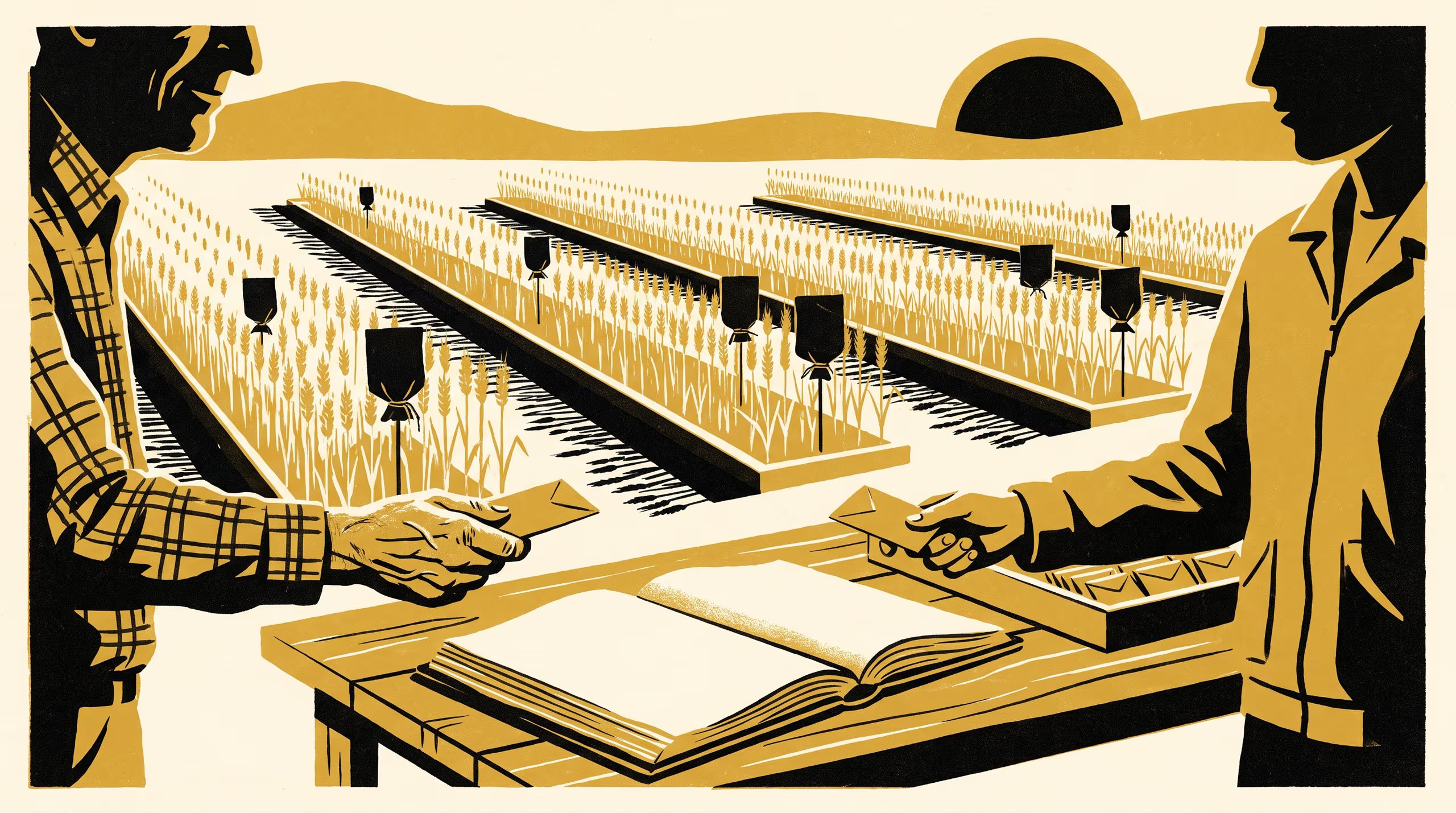
The authors spent fourteen months at a regional wheat breeding station as one lead breeder handed the programme to the next. Because a variety can take a decade to travel from first cross to release, eleven of the seventeen the programme released were signed off by someone who had not made the cross. The paper describes how breeders read a predecessor’s intentions out of the crossing book, keep faith with lines they would not have chosen, and make crosses expressly for whoever comes after them.
Every plan this University writes will be finished by somebody else. It is a comfort to find a field that has been doing that gracefully for a long time, and I expect our committees will be borrowing from it.
— Dr Anneke Tolan, Senior Research Fellow and Deputy Convenor, Futures in Committee
Bringing organisational theory, archival reading and close attention to agricultural practice into a single frame, the work positions succession as a shared temporal capability rather than a moment of transition. Ms Ogunbanjo said the fieldwork had reminded her of handing back the keys to a rented house, “when you leave a list on the bench and hope the next person reads it”.
It is a contribution the University is glad to carry forward.
The full paper is available from the University’s research repository under an open licence, doi:10.5555/slop.btfihu.