A new civic brochure from the School of Continuous Improvement introduces the University's work alongside residents, maintenance crews and community gardeners who live and work on shrink-swell clay.
A civic brochure from the School of Continuous Improvement on the households, footpaths, ovals and gardens that rise and settle with the ground
If the gate at your front fence sticks every February and swings freely again by July, the University would like to hear about it.
Built on Clay, a new civic brochure by Dr Sten Okwuosa, Senior Research Fellow and Convenor of the Impact Pathway Atlas, with Dr Vigdis Emenike, Senior Lecturer in the School of Underlying Conditions, and Dr Solveig Adeyemi, Lecturer and Deputy Convenor of the Review Cadence Observatory, sets out how the School of Continuous Improvement and its neighbours are coming to know the ground they share.
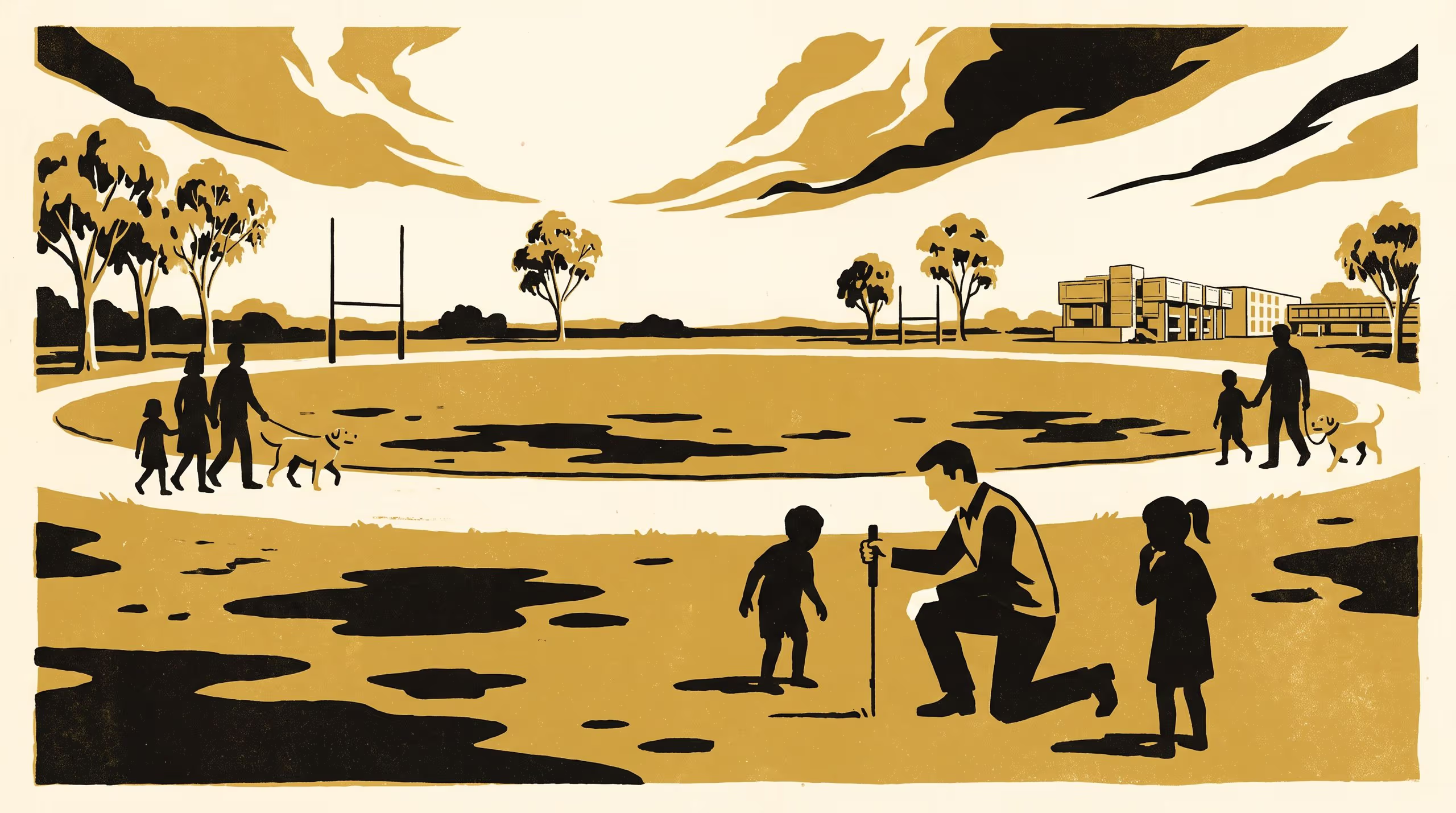
The brochure moves outward from the kitchen table. It begins with the cracks residents already watch above their doorways, follows the clay onto the footpaths and school ovals that council crews maintain, and ends in the community gardens where heavy ground rewards patience. Throughout, it positions the University less as an authority on the town’s soil than as a partner in keeping its many small observations together, alongside six published studies that ground the conversation in the University’s research record.
The Atlas spends most of its days following findings after they have left us. It has been a quiet pleasure to start, for once, at the front door where a finding first gets noticed.
— Dr Sten Okwuosa, Senior Research Fellow and Convenor, Impact Pathway Atlas, School of Continuous Improvement
The publication extends the School’s place-based agenda into one of the most ordinary materials a town possesses, and invites residents, crews and gardeners to help shape what comes next. Dr Emenike described the gardeners as “colleagues who have been running the longest field trial in the district without ever calling it one.”
The full brochure is available from the University’s research repository under an open licence, doi:10.5555/slop.sn3q3z.