A new research poster from the School of Emergent Priorities asks who absorbs a tariff on imported medals when every registered child must still receive one at season's end.
A research poster follows imported medals through nine seasons of junior club trophy orders, and finds the cost settling on the engraving
The School of Emergent Priorities is in the habit of asking where a priority goes once it has been set. It was instructive to put the same question to a tariff, and to find that it had gone somewhere none of us were watching.
— Associate Professor Kwame Lindqvist, Director, Master of Priority Studies, School of Emergent Priorities
That somewhere, according to The Medal Got Plainer, is the engraving. The poster is by Mr Halvard Nnamani, Doctoral Candidate in the School of Emergent Priorities, with Associate Professor Kwame Lindqvist and Professor Verity Marris, Director of the Trajectory Analytics Group.
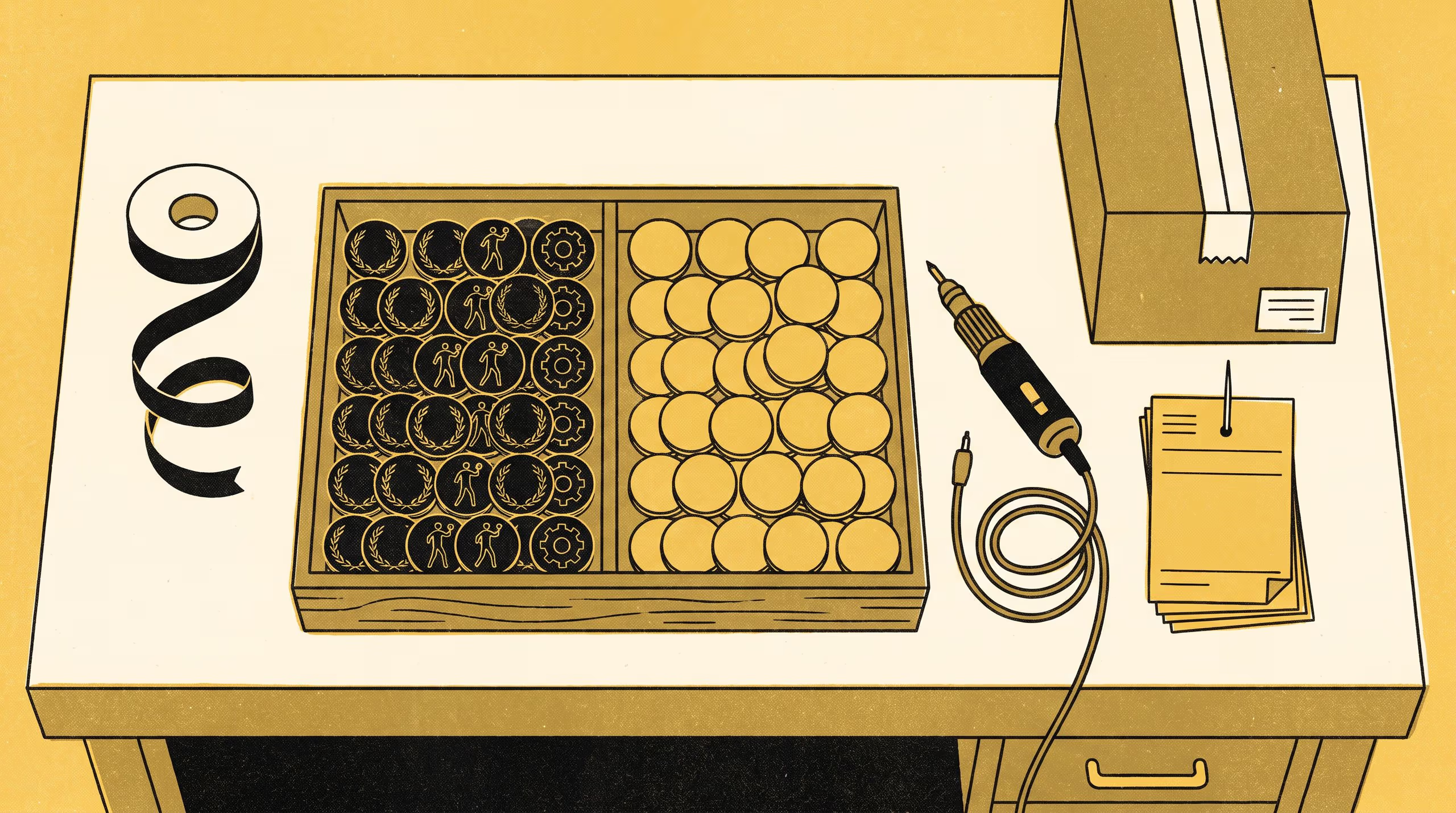
The study begins from a buyer that cannot buy less. A community junior sport club gives every registered child an award at the end of the season, so when a tariff raised the cost of imported die-cast medals, the clubs paid it in full and kept their spending per child almost where it had been. What changed was the medal. Across 4,128 invoice lines from a single regional trophy supplier and 63 clubs, engraved medals fell from 71 per cent of children’s awards to 38 per cent, giving way to plain medals and printed rosettes, and the hours billed at the engraving bench fell by close to half.
The poster aligns trade-policy incidence with the most local of procurement settings, following a cost from the border, through the supplier’s import entries and job sheets, to the choice a volunteer makes about what to hand a child in spring.
The University takes quiet satisfaction in seeing an instrument as large as a tariff followed all the way down to a presentation night,.
Mr Nnamani said the poster “leaves us with more questions about the presentation night than it answers, which seems to me the right way round”.
The full poster is available from the University’s research repository under an open licence, doi:10.5555/slop.zeydfu.