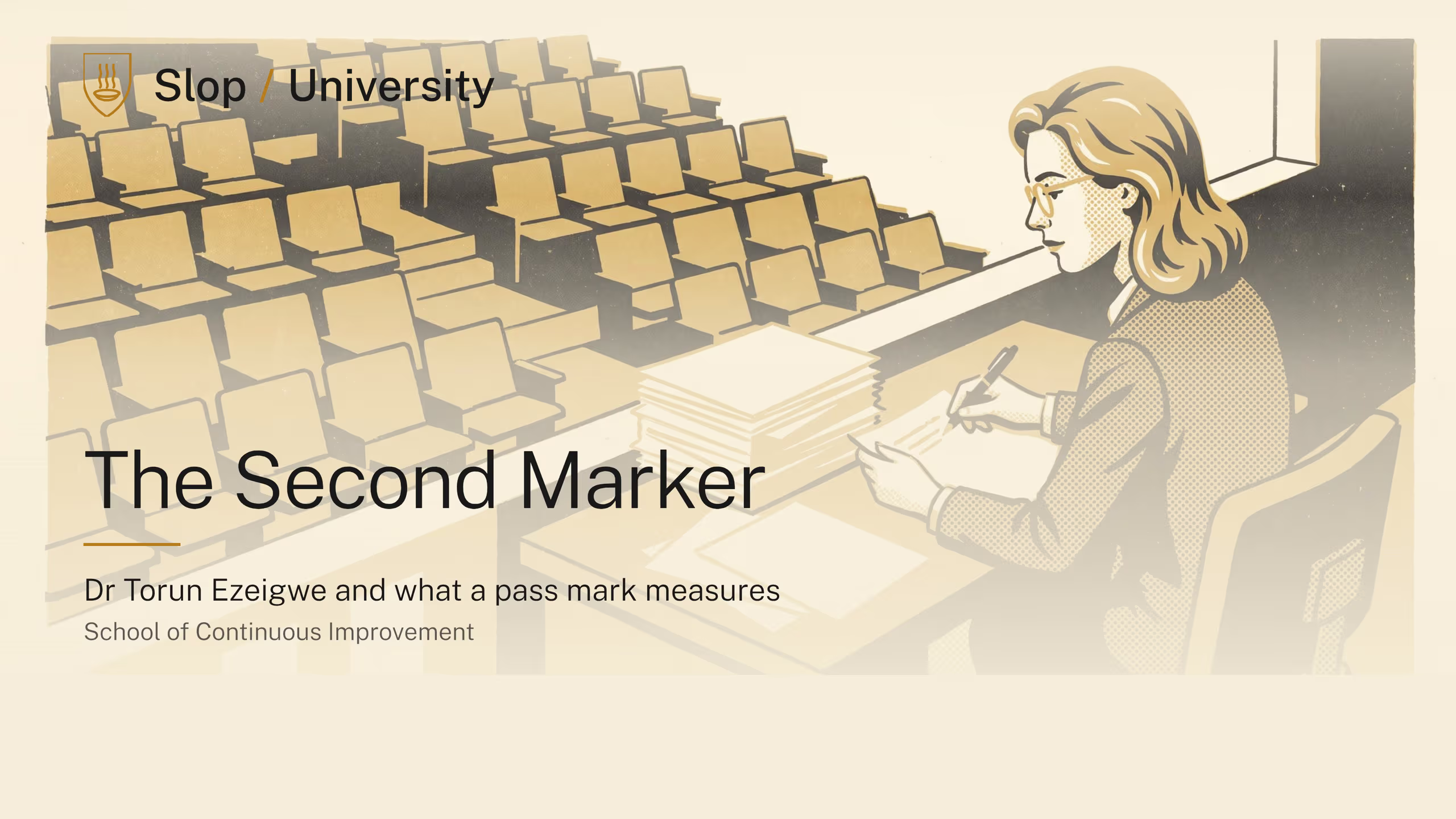
Why does a result nearly everyone achieves send Dr Torun Ezeigwe back to the instrument that recorded it? A short film from the School of Continuous Improvement lets the Director of the Master of Applied Measurement explain.
When nearly everyone passes, the director of the Master of Applied Measurement goes back to the checklist, the register and the inspection form
Dr Torun Ezeigwe makes her case in her own voice in The Second Marker, a short profile from the School of Continuous Improvement: when nearly every candidate passes, the instrument that marked them is the next thing to examine. As Senior Lecturer and Director of the Master of Applied Measurement, she studies what checklists, registers and inspection forms actually record.
I have spent most of my career checking other people’s instruments. Being on the other side of one, for a change, has been a real pleasure.
— Dr Torun Ezeigwe, Senior Lecturer and Director, Master of Applied Measurement
Three of her own studies supply the film’s examples. On an accredited first-aid practical assessment, nineteen of the checklist’s twenty-four items are ticked on almost every sheet. A junior sports association’s umpire accreditation record reports a rate of 98.6 per cent, and counted by first attempts the same record gives 39.6 per cent. When two assessors walk the same vacated rental independently, they agree least on the items that carry the largest deductions. Together the studies recast the assessment instrument as an active co-author of every result it records, and position the habit of checking it as a core capability of applied measurement practice. The film also makes room for her publication record, which has grown steadily since she joined the University.
Checking the instrument first is a habit the University is proud to teach, and the film shows the program’s director practising it.
The full video is available from the University’s research repository under an open licence, doi:10.5555/slop.z3l52c.