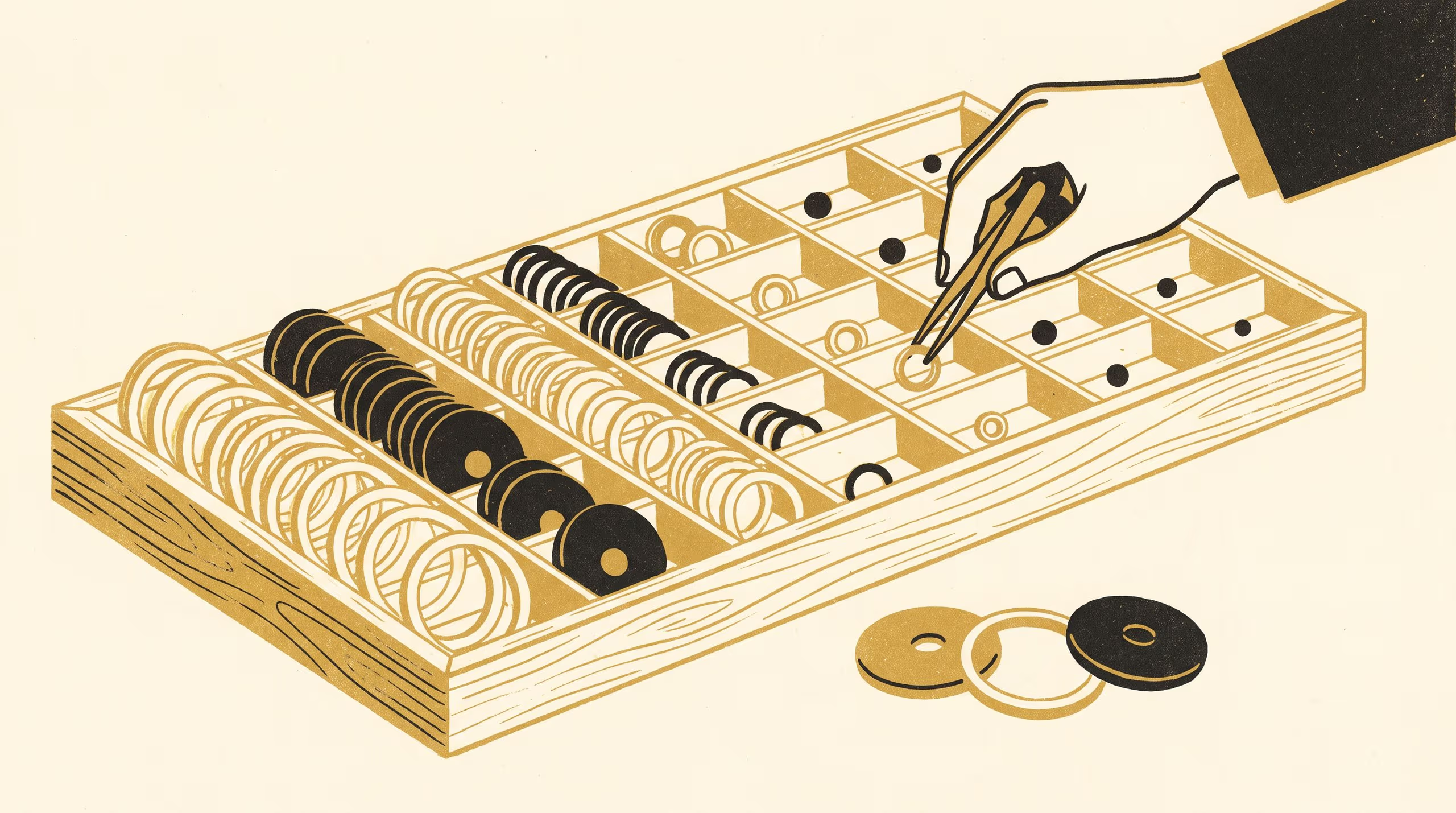
A research poster from the School of Underlying Conditions recovers spent matrix tablets from a dissolution bath and assays them ring by ring to close the account of a release run.
Ninety-six tablets, lifted from the bath and cut into rings, show where the unreleased remainder was sitting
There will be other things, in time, that the School cuts into rings. I would not want anyone to feel we had started with the most important one.
— Associate Professor Ragnhild Uzoma, Associate Professor and Lead, Basement Relations Group
So begins the University’s account of What Stays in the Ghost: Radial sectioning of spent matrix tablets to close the mass balance of a release run, a research poster from the School of Underlying Conditions by Associate Professor Uzoma and Dr Brynjar Obiora, Senior Research Fellow.
The work mobilises a retrieve, section and account sequence across 96 slow-release tablets made for the purpose and carrying a harmless tracer in place of any active ingredient. Tablets were lifted from a stirred bath at six points across a day, cut into five concentric rings, and each ring was assayed in turn. At the final lift the bath, the tablet and the glassware together returned 99.5 per cent of what had gone in, with most of the remainder located in the innermost rings. Nine rings that crumbled in the cutting are entered on the poster as lost.
The University counts the poster among the occasions on which a school has been lent another discipline’s glassware and has handed it back rinsed. Dr Obiora said the study “arrived at the bench already knowing how it wished to be written down, which spared everyone a meeting”.
The full poster is available from the University’s research repository under an open licence, doi:10.5555/slop.4x2rt9.