A paper from the School of Underlying Conditions designs a low-power processor for a borehole logging tool and reports where in the hole it should power down between samples.
A simulated 1,240 m descent shows the depth below which switching an idle circuit off between samples saves energy, and above which it costs it
A circuit that does nothing for ninety-eight per cent of its working life should not, it turns out, always be switched off. That is the finding of Asleep Between Samples: A Depth-Gated Near-Threshold Acquisition Processor for Battery-Run Borehole Logging, a paper by Associate Professor Ragnhild Uzoma, Lead of the Basement Relations Group, and Dr Vigdis Emenike, Senior Lecturer, in the School of Underlying Conditions.
We are geologists, and we went looking in the catalogue for an instrument that was not in it. I cannot say that it exists now. It is, however, a good deal better described than it was.
— Associate Professor Ragnhild Uzoma, Lead, Basement Relations Group
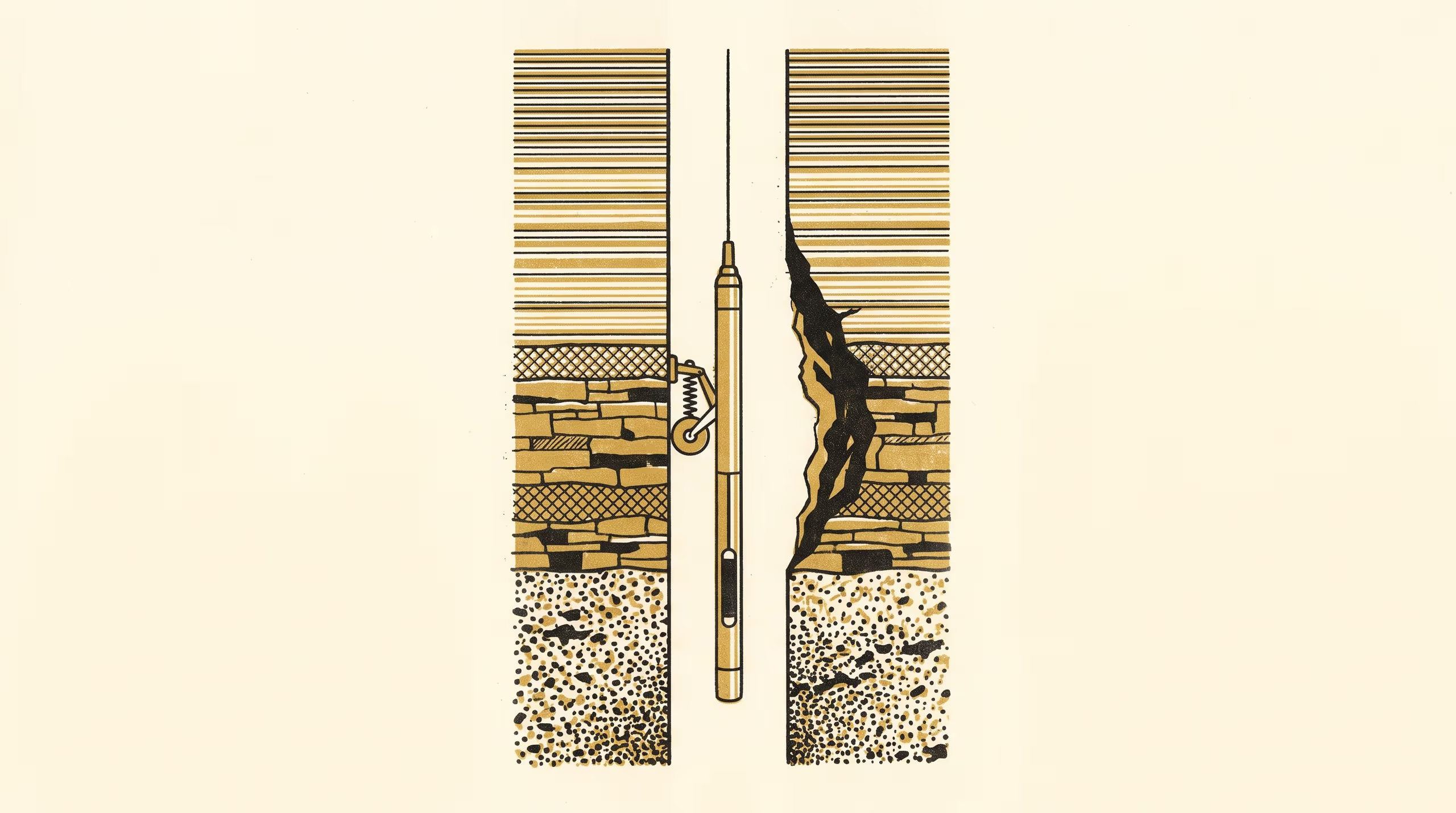
The paper aligns circuit design, thermal context and field practice around a single decision, taken 124,000 times on the way down one hole. Near the surface, where the rock is cool, the processor is left on between samples; below 629 metres at the speed studied, it is put to sleep. Across a replayed descent the approach uses about a third less energy in the part of the chip concerned than leaving it on, and about a sixth less than always switching it off. Where the tool loses contact with the wall of the hole, it records that it saw nothing, and for how long.
The University considers a school’s readiness to specify what it cannot yet purchase to be a mark of a settled research posture, and is pleased to see it exercised at the scale of a few square millimetres. Dr Emenike said the work “borrowed a vocabulary from colleagues in another discipline, and we intend to return it in good condition”.
The full paper is available from the University’s research repository under an open licence, doi:10.5555/slop.qzodae.