A School of Continuous Improvement paper scores 33 councils' dog-registration renewal desks against a five-level model, and the University now takes a renewal letter as proof of address on first presentation only from a council at Level 4 or 5.
A School of Continuous Improvement paper scores 33 councils' renewal desks on five named levels, and the University decides which letters it will take at the counter
Between five and fourteen days, on the median, is how long a council’s dog-registration desk takes to turn a renewal around, and the University has chosen to read that interval as a sign of care. From the next registration year a renewal letter from a council scored at Level 4 or 5 will be accepted as proof of address on first presentation; a letter from a council at Levels 1 to 3 will be accepted alongside a second document.
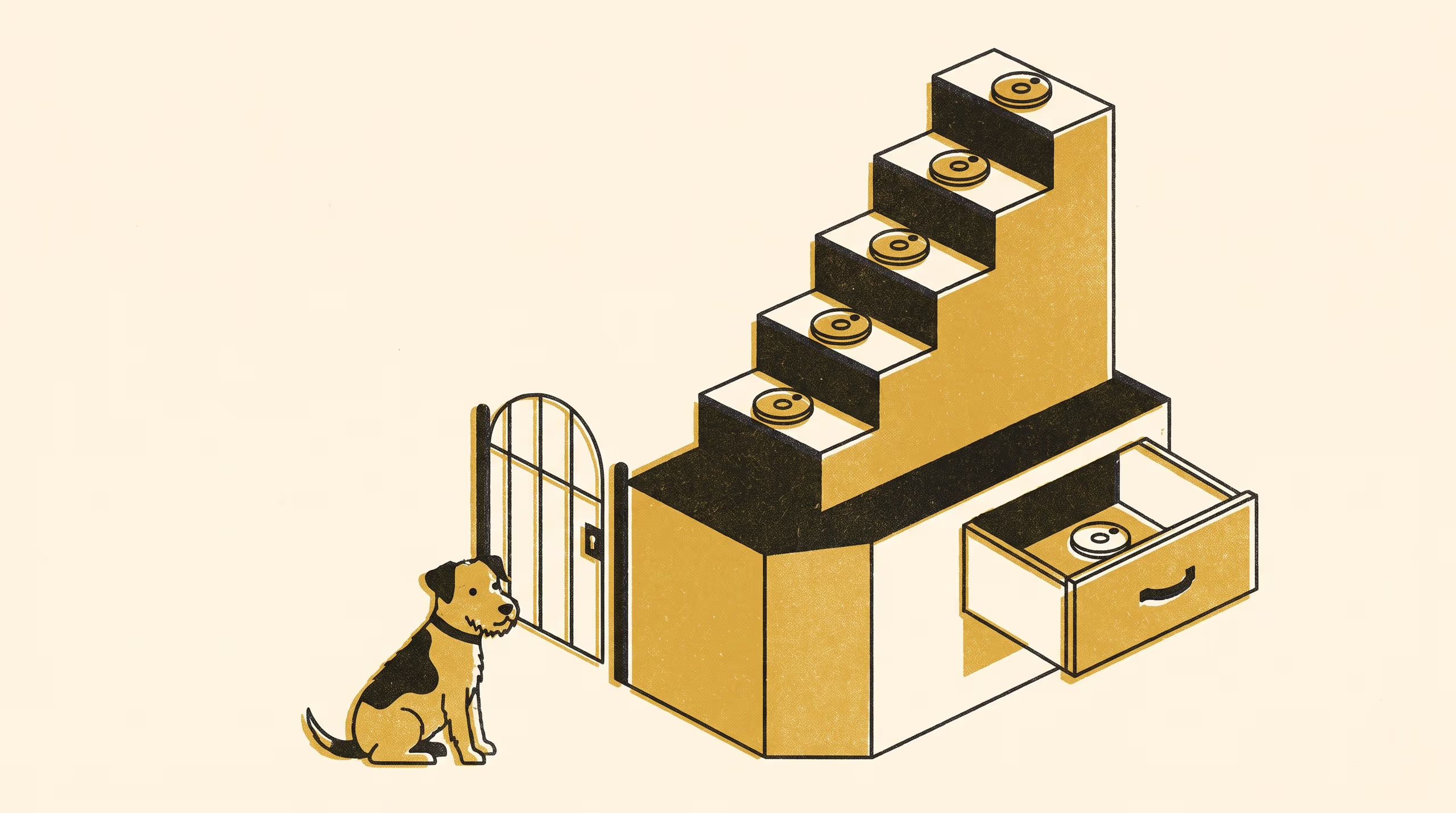
The paper, by Dr Marit Osayande, Dr Solveig Adeyemi and Dr Renke Sabel of the School of Continuous Improvement, sets out five named levels, from Tag in the Drawer to Tag at the Gate, and scores 33 councils against them using 6,237 renewal files, each rated twice. The levels turned out to be less of a ladder than their names suggest, and the authors report that a council’s level is better described by the steps a renewal passes through than by the rung beneath it.
The notice on the fridge does a great deal of quiet work, and it was a pleasure to keep it company for a registration year.
— Dr Marit Osayande, Lecturer and Convenor, Living Dashboard
The work translates a desk’s habits into a vocabulary of named levels, and the University will now re-read each council’s level from a fresh sample every registration year, applying it on the day it is published. Dr Sabel, Senior Lecturer and Convenor of the Indicator Commons, said that “a ladder is a generous word, and we have enjoyed learning how many ways there are onto it.”
The release reflects the School’s long-standing interest in how an administrative letter comes to carry more than its author intended. The School will continue to follow the scoring as councils return to it.
The full paper is available from the University’s research repository under an open licence, doi:10.5555/slop.48foyk.