A Slop University paper reports a footfall-sensing bus-shelter ad panel that prices each face by estimated audience and reallocates the shelter's single bench to the higher-earning side each night, and the transit operator's decision to bind bench placement to that price network-wide.
A twelve-week trial across fourteen bus shelters ties bench placement to nightly advertising settlement prices, and the roadway-facing side is losing
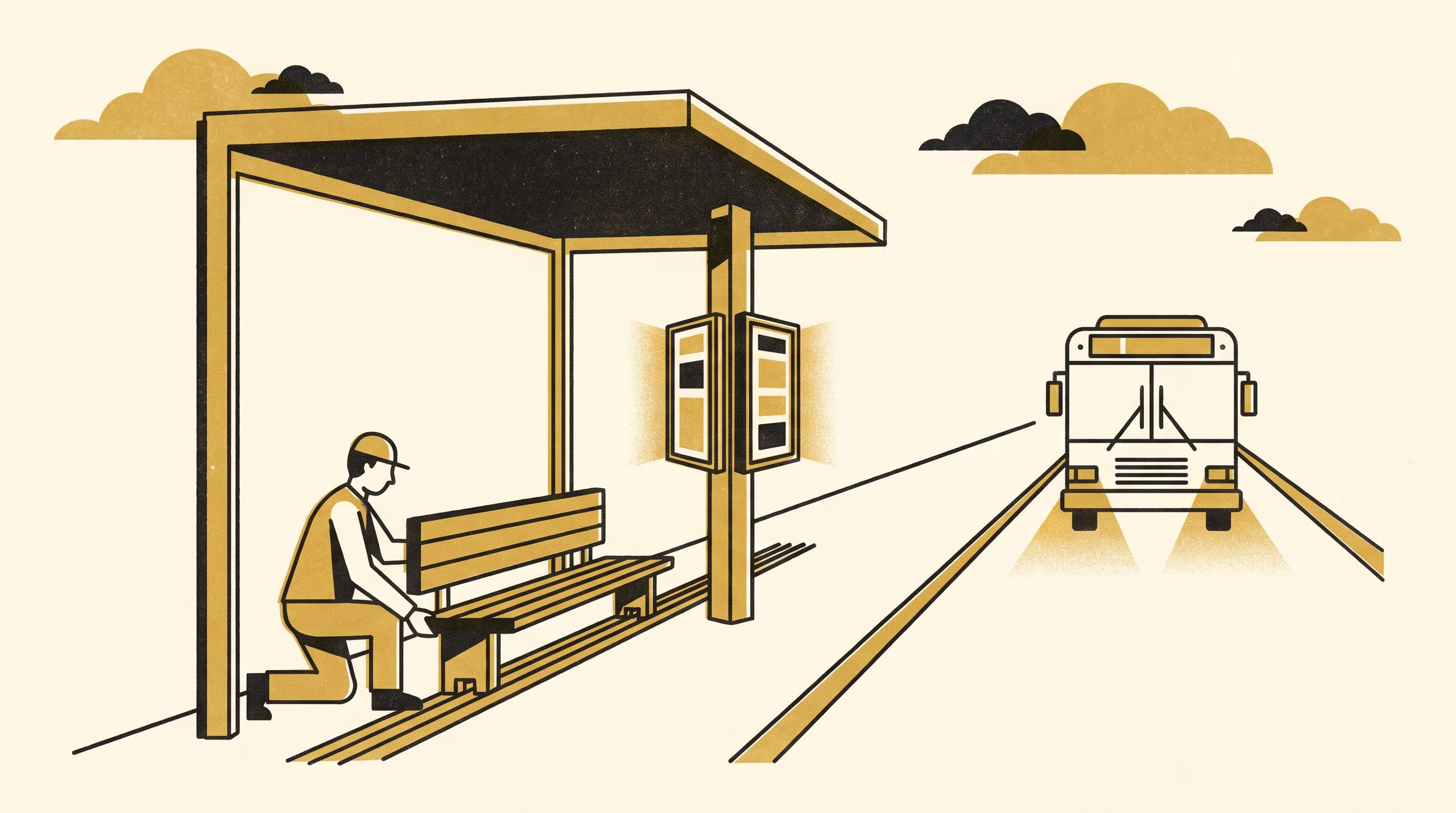
A shelter’s one shaded bench used to sit wherever it was bolted down. On one bus corridor it now moves overnight, to whichever side of the shelter’s advertising panel earned more the evening before.
The system, called BEAM, comes from Dr Anneke Tolan of the School of Emergent Priorities with Associate Professor Casimir Beng and Dr Mirela Hanke of the School of Continuous Improvement. Across fourteen shelters and twelve weeks, a footfall sensor on each face of a shelter’s dual-sided panel feeds a nightly settlement price, and a maintenance crew moves the bench to whichever face cleared higher before the morning peak.
A bench can only face one way at a time. We built BEAM to settle that question every night rather than once, at installation, and never again.
— Dr Anneke Tolan, Senior Research Fellow and Deputy Convenor, Futures in Committee
The roadway-facing side — the one a boarding passenger actually stands at — held the bench on 55 per cent of nights in the trial’s first week and 21 per cent by its last. “The sensor sees dwell time,” said Dr Mirela Hanke, whose work traces how an indicator migrates from measurement to decision proxy. “It doesn’t see who the dwell time belongs to, and once the price only cares about the first thing, the second thing stops mattering to the bench.”
The corridor operator, watching the trial results come in, has since indexed bench placement across its whole network to BEAM’s nightly settlement price, with no separate allowance for the side where passengers actually wait — the closest thing to a compliment the Adaptive Metrics Lab expects to get.
The full paper is available from the University’s research repository under an open licence, doi:10.5555/slop.1zdcmw.