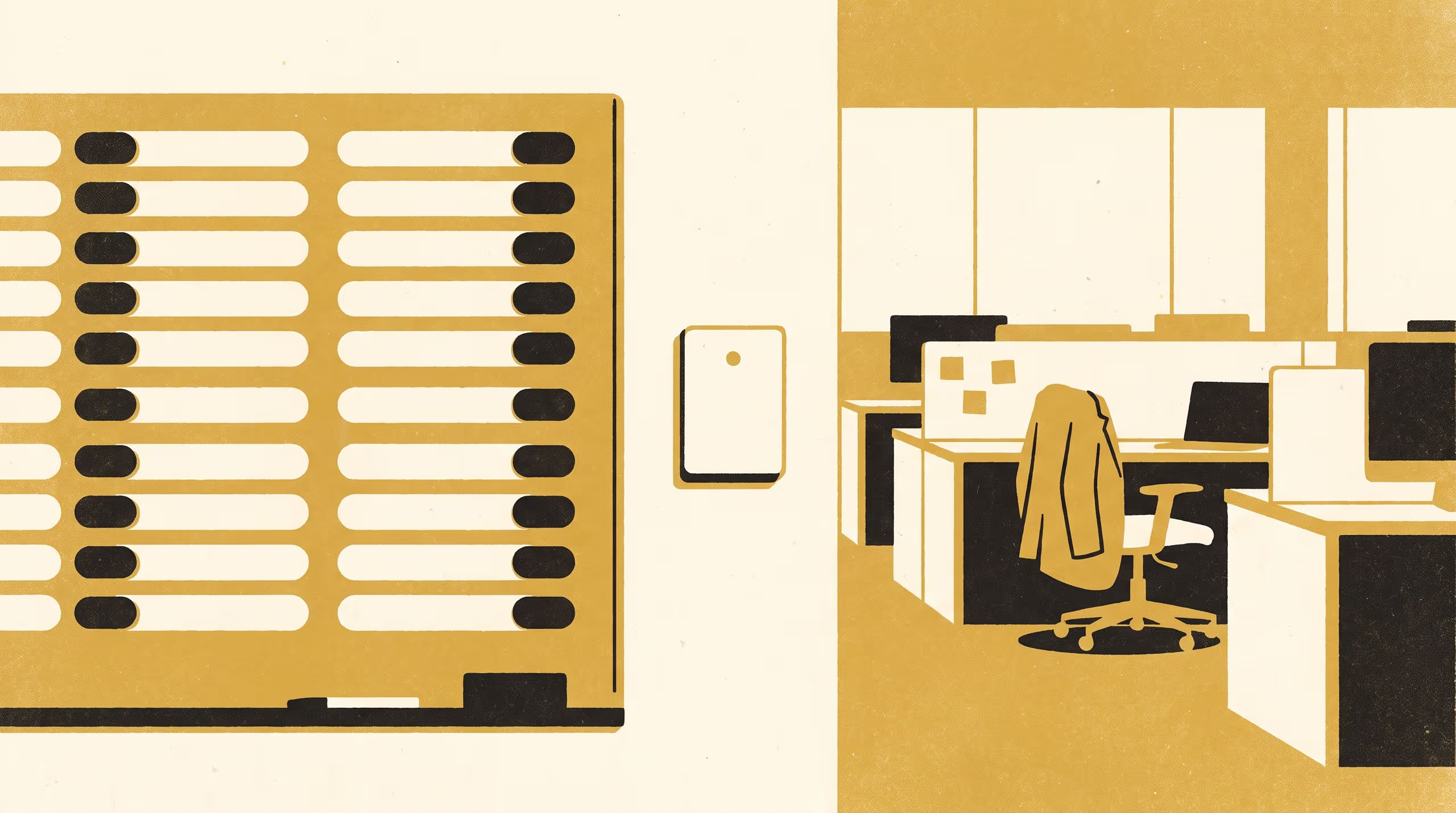
A Slop University paper cross-tabulates a hand-flipped in/out board against an independent badge-tap log across four back-office teams, and reports a Facilities rule, adopted mid-study, that ties fixed-desk eligibility to how often the two records agree.
A Reconciliation Score built from how often a desk's in/out marker matches its badge log has set fixed-desk eligibility on one shared-services floor since week six of an eleven-week study.
Everyone told us the board didn’t matter once the badge data existed. It turned out the board was the only record anyone’s desk actually depended on.
— Tove Ilesanmi, Doctoral Candidate, School of Emergent Priorities
A shared-services floor of four back-office teams has spent eleven weeks carrying two separate records of who was at their desk: a magnetic in/out board flipped by hand, and a badge-tap log nobody has to touch. The School of Emergent Priorities set the two against each other, cell by cell, and found Facilities already had an answer for what to do when they disagreed.
Reported as a four-cell reconciliation — Confirmed, Stale, Undeclared, and Cleared — the study finds a fixed-desk eligibility rule, introduced partway through data collection, moved the two records into closer agreement across every team on the floor. Independently logged time actually spent at the desk moved by only minutes over the same period.
“A record only tells you what someone remembered to leave behind,” said Professor Verity Marris, Director of the Trajectory Analytics Group. “The interesting part is watching an institution decide that’s enough to build a policy on.”
Facilities has not said whether it plans to extend the reconciliation approach to any other shared record on the floor. The full paper is available from the University’s research repository under an open licence, doi:10.5555/slop.gxevqa.