A Slop University paper interviews 34 adult children across 21 households about checking an ageing parent's weekly pill organiser from a distance, and reports that the Strategic Drift Survey has adopted the study's account of a checkable proxy as its own verification standard.
A ten-month interview study finds a printed reminder card changed nothing, and the Strategic Drift Survey has adopted its logic university-wide
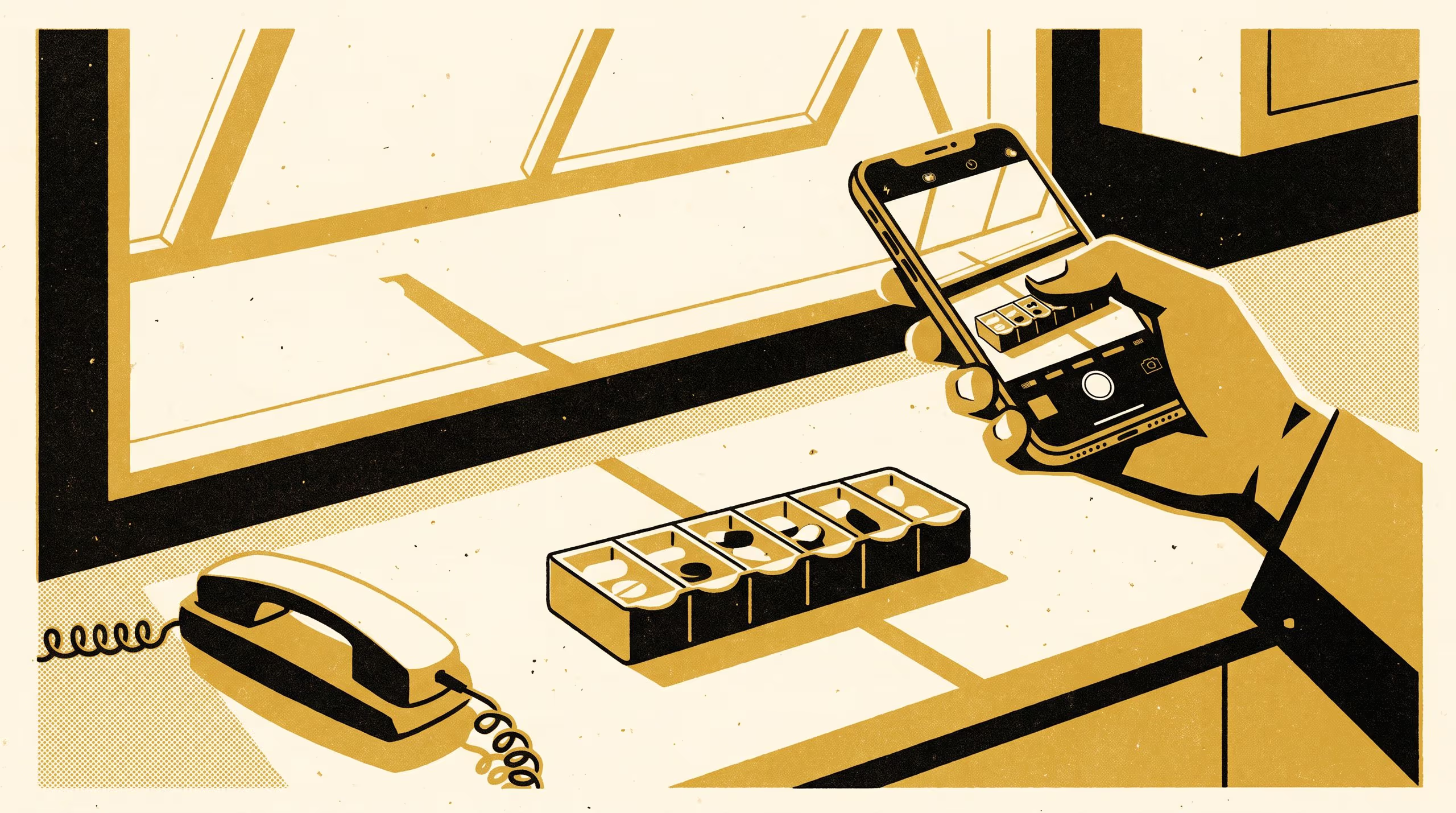
“If the Tuesday one’s still full by Thursday I ring straight away — but if it’s gone I don’t need to, do I, I can see she’s had it.” The sentiment repeated itself, in one form or another, across interviews with thirty-four adult children who check on a parent’s medication organiser from another suburb or another state. A paper from the School of Emergent Priorities follows twenty-one such households over ten months to trace how a photograph of a pill box’s compartments quietly became the thing a phone call used to be for.
Researchers tested whether the pattern could be reversed: eleven households were given a printed card for the organiser’s lid reading “still call — don’t just check,” while ten received nothing. Visit timing in the two groups was not distinguishable. Several households kept the card on the box without treating it as an instruction to do anything differently.
A measure that’s cheap to check has a way of becoming the only one anybody checks, in a family or in a university.
— Dr Runa Adegoke, Senior Lecturer and Convenor, Strategic Drift Survey
The School frames the finding as an unremarkable extension of its longstanding interest in what a stated commitment looks like once it meets a routine. Having heard the study’s account of “a checkable physical proxy standing in for the activity it once merely evidenced,” the Strategic Drift Survey has adopted that description as the basis for its own next assessment cycle: any University priority will now be scored as enacted only where it can point to an equivalent low-effort, checkable proxy, with no exception carried past a single review cycle.
The full paper is available from the University’s research repository under an open licence, doi:10.5555/slop.e9yuaw.