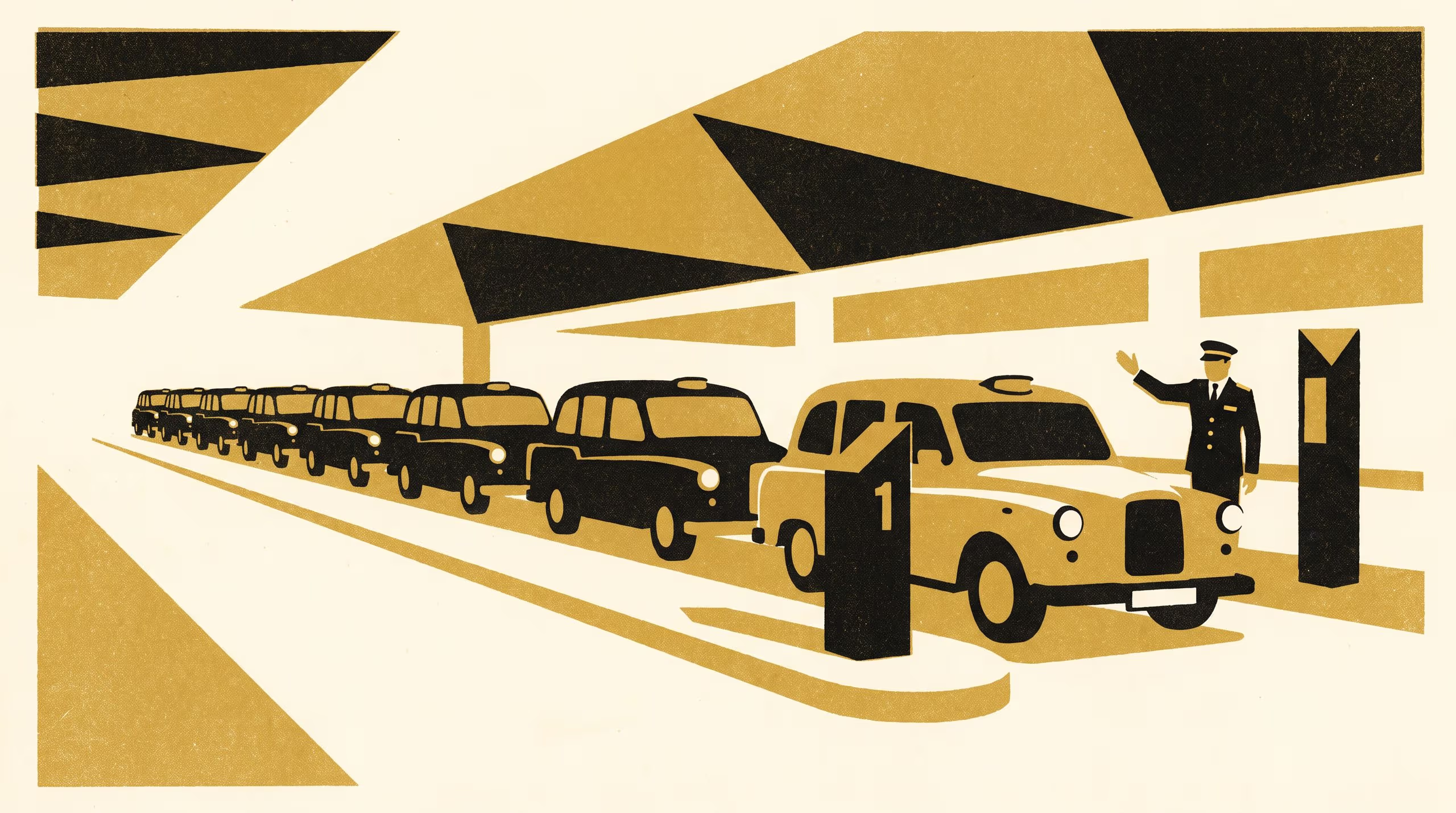
A Slop University research poster sorts taxi-rank drivers into a four-cell compliance quadrant by idle time and queue-jump attempts, and suspends repeat offenders from the rank's booking queue.
Idle time and queue-jump attempts sort drivers into four cells; landing in the worst twice costs a place in the booking queue
Station taxi ranks settle disputes about who’s next by consensus, memory, and the occasional raised voice. A research poster released today by the School of Emergent Priorities gives one station forecourt something more durable: a published record of who actually held their place.
Dr Anouk Mensah, Postdoctoral Fellow, led a 22-week deployment with Hedvig Anyanwu, Doctoral Candidate, pairing the rank starter’s paper log against dash-cam footage to score every driver’s idle time and queue-jump attempts each fortnight. The pair sort the results into a four-cell compliance quadrant — Cleared, Held, Flagged and Suspended — and the rank now holds a driver logged in Suspended twice running out of its app-integrated booking queue for a month, with no manual override once the cell is confirmed.
A rank that runs on memory is a rank that runs on whoever argues best. The quadrant just writes down what the drivers already know about each other.
— Dr Anouk Mensah, Postdoctoral Fellow, School of Emergent Priorities
“Idle time turned out to explain more of the worst cell than queue-jumping does,” said Hedvig Anyanwu, Doctoral Candidate. “Which the log alone can’t yet tell apart from a fare that simply ran long.”
The University reads the deployment as one more case for instrumenting the record a rank was already keeping, rather than adding a new one. A second forecourt begins parallel logging under the same thresholds in the new year. The full poster is available from the University’s research repository under an open licence, doi:10.5555/slop.6c9xtw.