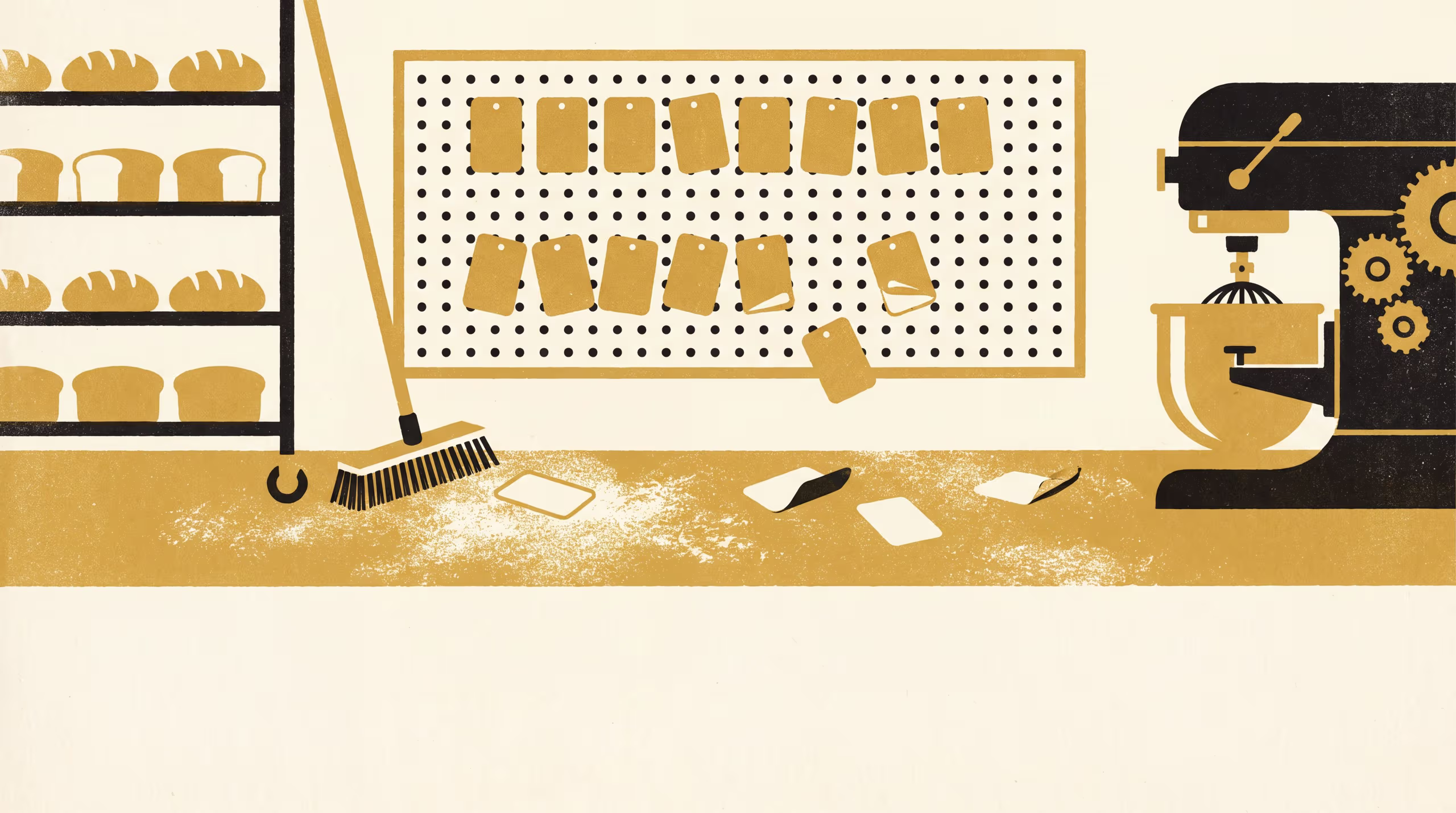
A new research poster from the School of Emergent Priorities leads the University to treat a roster tag found on the floor as binding on the person who finds it, with no swap, appeal or manager override.
The floor rule follows a single-site study of a bakery's hook-and-loop roster board and covers every casual roster board the University administers
Every roster has a moment at which it is finally decided, and a new research poster from the School of Emergent Priorities places that moment on the floor of a neighbourhood bakery. Whoever Picks Up the Fallen Name-Tag Works the Shift follows one back-of-house roster board through twenty-six weeks of Sunday drafting, and the University has moved quickly to act on what it found.
The study set each of 312 name-tags beside the shift it was drafted for and recorded what became of it. Where a tag stayed on its strip, the drafted worker almost always worked the shift. Where a tag came away, the shift was most often worked by whoever bent to pick it up, and the older the tag, the more often that was so.
We learned to look up at a board, and then rather sooner than we had planned to look down.
— Dr Lindiwe Achterberg, Lecturer, School of Emergent Priorities
From the coming teaching period, the floor rule will apply to the casual roster boards the University administers: a tag found on the floor binds its finder to that shift, and tags are retired on a fixed schedule. The University is glad to have a rule that is plain to everyone who walks past the board. Dr Dagny Okafor, Lecturer and Convenor, Evaluation of Evaluation, said the bakery had been generous in letting so small a strip of fastener carry so much of the process.
The poster is written for use in the case-method tradition and carries a teaching note for participants. A second site will follow the first into the series.
The full poster is available from the University’s research repository under an open licence, doi:10.5555/slop.y445k8.