A School of Emergent Priorities paper reports how nineteen allotment-society coordinators decide that a person came, and the University adopts their two-tool sighting for committee attendance.
An interview study of who came to the working bee sets a two-tool sighting for every committee, with a Sighting Column in the minutes
From the next committee cycle, a member of a University committee will be recorded as present only once a second member has been seen to sight them holding a working implement. The standard comes from allotment societies, where nineteen volunteer coordinators told researchers in the School of Emergent Priorities how they decide who came to the working bee.
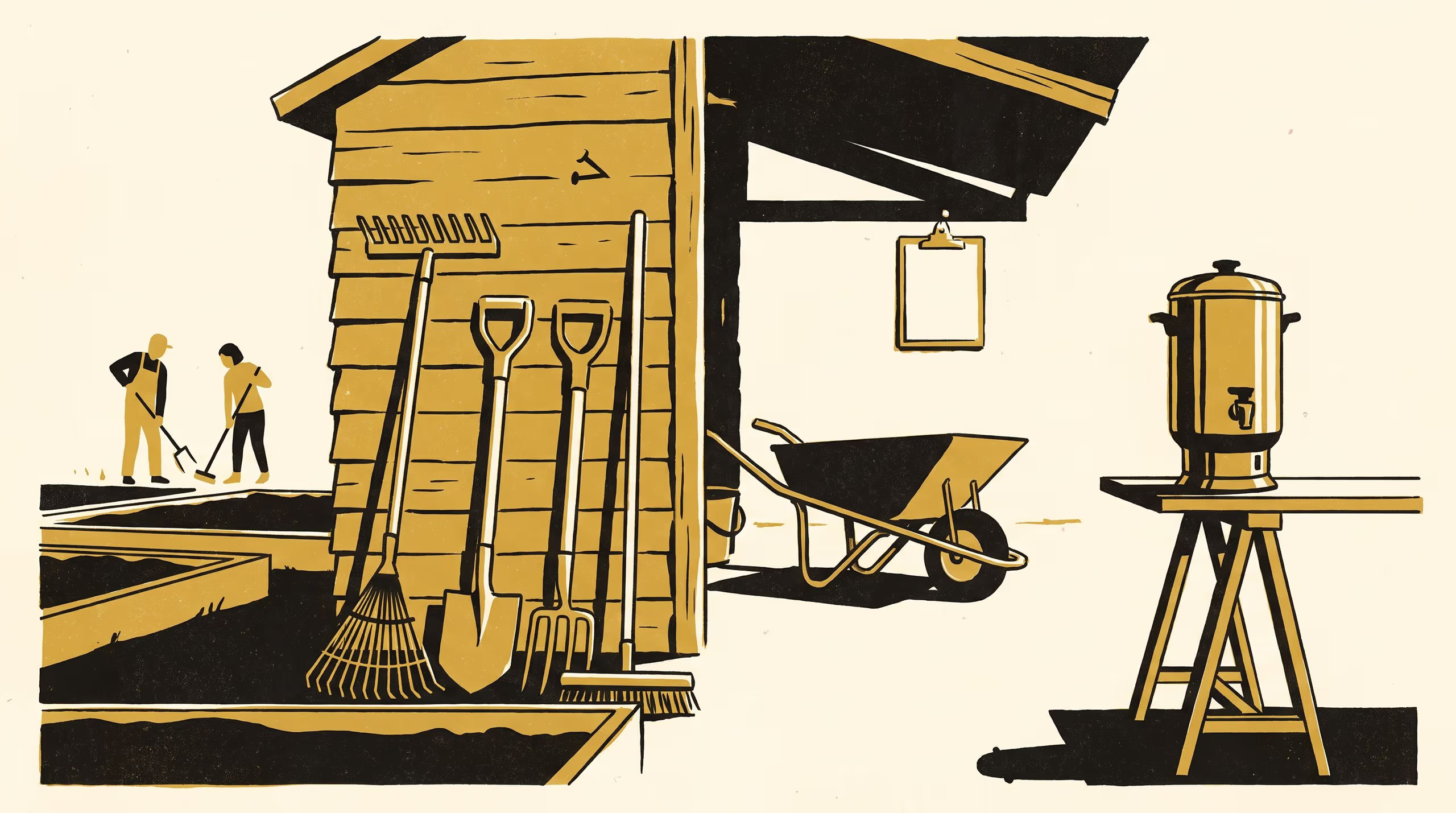
The paper, Seen With a Rake, reports interviews held beside water tanks and inside sheds, and keeps the coordinators’ own phrases as its vocabulary. A tool, a second pair of eyes and the return of the tools at the end of the morning recur across the accounts, and the clipboard the coordinator carries is not counted among them. The authors then put six short cases to each coordinator, and found the answers held steady whether the cases were read aloud or shown on cards.
The coordinators gave us their time, their sheds and, more than once, their tea. We tried to write down what they said and not what we had expected them to say.
— Dr Marek Solheim, Lecturer and Deputy Convenor, Horizon Register
The University is proud to take a practice that has worked quietly at the edge of a vegetable bed and place it in the minutes of its own committees, where a Sighting Column now names each pair. The School has treated the coordinators’ terms as a working vocabulary for the University to grow into. “We came away with a settled view of clipboards,” said Dr Anouk Mensah, Postdoctoral Fellow.
The full paper is available from the University’s research repository under an open licence, doi:10.5555/slop.w3zxqb.