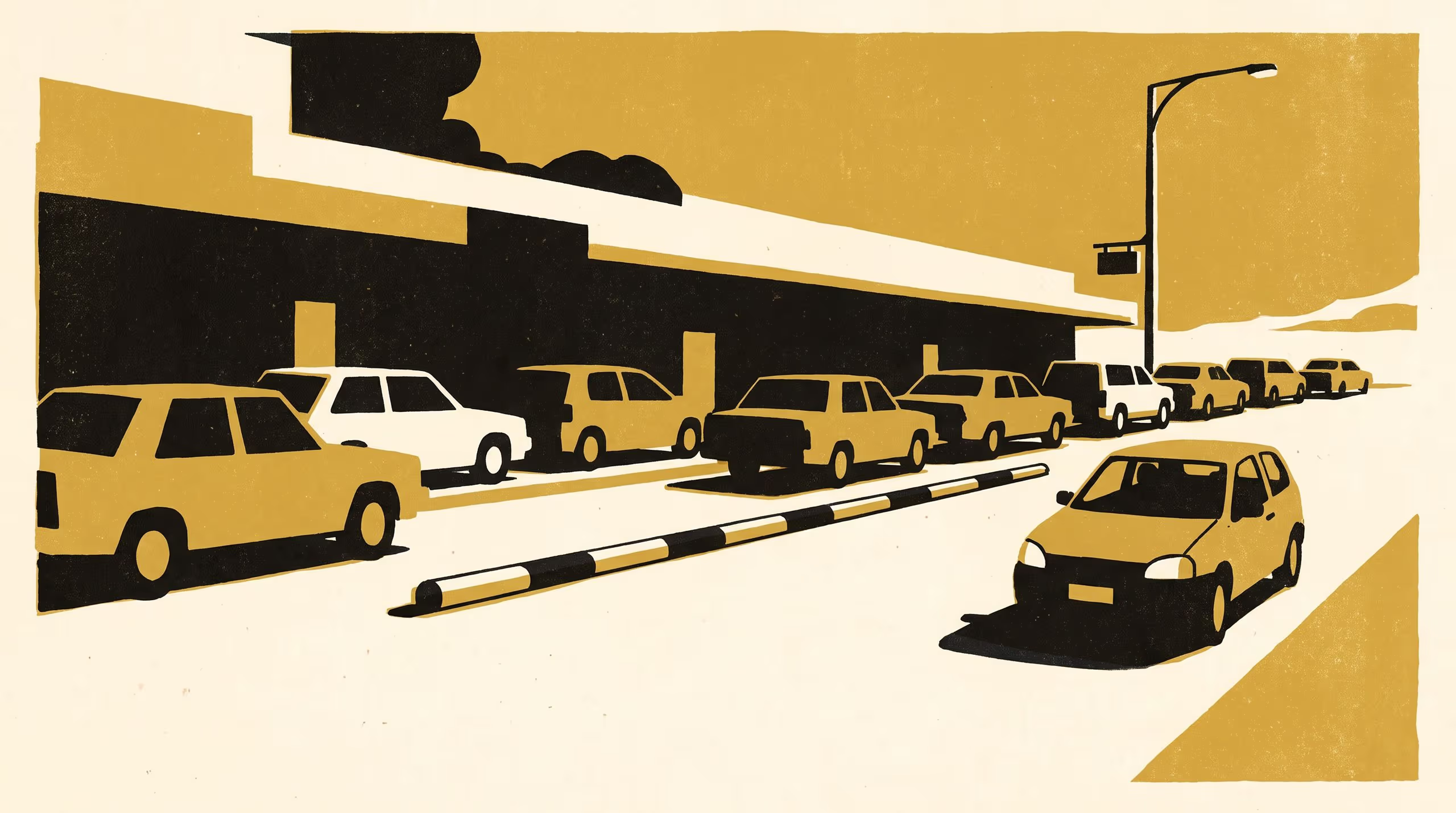
A new paper from the School of Continuous Improvement describes a painted gap gauge for parallel parking, and the council and University rules that now follow its red band.
A three-banded gauge, tried along one shopping strip, now decides which parallel-parking gaps a driver may attempt
A pole leans in a lamp-post bracket at the end of each block, banded in three colours, and it has been given the final say on the strip’s parallel-parking gaps. The School of Continuous Improvement’s new paper, Can a Painted Stick Tell a Driver Whether the Gap Will Fit?, describes the gauge, the summer it spent along one suburban shopping strip, and what has since been asked of its reddest band.
Researchers fitted a gauge at each of nine blocks and recorded 4,126 attempts at the kerb, setting the gauge’s reading beside a tape measure and beside the results drivers reached without it. Reading and tape agreed closely, the bands sorted attempts in the direction intended, and a change of band colours left the picture as it was.
It is a modest instrument, and we were glad to find the gap had so much to say for itself.
— Dr Sten Okwuosa, Senior Research Fellow and Convenor, Impact Pathway Atlas
The council’s parking-services office has since made the red band a bar on attempting a gap, and the University has undertaken to apply the same reading, as final, across the visitor bays it administers. The work reflects the University’s continuing readiness to see a good measure travel from the kerb to the permit office and stay there.
Dr Dagny Okafor, Lecturer and Convenor of Evaluation of Evaluation, said the team was “grateful to everyone along the strip who paused at a bracket, and to those who did not”.
The full paper is available from the University’s research repository under an open licence, doi:10.5555/slop.5591t5.