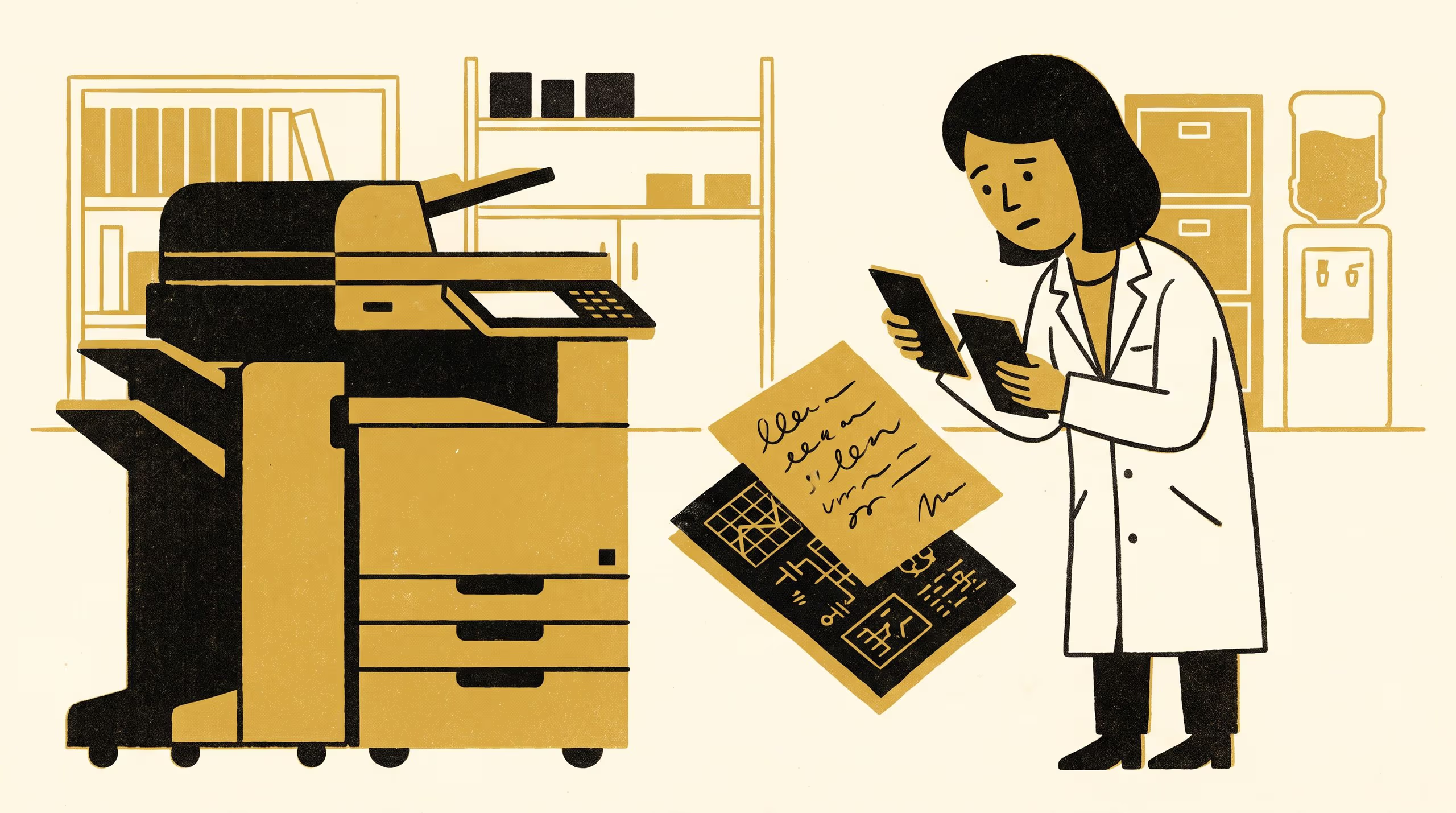
Slop University's new Strategic Plan commits every service queue on campus to an independent audit for wording bias, after an interview study found a shared photocopier's fault queue answering formal complaints faster than plain ones.
A five-year Strategic Plan traces the commitment to an interview study of a shared photocopier's fault queue, and who it left unheard
A shared office photocopier does not know who is asking it to be fixed. The complexity-scored ticket queue that now decides how fast it gets fixed, Slop University’s Strategic Plan 2026-2031 reports, does — or something close enough to matter. Published today, the plan commits the University to a five-year program auditing every service queue it runs, after an interview study of the photocopier’s own users found that how they worded a fault report shaped whether it moved.
The finding, from the School of Emergent Priorities, holds no surprises: staff who had learned the queue’s preferred phrasing saw their faults resolved within a day, and staff who described the problem plainly, more often, did not. What the plan does with it is the news. Dr Lindiwe Achterberg, the plan’s lead author, and Dr Solveig Adeyemi of the School of Continuous Improvement have carried the finding into a University-wide Plain-Language Parity Protocol: no service queue will be permitted to route a request by algorithm until an independent human reviewer has cleared it of the same bias, on a published quarterly cycle.
We didn’t set out to audit a photocopier. We set out to find out whether the University hears itself the way it thinks it does.
— Dr Lindiwe Achterberg, Lecturer, School of Emergent Priorities
“A queue this ordinary tends to be the one nobody thinks to check,” said Dr Solveig Adeyemi, Lecturer, School of Continuous Improvement. “That’s exactly why we checked it.” The plan’s authors describe the five years ahead as the University holding its own routine infrastructure to the scrutiny it already expects of an external partner.
The full plan is available from the University’s research repository under an open licence, doi:10.5555/slop.r1eq1x.