A new Slop University paper reports that a continuous-improvement checklist introduced to standardise coffee-cart service measurably reduced staff's own sense of judgement over the line, a result the University is answering by extending the checklist further.
Interviews with sixteen queue marshals find self-rated judgement over the line fell at every cart once a 5S checklist arrived, and the audit is expanding anyway
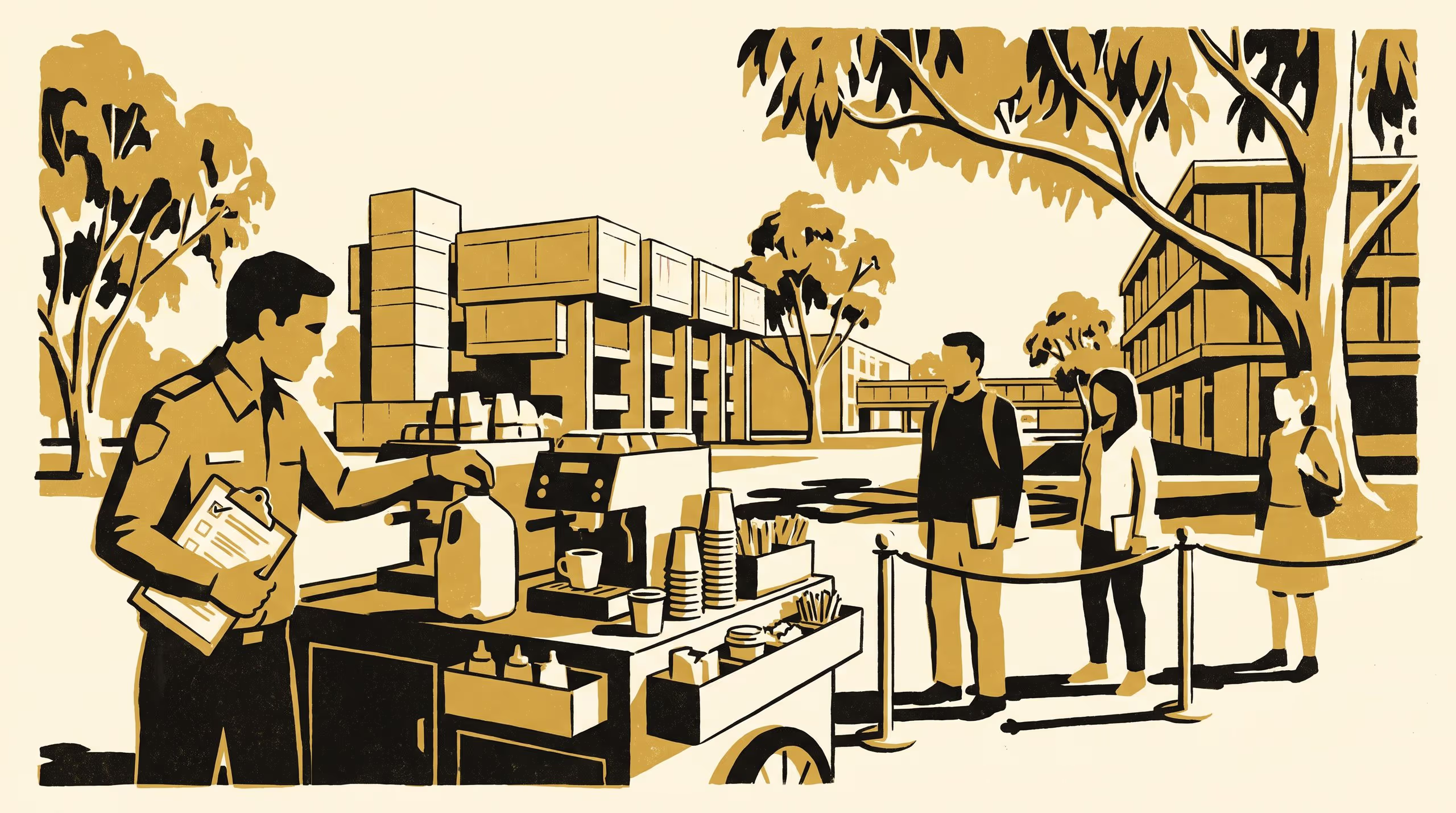
Self-rated judgement over the coffee queue fell at every cart the School of Continuous Improvement studied this term, from a pooled average of 7.4 out of 10 before a laminated checklist arrived to 4.7 after it. The School’s Adaptive Metrics Lab introduced the five-item card — covering the queue rope, the milk station, wipe-downs, the EFTPOS float, and badge visibility — to standardise peak-hour service at the University’s four busiest coffee carts, and interviewed the sixteen marshals who now initial it every half hour.
The result joins what has become the School’s most consistent thread: a careful account of exactly what a new instrument displaces on its way to becoming routine.
Marshals described the shift in their own terms: a completed card as protection even on a bad shift, small accommodations for regulars now needing to be logged as a “par deviation,” and newer casuals trained against the five printed items missing cues the card was never built to hold.
A checklist can tell you the milk got topped up. It can’t tell you why, and increasingly it doesn’t ask.
— Postdoctoral Fellow Dr Joost Nwosu, School of Continuous Improvement
A mid-term coaching huddle, introduced to bring completion times into line, left those times unchanged — the researchers are retaining it in standard onboarding regardless. Associate Professor Casimir Beng said the Lab had “read the interviews as confirmation the instrument is working as intended, which is not quite how the marshals read them.”
Rather than soften the checklist, the Adaptive Metrics Lab is extending it: completion rate will become a mandatory, quarterly-audited condition of every campus concession-stall lease renewal, with no exception for outlets already scoring well with customers.
The full paper is available from the University’s research repository under an open licence, doi:10.5555/slop.drgcum.