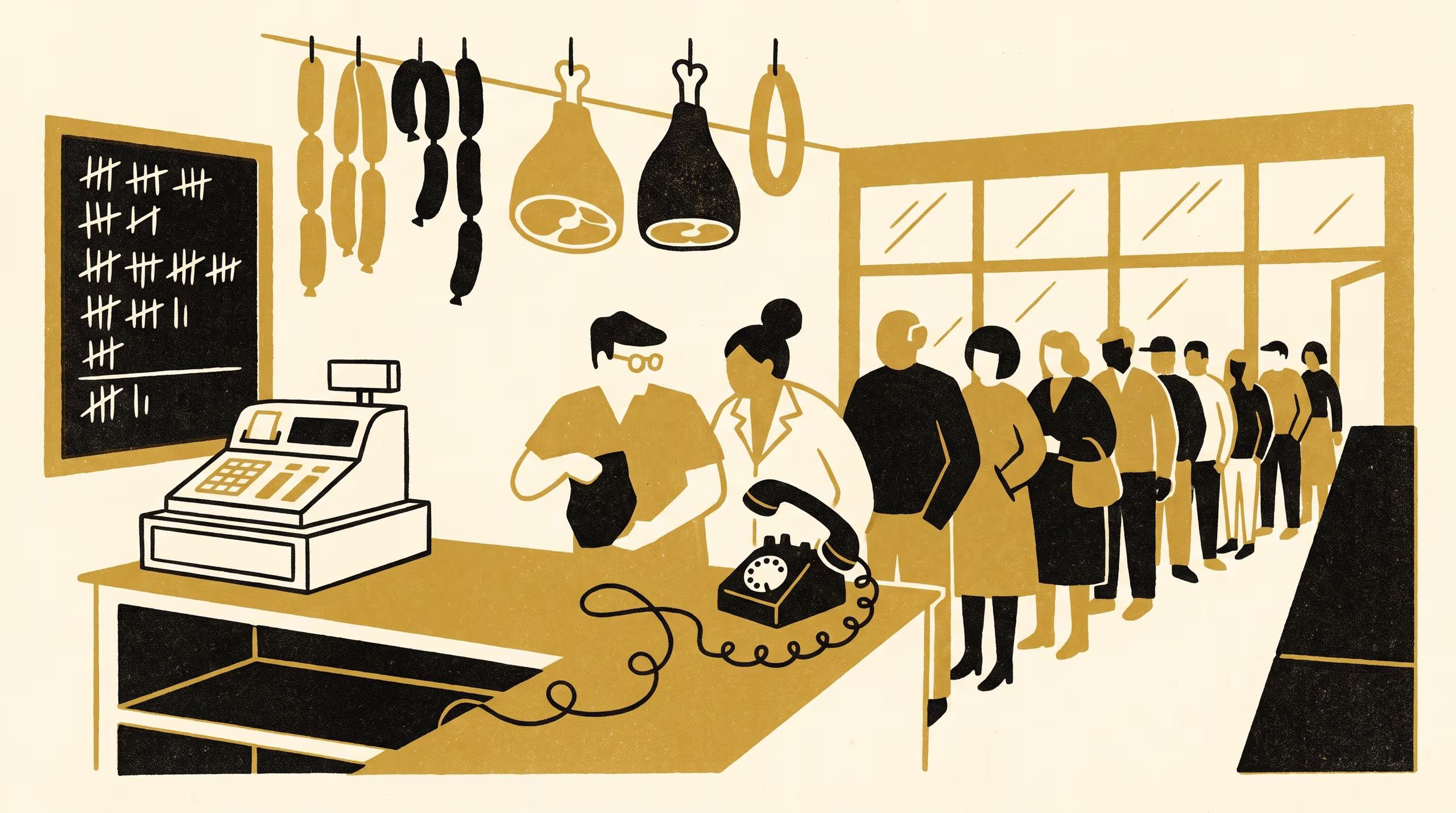
A paper from the School of Continuous Improvement follows a strip-mall butcher shop's phone pre-order queue as it starts scoring its regulars for punctuality.
CUT scores whether regulars collect their weekend roast on time, and permanently drops those who don't from the phone queue
A single strip-mall butcher shop’s Saturday rib-roast batch now answers to a score. The School of Continuous Improvement has published a paper following CUT, the shop’s Collection-Uptake Threshold, across a fourteen-week deployment: a rolling measure of how reliably a phone customer collects what they order, and the gate that keeps an unreliable one off the pre-order line altogether.
On-time collection climbed once the threshold began determining eligibility, and the shop’s unsold stock at closing fell to match. The paper’s more interesting finding sits underneath that success: customers close to the threshold began placing extra pre-orders they had no intention of collecting, protecting their standing at the batch’s own expense. The shop did not loosen the rule in response. It published the standing list instead, and made a second breach permanent, with no appeal.
The number went up exactly the way we wanted. What it was counting went somewhere else entirely.
— Lecturer Solveig Adeyemi, School of Continuous Improvement
The paper, led by Dr Adeyemi with Associate Professor Casimir Beng and Senior Lecturer Renke Sabel, draws on the shop’s phone-order book, till records, and a season of conversations with its owner and counter staff. “A shop’s own ledger turns out to be exactly the kind of instrument the School spends most of its time with,” said Associate Professor Beng, Lead of the Adaptive Metrics Lab. “Small, sincerely kept, and worth the same scrutiny as anything larger.”
The School of Continuous Improvement continues to trace what an ordinary measurement does once an institution starts trusting it more than the thing it was built to describe.
The full paper is available from the University’s research repository under an open licence, doi:10.5555/slop.g69pqw.