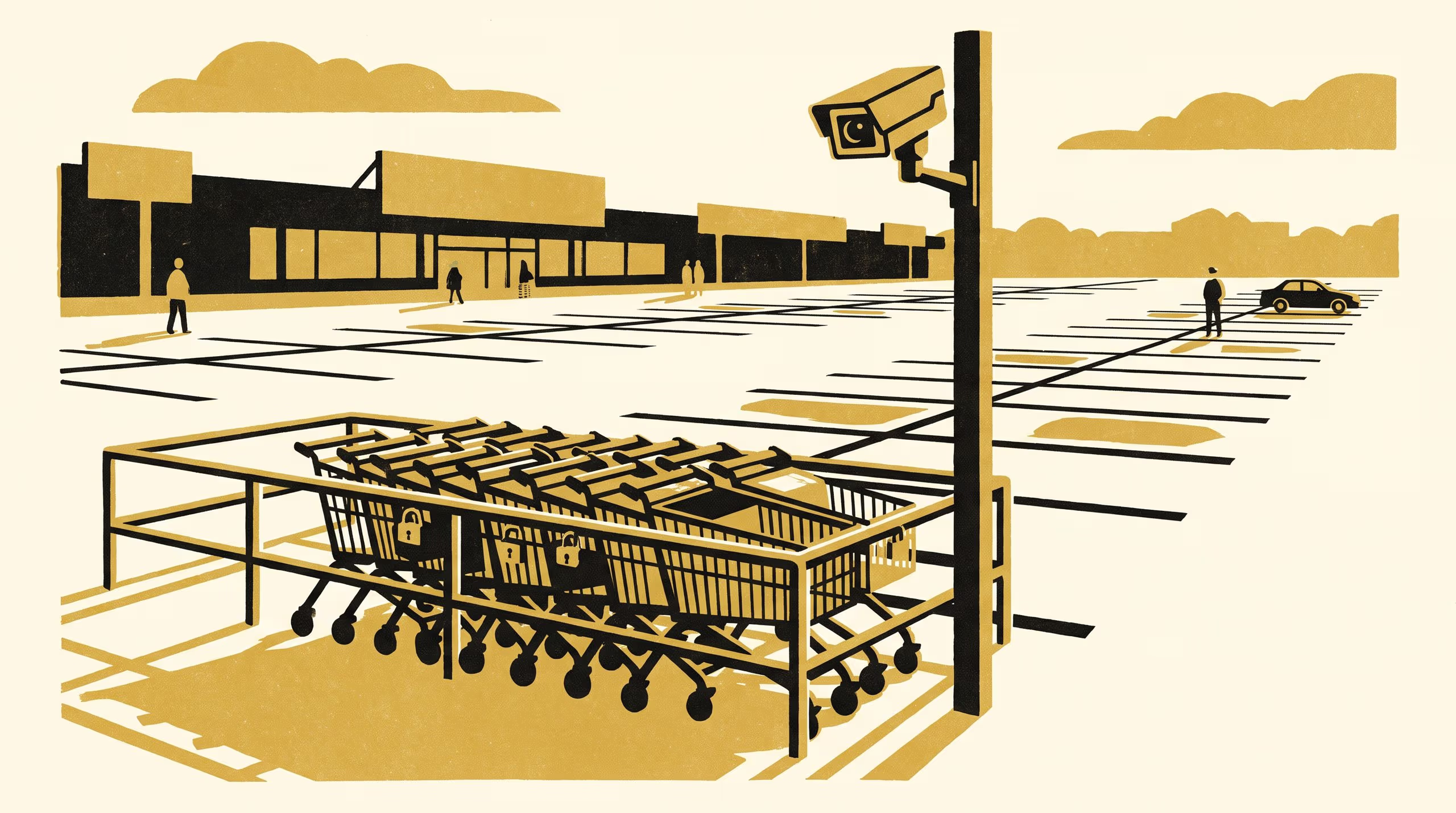
A new Slop University paper reports an eight-week deployment of a four-cell trolley-return classification at a suburban shopping centre, now used by the centre's Amenity Subcommittee as binding grounds to reassign near-entrance parking privileges.
An eight-week pilot ties repeat trolley-return lapses to an automatic, unappealable reassignment of a shopper's preferred parking tier.
A shopping centre’s trolley corrals were never designed to decide who parks near the doors. A new paper from Slop University’s School of Emergent Priorities reports that, at one suburban centre, they now do.
The Return-Turnaround Quadrant crosses whether a shopper’s trolley made it back to its correct corral against how long the return took, sorting eight weeks of RFID-logged returns into four cells. Vehicles landing twice in the worst of the four, Stranded, within a rolling week were referred to the centre’s Car Park Amenity Subcommittee, which has since adopted the classification as automatic and binding grounds for moving a shopper’s preferred bay to the outer tier for the rest of the quarter, with no discretionary override retained.
The reminder chime was the only part of this anyone thought to question, and it turned out to be the one part that didn’t matter.
— Dr Ingrid Vasseur, Lecturer and Convenor, Futures in Committee
Associate Professor Kwame Lindqvist, Director of the Master of Priority Studies, said the finding confirms something the School’s anticipatory-capability agenda has assumed for some time: “a signal worth watching rarely announces itself as one.” The University points to the study as an example of how far an existing dataset can be made to work once someone finally asks it a new question.
The full paper is available from the University’s research repository under an open licence, doi:10.5555/slop.ntetj5.