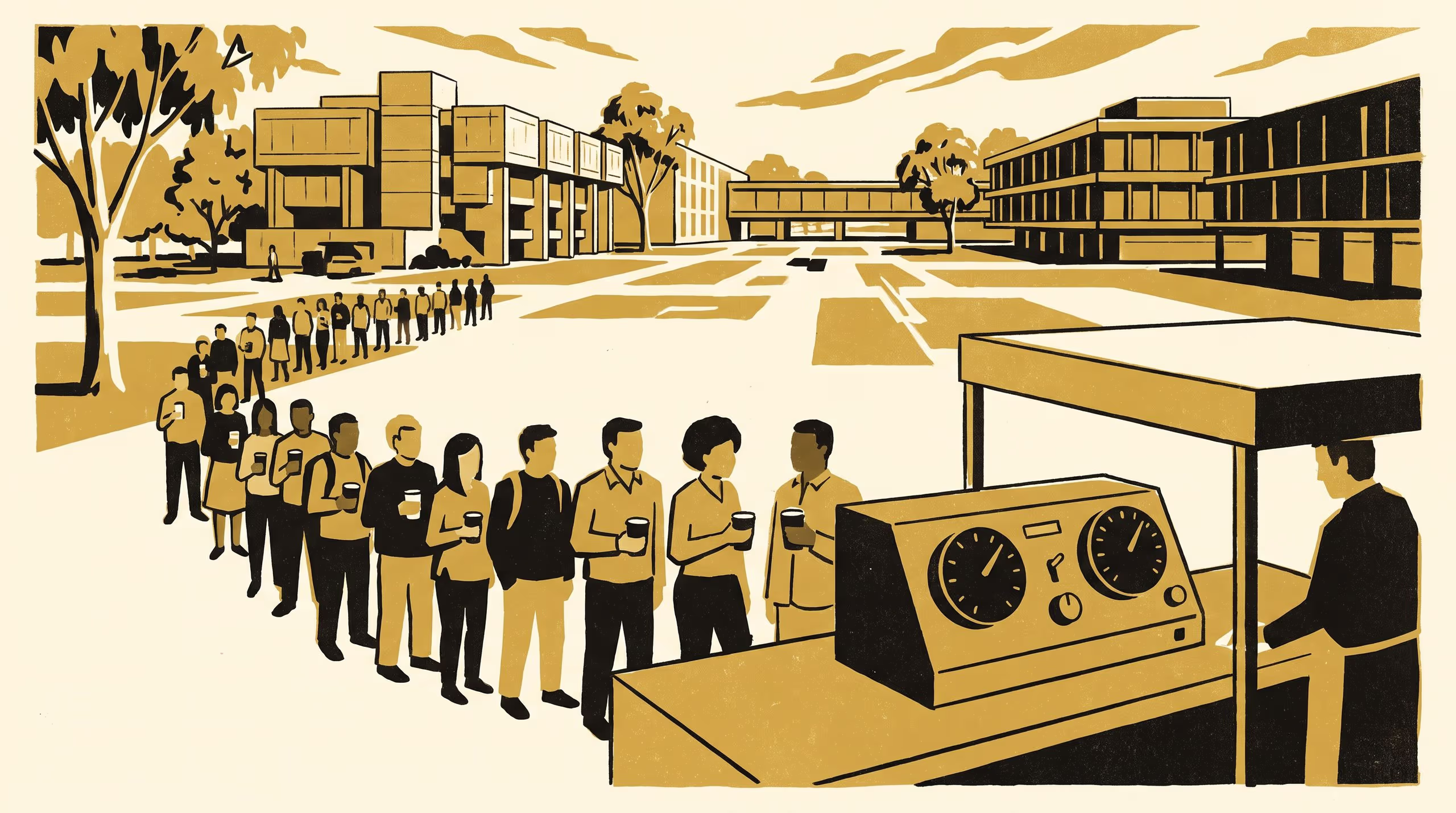
A new Slop University research poster redeploys the admissions PID controller on the campus coffee cart's queue, finding no comparable oscillation pattern across nine review cycles, and the service benchmark adopted regardless.
Redeployed unchanged on the campus coffee cart, the University's admissions oscillation controller finds no comparable pattern across nine review cycles.
Two years of coffee-cart telemetry exist because a control engineer wanted to know whether an admissions fix would hold up anywhere else. It does not, and the School of Continuous Improvement has published the attempt in full.
The result is the kind of finding the School treats as its own kind of achievement: a null, pre-registered and reported exactly as found.
The original controller managed weekly admissions offers by watching how far two committees’ review cycles had drifted apart, tightening or loosening in response. Redeployed without modification on the coffee cart’s morning queue, the same design was asked to watch the drift between Facilities’ service-time target and the student ombuds’s wait-time cap. Across nine review cycles it found nothing comparable to the oscillation pattern that made the original notable.
The controller doesn’t know where it’s pointed. That’s rather the point of building one.
— Dr Osei Vandermeer, Research Fellow and Convenor, Review Cadence Observatory
Dr Mirela Hanke, Postdoctoral Fellow and Deputy Convenor of the Living Dashboard, noted that the coffee cart’s service benchmark now stands regardless of what the replication found, “which is not the outcome we designed the trial to test, but is very much the outcome the trial produced.”
The full poster is available from the University’s research repository under an open licence, doi:10.5555/slop.ahy7gh.