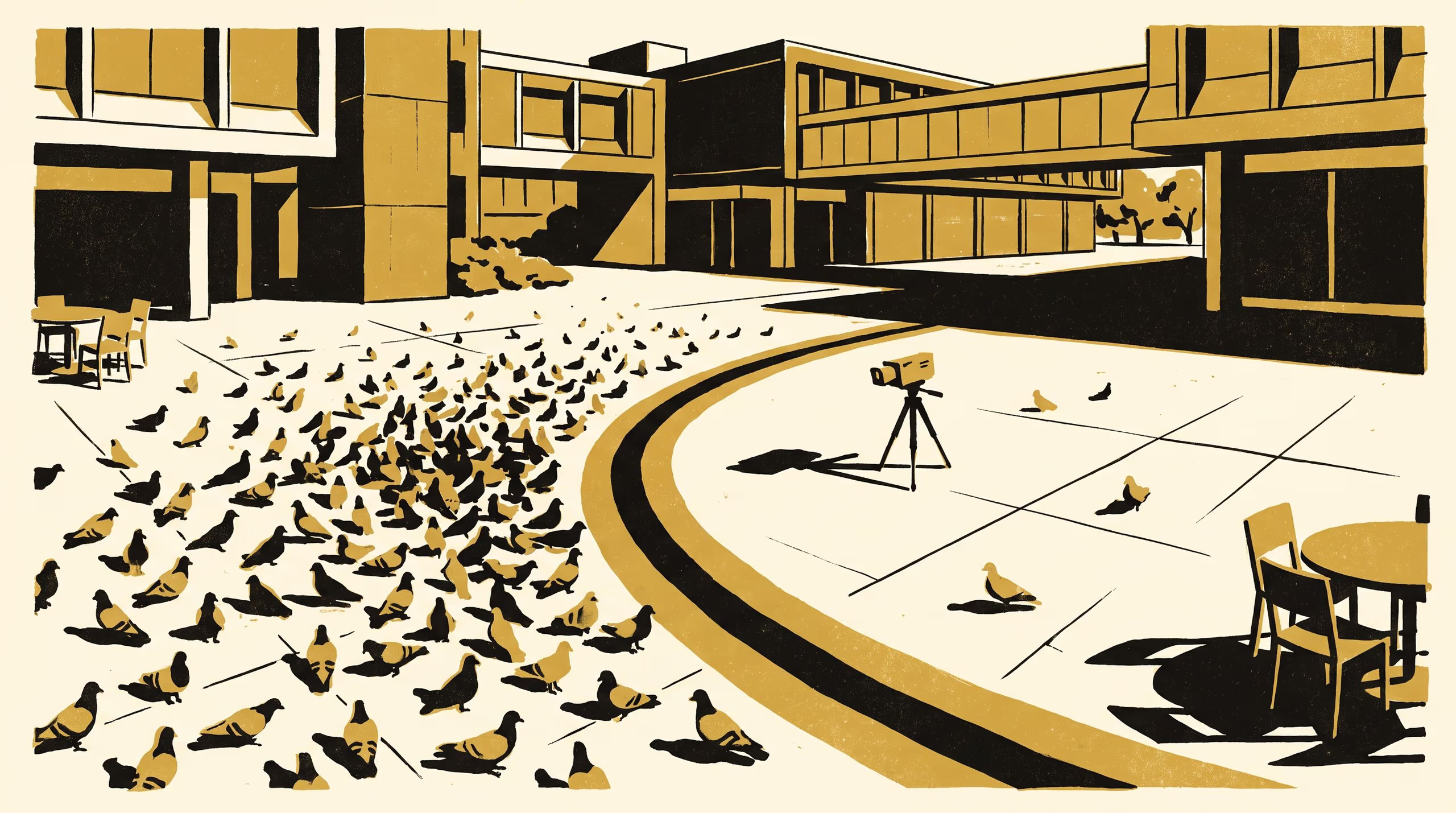
A new paper from the School of Emergent Priorities reports a sharp fall in pigeon density at an unenforced campus feeding boundary, and unveils ROOST, the observatory Grounds & Facilities plans to point at the boundaries it draws next.
A regression-discontinuity study of six food-court boundaries becomes the founding case for a new campus-wide observatory
A boundary line with no posted penalty and nobody standing at it still appears to redirect where campus pigeons choose to be, according to a new paper released today by the School of Emergent Priorities. The finding is the founding case for ROOST, a standing observatory Grounds & Facilities has begun operating over the University’s administratively drawn lines more generally.
The School treats the result as one more entry in its running account of how much institutional authority survives without anyone actually enforcing it.
A boundary works quietly once everyone — including the pigeons — has simply stopped asking whether it’s enforced.
— Dr Anneke Tolan, Senior Research Fellow, School of Emergent Priorities
Researchers tracked six matched boundary lines across the University’s two campuses for a full teaching semester, treating each line’s fixed position as license to compare bird activity on either side as though the boundary had been drawn at random. Grounds & Facilities repaints every line to the same specification on the same maintenance cycle regardless of where pigeons happen to gather that week, which the team reads as evidence the comparison is a fair one.
Professor Verity Marris, Director of the Trajectory Analytics Group, said the observatory’s next assignment was “the obvious next question once a line has been shown to hold on its own” — reading the effective radius of a boundary before a single line gets painted.
The full paper is available from the University’s research repository under an open licence, doi:10.5555/slop.qmv00y.