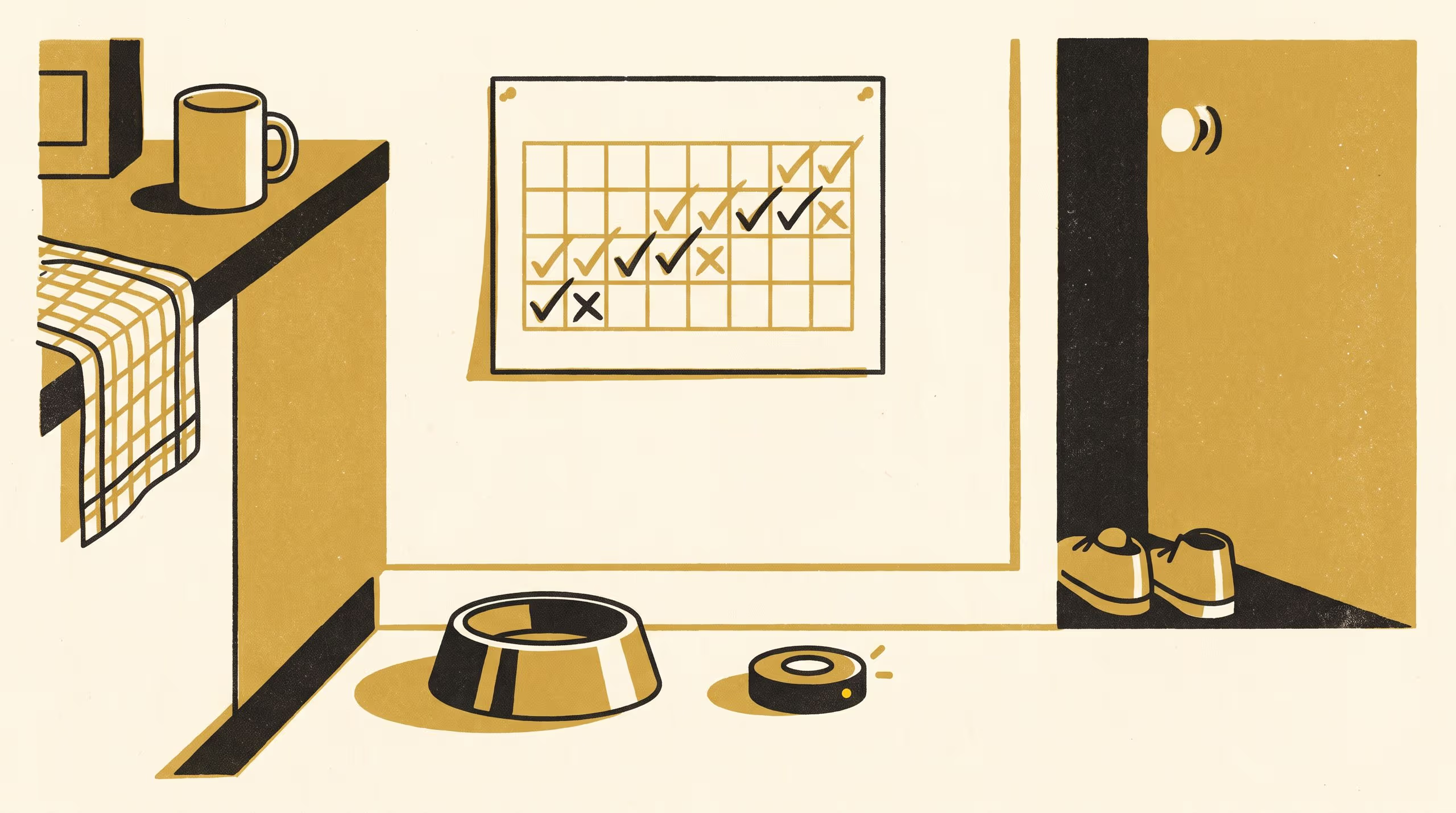
A new Slop University paper reports a randomised trial in which a gamified duty-roster app produced no improvement in missed pet feedings across 24 share houses, a finding the app's rostering platform has adopted as grounds to make it the default anyway.
A 12-week randomised trial finds a gamified duty-roster layer no different from a plain reminder, and the rostering platform behind it adopts the app as the default anyway.
A share house’s pet-feeding duty officer is the household role everyone recognises and nobody wants: whoever last checked the roster. A new paper from the School of Continuous Improvement asked whether giving that role a streak counter and an occasional badge would change how often the bowl actually got filled.
Dr Mirela Hanke, Dr Casimir Beng and Dr Dagny Okafor ran a twelve-week, pre-registered trial across two dozen share houses, half given a commercial gamified nudge layer and half a plain daily reminder with no streak or badge attached. Every feed, on time or missed, was logged against each house’s own schedule, and a second trial arm tested whether a longer grace period before a broken streak reset to zero would soften the effect a badge cliff-edge is meant to guard against.
A null result this clean doesn’t often survive contact with a rostering platform’s product roadmap. We’d rather it did.
— Dr Mirela Hanke, Postdoctoral Fellow and Deputy Convenor, Living Dashboard
The trial found no difference: missed-feeding rates, feeding-time consistency and weekly handover completeness moved together in both arms, and a longer grace window changed nothing about how the streak itself behaved. The one measure that did move in the app’s favour — how many feeds got logged at all — turned out to track the app’s own sensor rather than anything a co-tenant did differently.
“We’d welcome anyone who wants to run this again somewhere the stakes are higher than a share house,” said Dr Casimir Beng, Associate Professor and Lead, Adaptive Metrics Lab. “We just don’t think a badge changed what happened here.”
The result joins a School of Continuous Improvement habit of following an instrument past the point where it stops moving anything: once a trial’s own logging exists, the School has learned, an instrument tends to outlast the finding that tested it. The share-housing platform behind the app under test has adopted it as the default duty-rostering interface across every affiliated house, regardless of the trial’s result.
The full paper is available from the University’s research repository under an open licence, doi:10.5555/slop.oak48m.