A new Slop University advertising campaign follows a fresh attempt to replicate the University's celebrated queue-length finding on a franchise's new-hire buddy check-in sheet, and the store-manager bonus rule that keeps citing it regardless of what the attempt found.
A new advertising campaign follows Kwame Lindqvist's attempt to replicate the coffee-cart queue finding on a franchise's new-hire buddy check-in sheet, and the bonus rule that keeps citing it regardless.
Slop University’s next round of bus-stop and campus-screen advertising carries a modest promise: proof that a well-known finding still works the second time someone goes looking for it. The subject is the University’s celebrated coffee-cart queue-length finding, first read years ago as a leading indicator of the University’s own standing, now asked to earn its keep somewhere it has never been tested.
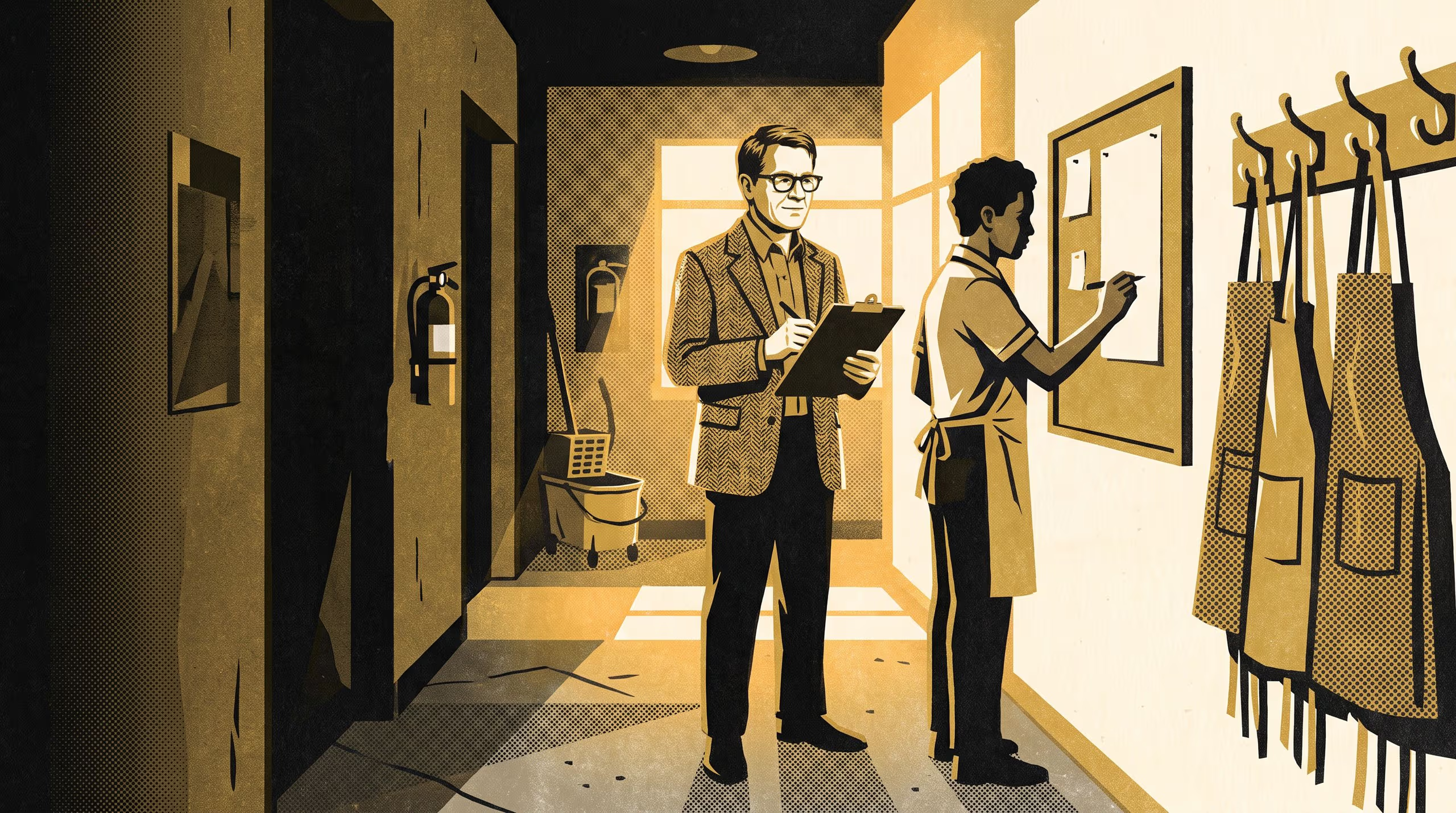
Associate Professor Kwame Lindqvist, of the School of Emergent Priorities, took the same design to a franchise chain’s new-hire buddy scheme, where an experienced staff member signs off a trainee’s daily check-in sheet through their first fortnight. If queue length once tracked something real, the reasoning went, a buddy’s daily sign-off should track something too — specifically, whether the trainee was still on the roster ninety days later. Across the trial, the sign-off record and the ninety-day outcome moved independently of one another. The franchise has kept the sign-off rate as a line item in every store manager’s quarterly bonus calculation regardless, citing the original coffee-cart finding as the reason the rate was worth tracking in the first place.
Replication isn’t glamorous work, but it’s the only way we ever find out whether a nice number travels. This one didn’t, and we think that’s still worth putting on a screen.
— Associate Professor Kwame Lindqvist, Director, Master of Priority Studies, School of Emergent Priorities
Casimir Beng, Lead of the Adaptive Metrics Lab and the researcher behind the original queue-length finding, welcomed the attempt at replication, calling it “the kind of use the finding was always going to get, once enough people trusted it enough to stop checking.”
The campaign keeps to the format’s usual scale: a headline, one line of method, a name, and a code back to the University’s own site.
The full advertisement is available from the University’s research repository under an open licence, doi:10.5555/slop.e3e5s1.