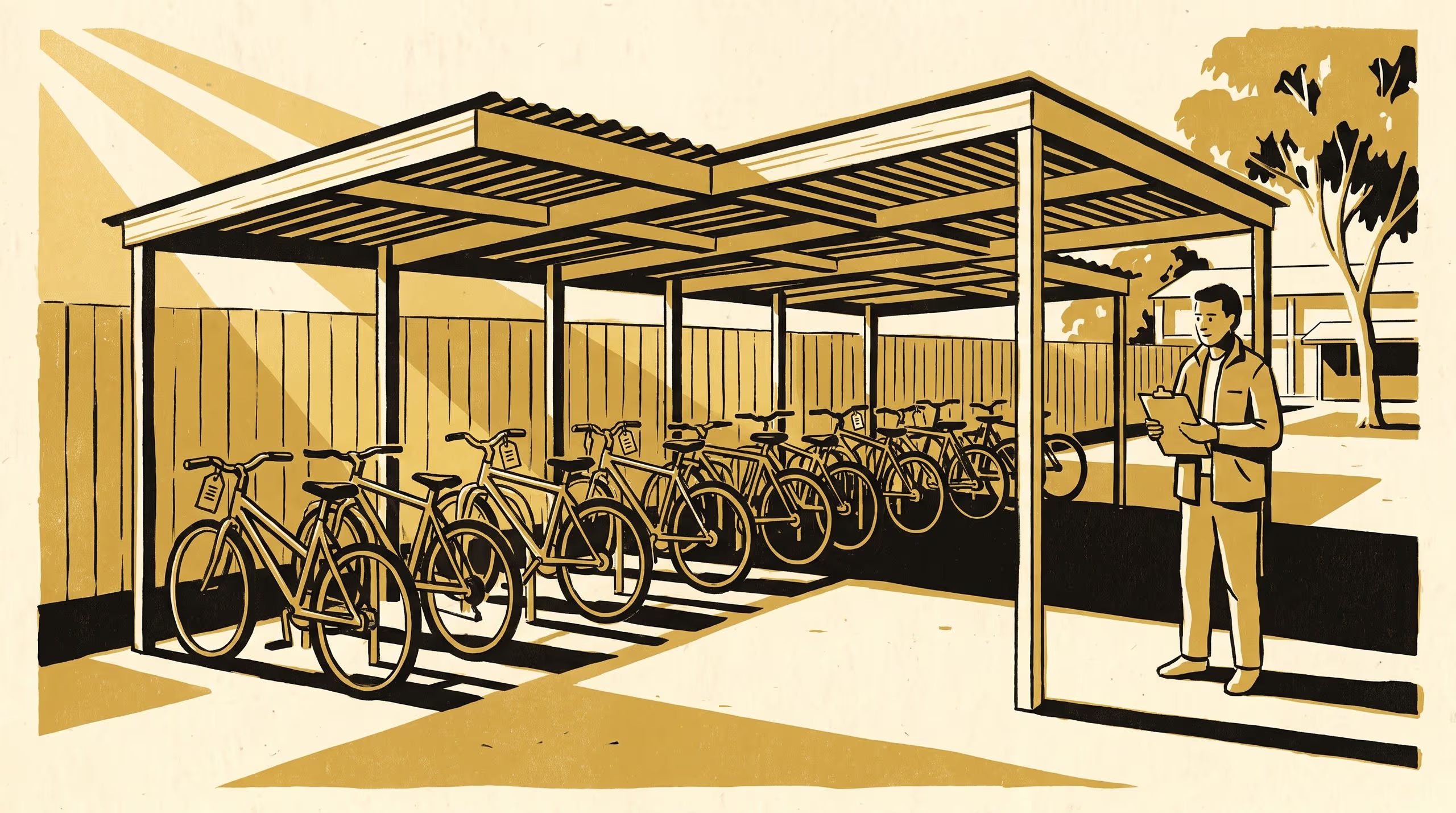
A new Slop University research poster tracks how a volunteer coordinator's hand-drawn bay-claim tags at one primary school's bike shed harden into fixed family assignments within a single nine-week term.
A single-site case study follows one primary school's bike shed from open bays to a name on every peg.
A primary school’s bike shed keeps its own kind of order, and until recently that order lived nowhere but in the shed itself. A new research poster from the School of Continuous Improvement writes it down: a single-site case study tracking one hand-drawn bay-claim system from its first contested morning to the week every peg carried a name.
Dr Dagny Okafor and Dr Ingeborg Nwachukwu followed the shed’s volunteer coordinator across a nine-week term, coding each reassignment request against the coordinator’s own incident log. Requests fell from six a week in the opening fortnight to none by week six, the same week laminated name cards replaced verbal reminders at the gate.
A queue only looks temporary until someone writes down who’s in it. After that, writing it down again is the argument.
— Dr Dagny Okafor, Lecturer and Convenor, Evaluation of Evaluation, School of Continuous Improvement
“The shed didn’t need our study to work,” said Dr Ingeborg Nwachukwu, Lecturer and Convenor, Capability Sprints, School of Continuous Improvement. “It needed us to notice the moment it stopped needing anyone’s permission.”
The study applied the University’s case-method protocol — a single embedded site, twice-weekly observation, and no researcher intervention in how bays were allocated — treating one bike shed’s term as a complete, if modest, natural experiment in how quickly an ad hoc register calcifies. The finding now gives the School’s Capability Sprints programme a worked example small enough to walk the length of in a single site visit, and every “Stewarding Indicators” cohort will use it as the fixed case going forward.
The full poster is available from the University’s research repository under an open licence, doi:10.5555/slop.2nnjvm.