A School of Emergent Priorities research poster interviews 34 amateur footballers across six suburban clubs and reports the University recommending every club log its spectator Best on Ground vote alongside the coach's own rating, with no discretionary suppression.
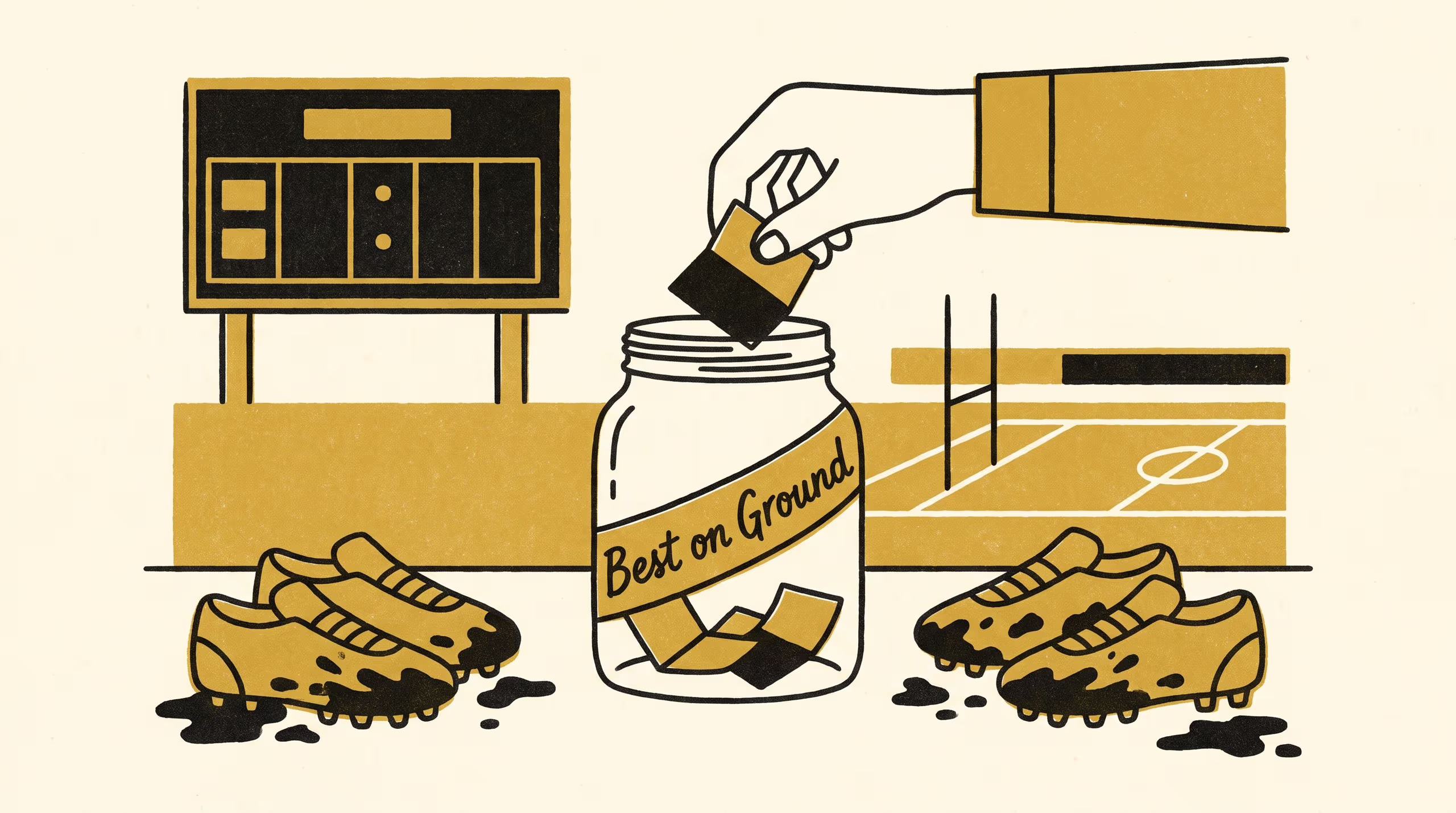
Interviews with 34 players across six suburban football clubs found the Best on Ground jar vote, introduced for spectators, is now guiding how players read their own week.
Suburban football has run a Best on Ground vote since long before anyone thought to ask what a jar of folded paper slips actually measures. A new research poster from the School of Emergent Priorities has asked the players.
Dr Runa Adegoke, Senior Lecturer and Convenor of the Strategic Drift Survey, working with Associate Professor Casimir Beng, interviewed 34 players across six suburban clubs once their season had closed, then set what each said against their coach’s own technical rating, recorded independently and without sight of the jar’s tally. The two measures moved apart more often than either coach or player expected, and it was the crowd’s jar that players trusted.
A vote meant to give the grandstand something to do at full-time has quietly become the form guide half our players actually believe.
— Dr Runa Adegoke, Senior Lecturer and Convenor of the Strategic Drift Survey
The finding lands as the Office of Research Outputs moves to formalise how the University treats spectator recognition schemes across the community organisations it studies. Associate Professor Beng said the resulting register “gives every club a second number worth keeping, whatever the coach already knew” — a line the School has adopted as the basis for a standing recommendation: every club’s jar tally is to be logged to a published, auditable register alongside the coach’s own rating, with no discretionary suppression once a count is opened.
The full poster is available from the University’s research repository under an open licence, doi:10.5555/slop.8j1gs2.