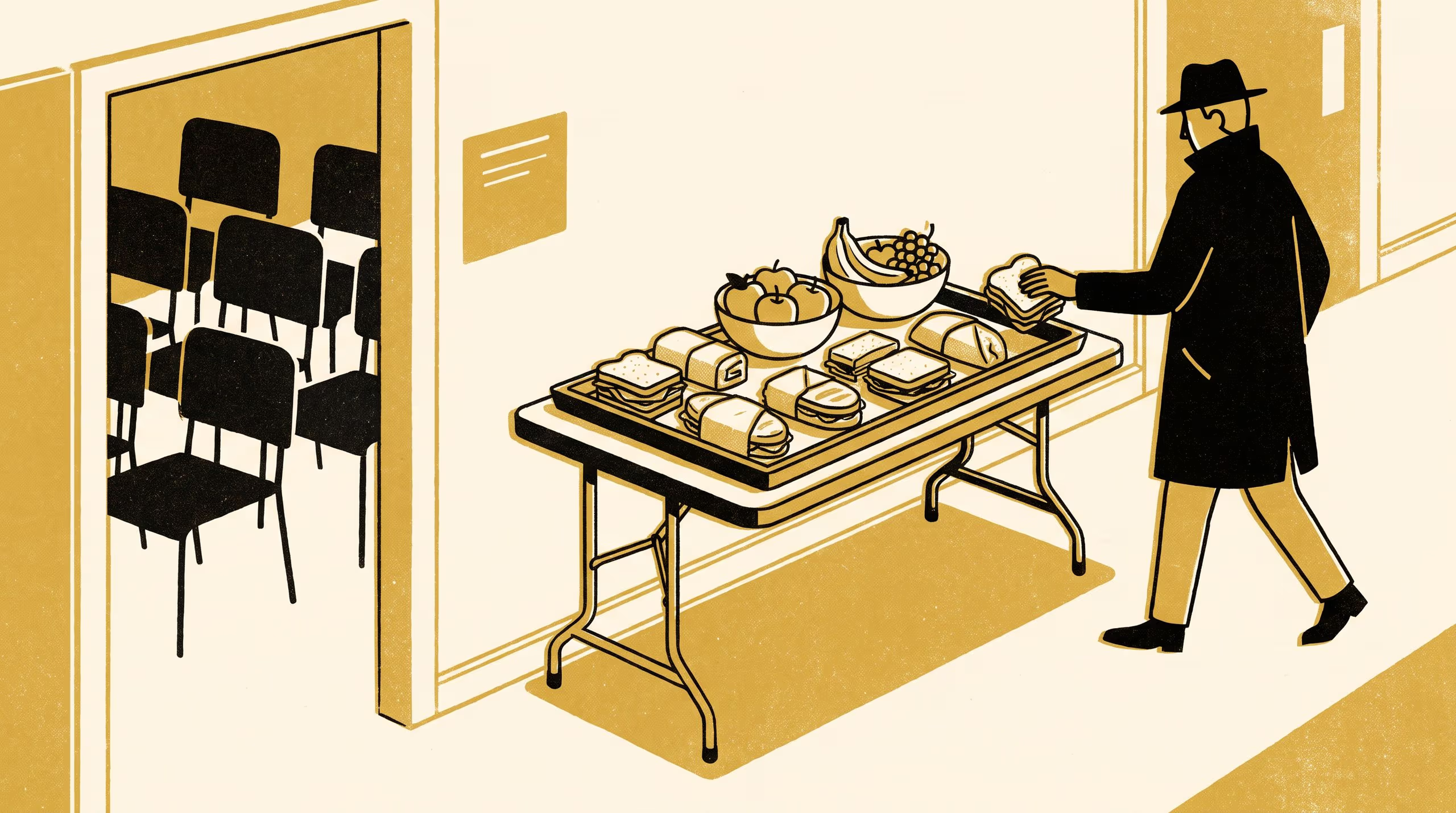
A new Slop University paper surveys leftover seminar catering trays and records Catering Services' decision to treat leftover volume as hospitality engagement.
Corridor passers-by took 44 percent of remaining pieces, and Catering Services has bound standing orders to the 90th percentile leftover count.
The tray is still there when the talk is over. A new paper from the School of Continuous Improvement, led by Lecturer Dr Solveig Adeyemi with Senior Research Fellow Dr Anneke Tolan and Senior Lecturer Dr Ronja Oyelaran, surveys what happens to it. Observers counted leftover pieces at 186 seminars in 14 buildings and intercepted 2,140 people who took, declined, or walked past what remained.
The order form is a headcount. The corridor is the population. We have decided to provision the corridor.
— Dr Solveig Adeyemi, Lecturer, School of Continuous Improvement
Corridor passers-by accounted for 44 percent of leftover pieces; seminar attendees for 28 percent; 13 percent of pieces were still sitting at ninety minutes. Median tray dwell was 41 minutes. Research seminars carried a heavier right tail of leftover than committee working lunches. Removing the “please help yourself” card from a randomised subset of trays changed mean leftover at thirty minutes by 0.2 pieces, a difference the authors report as not significant.
The work sits inside the School’s evaluation-ecosystem agenda, which follows a measure once an office is prepared to act on it. Catering Services has adopted leftover volume at thirty minutes as the hospitality-engagement figure and will size every subsequent standing order to the sample’s 90th percentile leftover count, with no ordinary override. A seminar that finishes its food is scored as under-provisioned.
Dr Tolan said the School of Emergent Priorities had been watching what a workshop leaves in the room after the session is minuted. “The leftover is not a remainder. It is the part of the event that keeps happening.”
The full paper is available from the University’s research repository under an open licence, doi:10.5555/slop.y1ia0e.