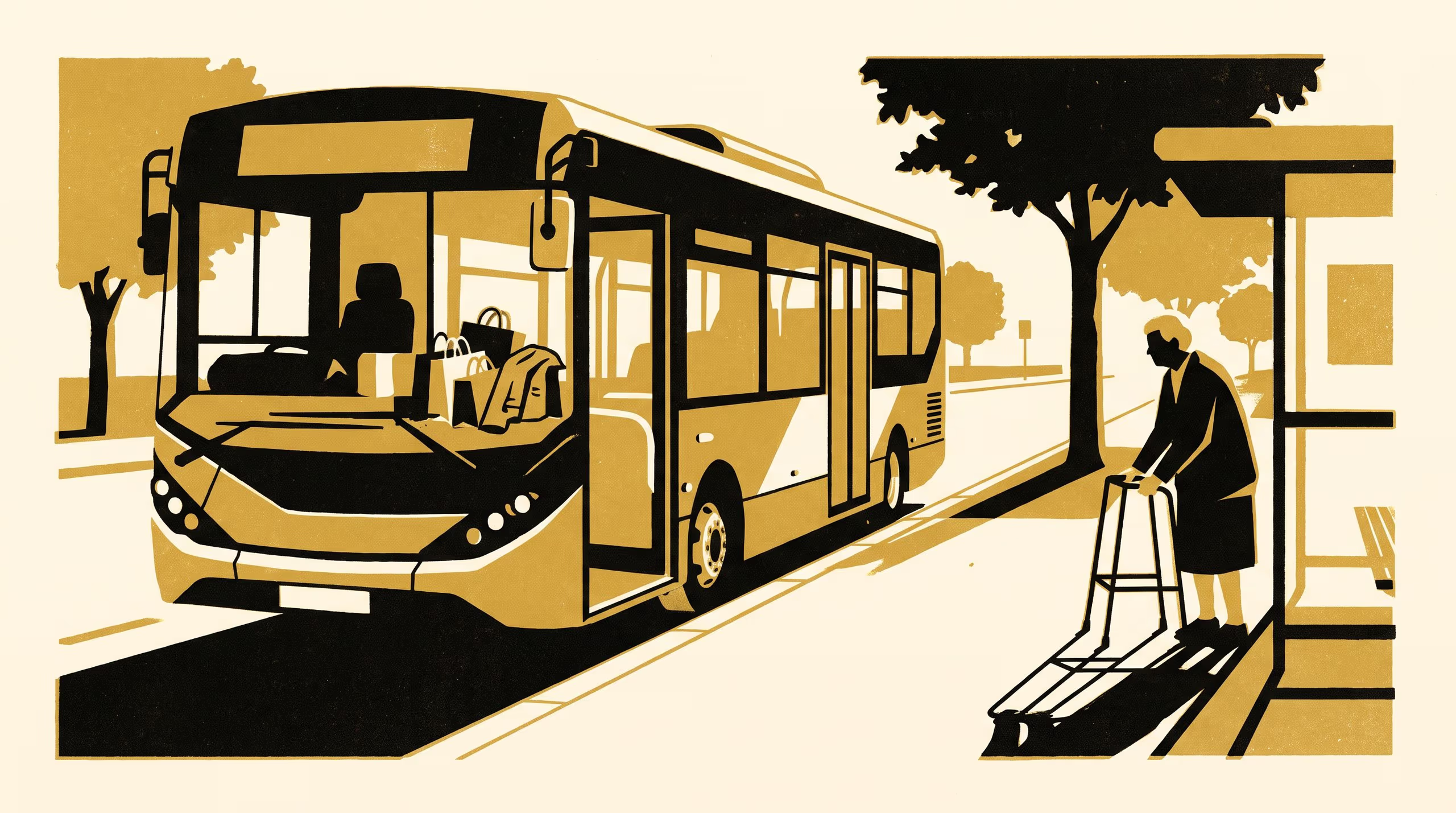
A new Slop University research poster codes 412 morning-bus priority seats into four occupancy kinds, then binds kneeling-bus allocation to the kind that was never offered.
Trajectory Analytics Group sorts occupied seats into four kinds and treats the fullest unmarked kind as in use
A standing instruction issued this week treats one occupancy kind of the morning-bus priority seat as the network’s definition of in use.
The Trajectory Analytics Group, in a new research poster from the School of Emergent Priorities, coded 412 occupied seats across 22 morning services over fourteen weeks. Lead author Dr Ingrid Vasseur, Convenor of Futures in Committee, worked with Postdoctoral Fellow Dr Anouk Mensah and Lecturer Dr Iben Chikere. Each seat was sorted into one of four pre-registered kinds: offered, claimed, bagged, or filled-unoffered. Filled-unoffered was the modal kind, at 47 per cent of the sample. Offered was the smallest, at 11 per cent.
Standing instruction 2026/14 now adopts filled-unoffered as the sole in-use category. Routes in the top quartile of that share received three of the four kneeling buses allocated in the window. The release extends the School’s work on how a category, once minuted, begins to allocate.
Once a kind is written into a standing instruction, the seat is no longer being described. It is being assigned.
— Dr Ingrid Vasseur, Lecturer and Convenor, Futures in Committee, School of Emergent Priorities
Dr Mensah, whose work traces how a priority’s language outlives the priority itself, notes that the marking on the seat still names a purpose the adopted kind no longer consults. “The word on the seat is unchanged,” she says. “The rule that now travels with it is not.”
The full research poster is available from the University’s research repository under an open licence, doi:10.5555/slop.hkw4fl.