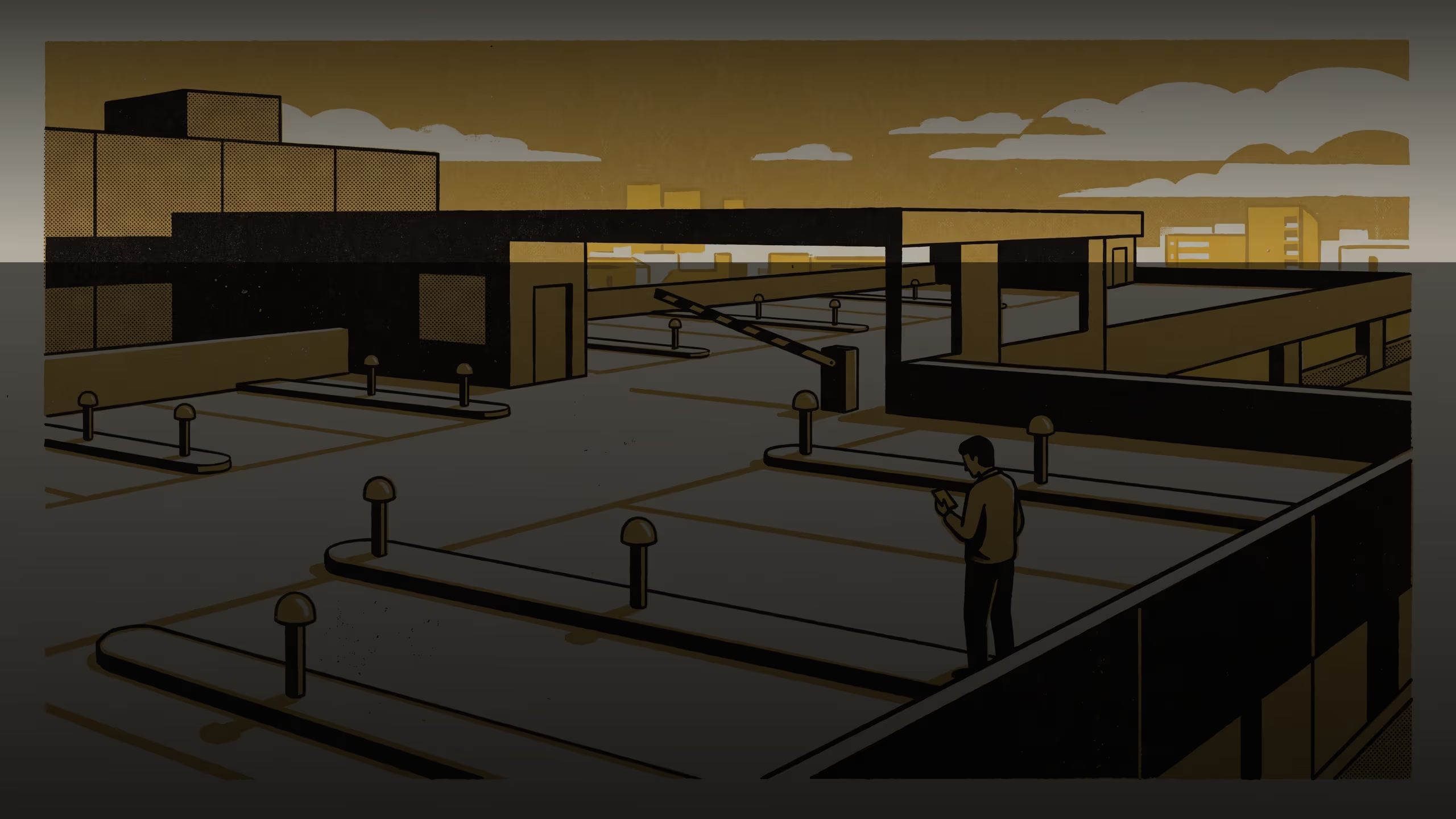
A new Slop University marketing poster reports that a car-park bonus scheme's original closure-time drop did not reappear at a second site, and turns that into the campaign itself.
A second, forty-car-park SLOT deployment fails to reproduce the original closure-time drop, and the finding goes straight onto the campaign.
Continuous Improvement’s car-park bonus scheme already had a follow-on deployment scoped when it published its original trial: the same sensor-and-dispute network, extended to forty more car parks, with a blinded spot-check written into the bonus terms from the outset. The School of Emergent Priorities has been watching from the outside, and today it puts what actually happened on the University’s own signage rotation.
The median closure-time collapse that defined the original trial does not reappear. Across the second deployment, disputed-vacancy calls close at close to their original pace, spot-check and bonus term notwithstanding. The campaign states the finding without qualification, alongside a read-the-work strip naming three of the School’s related published studies.
A second reading doesn’t close a question. It just tells you the question is still open.
— Lecturer Lindiwe Achterberg, School of Emergent Priorities
“We built the same measure again because a measure is only as good as how often it holds,” said Associate Professor Casimir Beng, Lead of the Adaptive Metrics Lab, whose original trial the campaign revisits. “A second number is still a number.”
The University counts the non-replication itself toward its own account of how closely it checks its published work, and the bonus scheme continues on its original terms while a further deployment is scoped.
The campaign is running across the University’s bus-stop and campus-screen rotation.
The full poster is available from the University’s research repository under an open licence, doi:10.5555/slop.pdeof6.