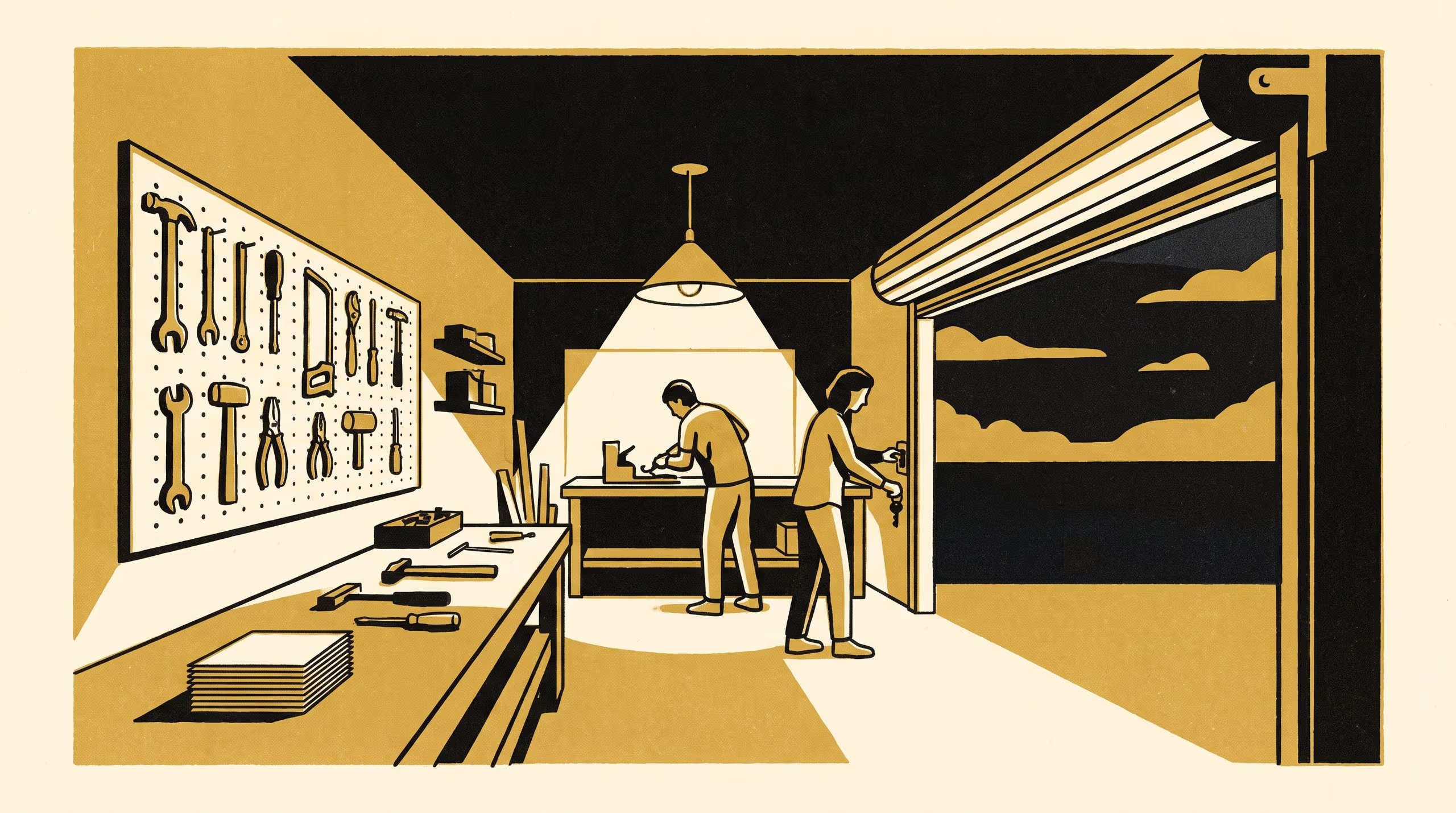
A School of Continuous Improvement research poster finds rostered working-bee hours, not incident-book entries, jumping at the supervised-induction cutoff that clears community shed members for solo power-tool use.
A regression-discontinuity study finds the third logged induction, not the incident book, deciding who the roster calls back
A community shed’s safety rule exists to answer one question: has this member had enough supervised practice to use the power tools alone. A poster from the School of Continuous Improvement’s Adaptive Metrics Lab describes the second, unbudgeted question it has started answering — who the roster reaches for next.
Working from twenty-four months of sign-in and rostering records at four community sheds, the team compared members just above and just below the third logged induction, the point at which each shed clears someone for solo tool use. Incident-book entries showed no change at the line. Rostered working-bee hours nearly tripled. The finding extends the Lab’s standing interest in what a measurement system starts to do once the people around it trust it more than it has earned.
A safety threshold and a scheduling rule are not supposed to be the same decision. At the sheds we studied, they already were.
— Dr Mirela Hanke, Postdoctoral Fellow and Deputy Convenor, Living Dashboard
“The induction count was built to certify one thing,” said Dagny Okafor, Lecturer and Convenor, Evaluation of Evaluation. “Nobody signed off on it certifying availability as well.”
The School’s Indicator Commons has provisionally adopted the third-induction mark as a rostering-readiness signal for affiliated community organisations, pending a second wave of sheds.
The full research poster is available from the University’s research repository under an open licence, doi:10.5555/slop.302bnr.