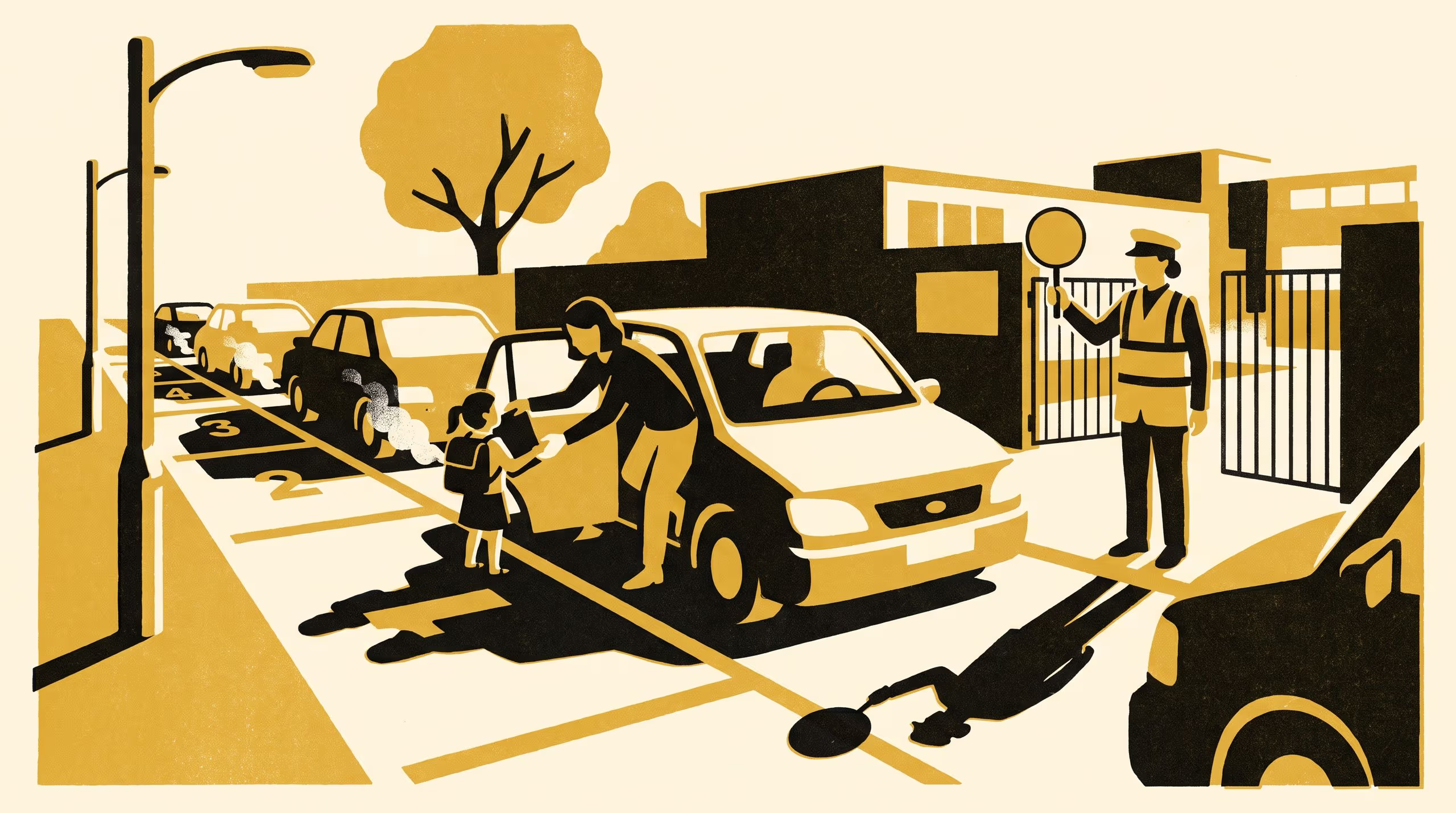
A School of Continuous Improvement trial tests whether a parking-office scoring rubric's neutral track record travels to nine primary schools' kiss-and-drop zones, and finds it reallocates bay access instead, a result the Facilities' Transport Unit's expansion plan is proceeding past.
A nine-school replication trial finds the frozen-cap car park's neutral scoring rubric reshuffles who gets the closest kiss-and-drop bay, and Facilities' Transport Unit is rolling it out regardless
A scoring formula that left a frozen-cap staff car park’s queue untouched has not left a primary school’s kiss-and-drop zone untouched. Facilities’ Transport Unit’s priority-tier rubric, adopted for staff parking permits on the strength of a finding that it changed nothing, has spent one school term reallocating who gets the bay closest to the gate at nine partner schools.
The School of Continuous Improvement’s trial matched more than a thousand morning drop-offs against both the old first-in queue and the new score, and found the two agreeing only loosely, most sharply for families carrying the rubric’s mobility-need flag, who moved substantially closer to the gate than their place in the queue would have predicted. The University reads the result as a reminder that an instrument’s neutrality in one setting is a finding about that setting, not a property of the instrument.
A score that agrees with the queue it replaces isn’t proof the score does nothing. It’s proof the two happened to be measuring the same thing already.
— Dr Mirela Hanke, Postdoctoral Fellow and Deputy Convenor, Living Dashboard, School of Continuous Improvement
For the School of Continuous Improvement, the trial extends its standing interest in what a governance instrument carries with it when it moves, and what it leaves behind. “The formula itself never changed between the two sites,” said Associate Professor Kwame Lindqvist, Director of the Master of Priority Studies, School of Emergent Priorities, and a co-author of the original car-park audit. “What changed was how much work the score actually had to do once it arrived somewhere the old queue wasn’t already getting it right.”
Facilities’ Transport Unit’s rollout brief, drafted before the trial reported its results, describes the rubric as a neutral upgrade and is extending it unmodified to the nine schools’ shared community bus-bay roster.
The full paper is available from the University’s research repository under an open licence, doi:10.5555/slop.mkmhgm.