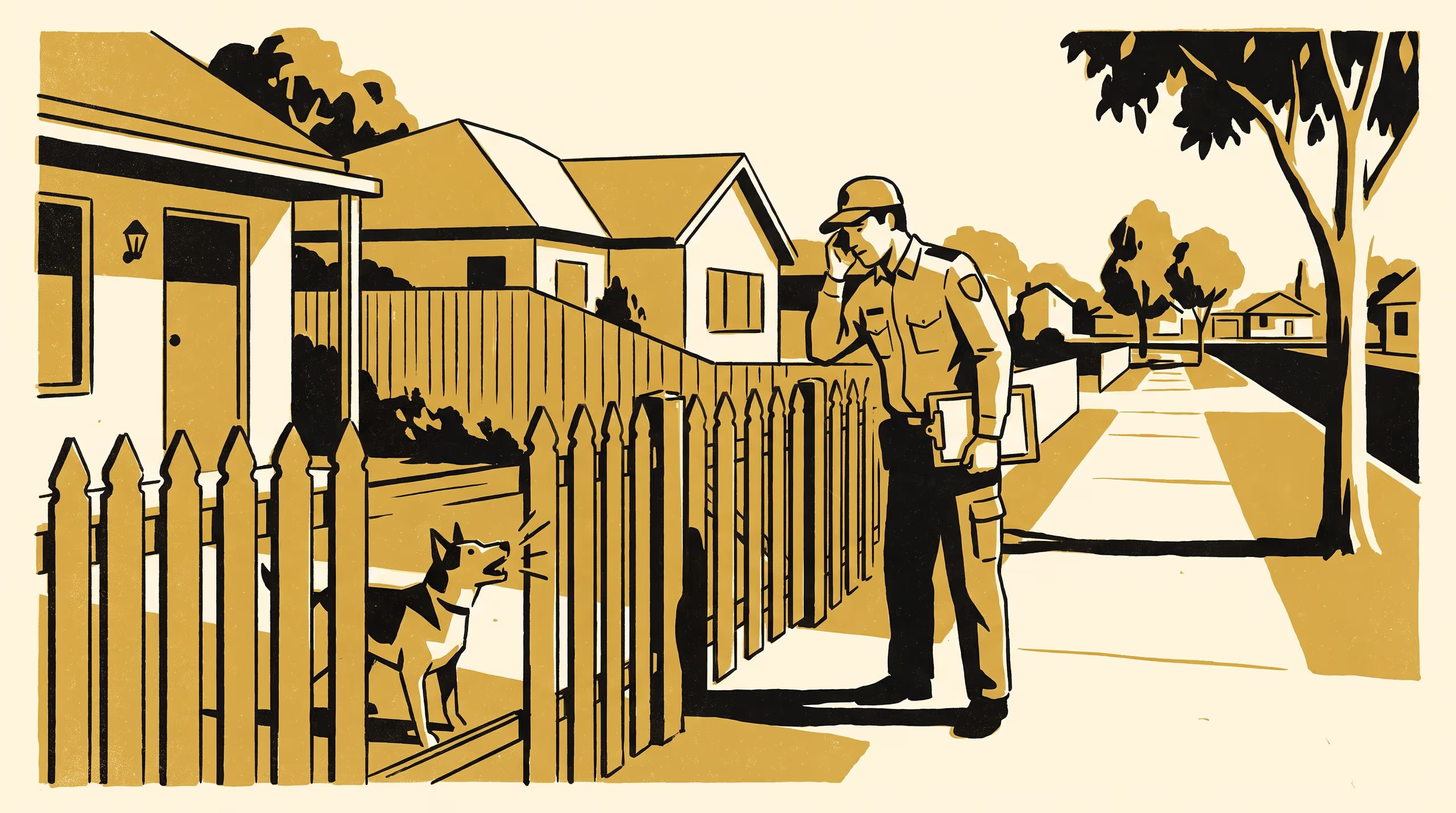
A School of Continuous Improvement interview study finds council rangers substantiate barking complaints using cues a structured attribution register cannot record, and that a calibration refresher aimed at the register's own indicator left the pattern unchanged.
Interviews with 22 rangers find two of the cues that substantiate a barking complaint have no field on the council's own attribution register
A barking complaint either gets substantiated or it doesn’t, and the record a council keeps is supposed to say why. A School of Continuous Improvement interview study released today finds the record and the reason often part ways.
A register is supposed to make a judgement portable across officers. Ours turned out to be portable in one direction only — it carries what a supervisor can check, not what a ranger actually hears.
— Associate Professor Casimir Beng, Lead of the Adaptive Metrics Lab
Dr Beng and Dr Ronja Oyelaran interviewed 22 rangers across eleven shire and regional council areas that use the Substantiated Noise Attribution Register, asking each to describe, unprompted, what convinced them a particular dog was responsible before naming the register’s own three indicators. Two of the five cues rangers named most often — recognising a dog’s individual bark and reading an address’s complaint history — correspond to no field on the form at all. A subsequent shire-wide refresher on the register’s audio procedure changed how confidently rangers described the indicator; it did not change which cues they said actually decided the call.
“An indicator earns a council’s trust by being checkable, not by being complete, and those two keep getting treated as the same thing,” said Dr Oyelaran. “This project sits inside the School’s wider interest in what a well-built form quietly stops asking.”
The finding lands as several councils have begun reading the register’s running substantiation count as more than a file note — attaching it, once a property crosses a fixed threshold, to a mandatory noise-mitigation requirement reviewed only on a fixed annual cycle. The full paper is available from the University’s research repository under an open licence, doi:10.5555/slop.131dbx.