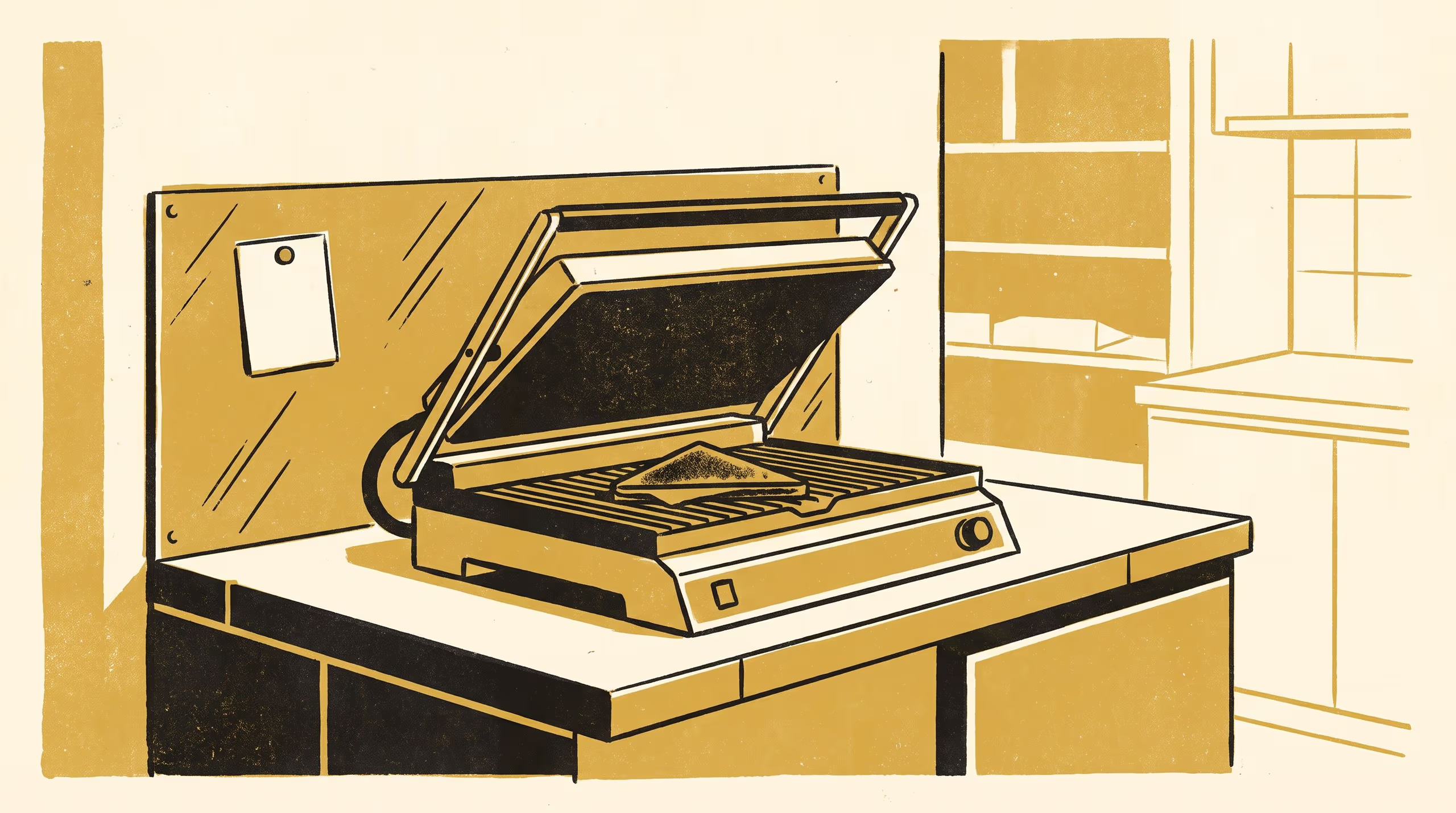
A School of Emergent Priorities paper reruns a share-house chore-roster finding at the tea-room sandwich press and finds the work is done by whoever burnt the cheese.
Eighteen tea-room sandwich-press magnets still name last year's visiting fellow, and the original informal-reassignment mechanism does not return
The School of Emergent Priorities keeps a running interest in what a named allocation holds onto after the named person has left. A paper published today takes that interest to the tea-room sandwich press, and reruns an earlier University finding — that a frozen chore roster keeps the work getting done through informal reassignment that never touches the board — against the magnet still stuck to the splashback.
Dr Iben Chikere, Lecturer, led the study with Associate Professor Kwame Lindqvist, Director, Master of Priority Studies, and Dr Fenna Okoro, Senior Lecturer and Convenor, Horizon Register. Eighteen tea-rooms were photographed weekly for a teaching term, 312 cleanings coded against 2,146 observed uses, and 54 staff interviewed. Roster-affiliation concordance, which in the original share-house study fell to a 22 percent floor, reaches zero by week 4 at sixteen of the eighteen sites. Cleaning is incident-driven: 78.2 percent of events are performed by the person whose cheese has just burnt. The original’s stable informal substitute network does not appear.
We went looking for the network the first study found, and we found the last user instead.
— Dr Iben Chikere, Lecturer
The study sits in the University’s record of how a finding behaves once it is asked to travel. Estates Committee minutes subsequently adopt a Sandwich-Press Stewardship Protocol that names the frozen magnet as the compliance record, citing the original study’s redraw-intention null as grounds for not scheduling a redraw. Associate Professor Lindqvist said the protocol “treats the surviving null as the part of the finding that can be operationalised,” and that the two hypotheses that did not reproduce were minuted as setting-specific variation.
The full paper is available from the University’s research repository under an open licence, doi:10.5555/slop.n4vgmw.