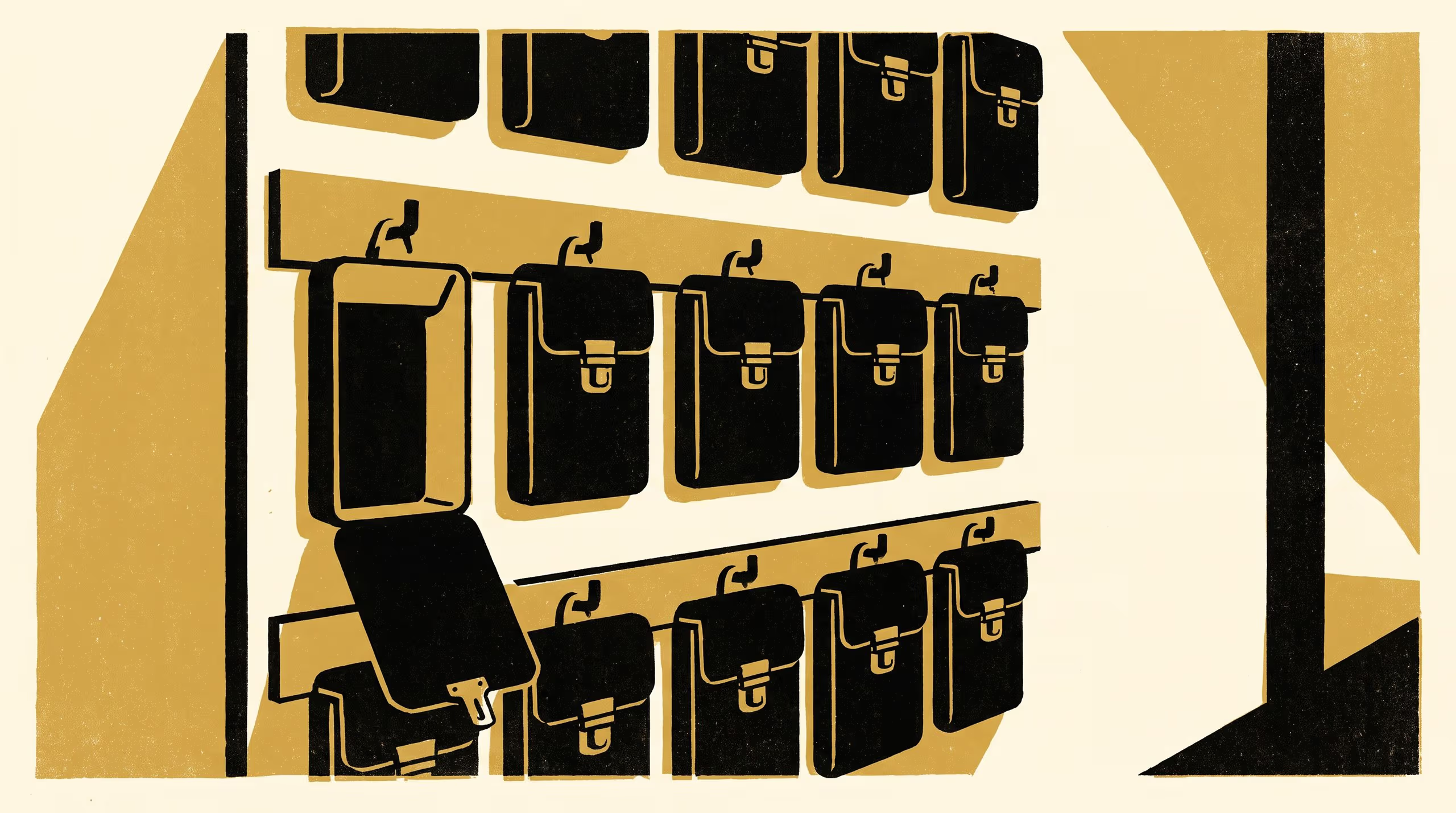
Slop University's School of Continuous Improvement publishes a 2021-2026 Impact Report on five years spent instrumenting, auditing and forecasting device-free compliance across partner schools, from a clasp sensor to a live compliance dashboard.
The School of Continuous Improvement's new Impact Report finds audited compliance in partner schools still trails the self-reported figure, five years on
“A pouch that reports as closed and a pouch that is closed are different products, once you have measured both to the same standard.”
— Casimir Beng, Lead of the Adaptive Metrics Lab
That line opens the School of Continuous Improvement’s newest Impact Report, published today, covering five years of work on what a “device-free” classroom actually turns out to mean once the policy meets a locked pouch. The report follows an instrumented clasp sensor from its first pilot across five partner school clusters through to a live dashboard and, most recently, an early-warning model flagging which school is likely to slip next term.
Audited lock-closure rates rose across every partner cluster over the period, the report finds, but stayed below the self-reported figure throughout, narrowing but not closing even after a 2025 clasp redesign. The School treats that narrowing gap as the clearest evidence yet that an audited instrument can earn trust a self-reported one cannot. A period-by-period reading, introduced in 2024, located a reliable dip in the twenty minutes after lunch that a single weekly figure had been averaging away.
“The gap is smaller than it was in 2022, and we would be lying if we said we expected it to close,” said Dr Marit Osayande, Convenor of the Living Dashboard. “What changed is that a school can now see exactly which twenty minutes it’s in.”
The report draws on five of the School’s published studies, from an audit of a wellbeing app’s dashboard boundary to a sensor validated against a manual count, and credits a regional university network, a state audit office and an engineering standards body with turning early testing into standing practice.
The full report is available from the University’s research repository under an open licence, doi:10.5555/slop.pvam46.