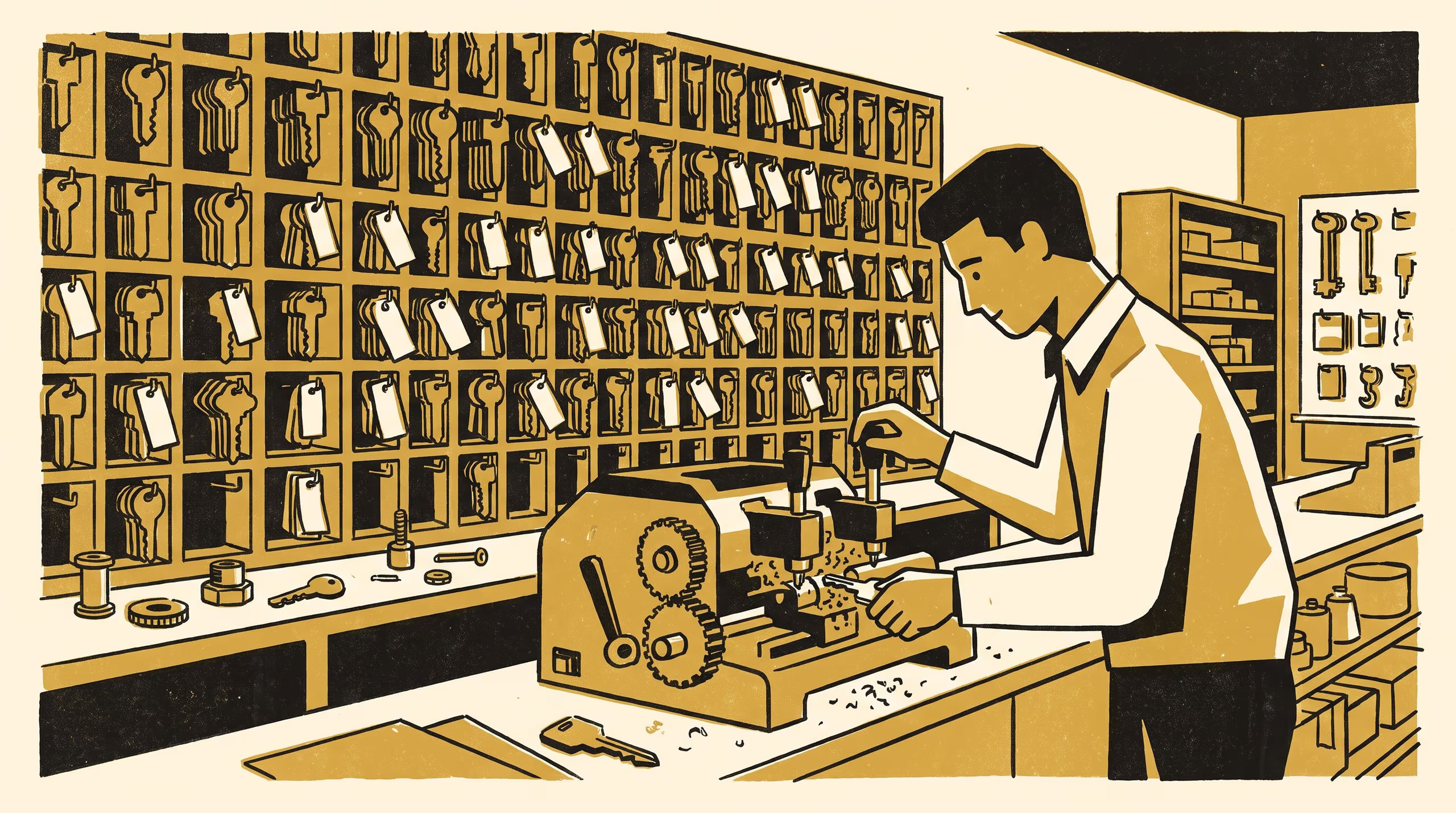
A School of Emergent Priorities paper logs occupancy on a key-cutting cubby wall and reports that the reminder meant to clear it does not, after which Saturday junior hours follow the stores whose walls are already full.
A 22-store hardware study finds an SMS that the spare key is ready does not clear the cubby wall a chain now uses to roster juniors
A spare key that has been cut is already counted as done, whether or not anyone has come back for it. A paper published today by Associate Professor Kwame Lindqvist, Dr Runa Adegoke and Dr Ronja Oyelaran follows that gap onto the cubby wall behind a hardware cutting counter, where a metropolitan chain had begun ranking Saturday junior hours from how many tagged-complete keys were still hanging.
The University treats the study as a working account of how a finished job waits, and of what a Saturday roster does with that wait. The authors’ weekly occupancy logger snapshotted the wall at close across twenty-two stores and sixteen weeks. Mean occupancy sat at 47.3 keys. Saturday was the heaviest weekday. High-occupancy stores stayed high-occupancy stores.
The till already knew how many keys were cut. The wall knew how many were still there. Those are different numbers, and only one of them is smooth enough to roster from.
— Associate Professor Kwame Lindqvist, Director of the Master of Priority Studies
Nine stores were sent an SMS the morning after a key was tagged-complete. Occupancy did not fall. Removing the logger’s seven-day decay term left store ranks statistically indistinguishable. From week twelve the chain allocated Saturday junior hours by occupancy quartile; the stores whose walls were already fullest received the extra hours and cut more keys the following Saturday. “We kept the reminder in the logger,” said Dr Runa Adegoke, Convenor of the Strategic Drift Survey. “A message that does not clear the wall is still a complete record of having been sent.”
The work continues the School of Emergent Priorities’ attention to counters where completion and collection are different events. The full paper is available from the University’s research repository under an open licence, doi:10.5555/slop.sfssds.